

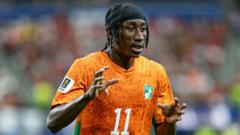
The European football landscape stands on the precipice of another paradigm shift as elite clubs recalibrate their recruitment strategies, highlighted by a major development in the market involving RB Leipzig’s electrifying winger, Yan Diomande. In a development that has sent shockwaves through the upper echelons of continental football, Diomande has reportedly reached a comprehensive agreement on personal terms with Spanish giants Real Madrid, following a dramatic withdrawal from the race by French heavyweights Paris Saint-Germain.
This pivotal moment in the ongoing European transfer saga not only underscores the aggressive yet calculated machinations of Real Madrid's front office under Florentino Pérez, but it also signals a strategic pivot by Paris Saint-Germain under their current sporting administration. As the modern game evolves—driven by complex financial regulations, shifting tactical paradigms, and the astronomical inflation of elite talent valuation—the pursuit of a player of Diomande’s caliber serves as a fascinating case study in contemporary sports economics and high-stakes sporting diplomacy.
For Sierra Leonean and broader African sports enthusiasts watching the global game, the rise of elite wingers in Europe dictates the cutting edge of tactical innovation. Diomande, whose dynamic playstyle has terrorized defences in the Bundesliga and the UEFA Champions League, represents the archetypal modern wide forward: explosive, technically proficient, and physically imposing. His impending transition to the Santiago Bernabéu is not merely a player moving from one club to another; it is a realignment of continental power dynamics that will resonate from the pitches of Saxony to the boulevards of Madrid and the boardrooms of Doha.
The Tactical Evolution of Modern Wing Play and Diomande’s Ascent
To truly comprehend the magnitude of Yan Diomande agreeing to terms with Real Madrid, one must first examine the tactical evolution of the winger position in contemporary association football. Over the past decade, the role has transitioned from traditional touchline-hugging crossers to inverted, goal-scoring dynamos who operate as auxiliary second strikers. Diomande fits this modern mold with chilling precision. Blessed with a rare combination of elite acceleration, close-control dribbling in confined spaces, and a ruthless eye for goal, the RB Leipzig standout has consistently dismantled low blocks and exploited high defensive lines alike.
At RB Leipzig, a club renowned for its rigorous, data-driven approach to talent acquisition and development under the Red Bull multi-club umbrella, Diomande was cultivated in an environment that prioritizes verticality, intense gegenpressing, and rapid transitions. This tactical education has rendered him uniquely suited for the demands of elite European football. Bundesliga observers have long noted his capacity to receive the ball under intense pressure, turn his marker with a swift change of pace, and deliver decisive output in the final third. Such traits are rare commodities, explaining why Europe's elite quickly queued up for his signature once his trajectory indicated he had outgrown his current surroundings.
Tactical analysts across the continent have pointed out that Diomande’s profile offers an antidote to the defensive stalemates that frequently plague modern knockout football. His ability to draw multiple defenders creates systemic space for teammates—a quality that will undoubtedly be weaponized by managerial masterminds. Whether cutting in from the left to unleash curling efforts into the far corner or burning past fullbacks on the outside to provide cutbacks, Diomande represents a multi-dimensional threat that few defenders can neutralize over ninety minutes.
The Real Madrid Strategy: Securing the Next Generation of Galácticos
Real Madrid’s pursuit and subsequent agreement with Diomande fit neatly into a meticulously crafted long-term recruitment blueprint. Gone are the days when the club relied exclusively on the acquisition of established, prime-age global icons through exorbitant, market-shattering fees. Instead, the hierarchy at Valdebebas has pivoted toward a proactive, preemptive strategy: identifying, securing, and integrating the absolute pinnacle of global youth talent before their valuations reach astronomical heights.
This philosophy has yielded remarkable dividends, evidenced by the seamless integration of previous generational acquisitions. By locking down players who possess both immense athletic ceilings and elite psychological resilience, Real Madrid ensures continuity and sustained competitiveness across domestic and continental fronts. Diomande’s arrival fits this exact ethos. The club views him not merely as a rotational option, but as a foundational pillar for the next decade of success. Securing his personal terms is a massive psychological and logistical victory, reflecting the enduring allure of the famous white shirt, even in an era where financial competition from state-backed entities is fiercer than ever.
Moreover, the integration of Diomande into the Real Madrid tactical ecosystem poses fascinating questions for the coaching staff. With an already formidable attacking department, the addition of a explosive winger necessitates careful squad management to ensure harmony and optimal performance levels. However, history demonstrates that Real Madrid thrives on elite competition within the squad, using internal rivalry to elevate training standards and matchday execution to world-class heights.
The Paris Saint-Germain Retraction: A Strategic Re-evaluation
Equally compelling in this unfolding narrative is the role of Paris Saint-Germain. For weeks, rumblings from the French capital suggested that PSG viewed Diomande as an integral piece of their ongoing sporting project—a project that has undergone a noticeable philosophical shift in recent years. Under the guidance of their sporting leadership, the club has decisively moved away from the era of accumulating aging global superstars toward a more balanced, sustainable, and French-centric or youth-oriented recruitment model.
Why, then, did PSG abruptly step away from the negotiating table after deeply exploring a move for the RB Leipzig star? Financial Fair Play (FFP) parameters and the strict enforcement of UEFA’s new squad-cost ratios undoubtedly played a significant role. Modern European giants must navigate a labyrinth of budgetary constraints, wage-bill caps, and amortization schedules. Committing monumental capital to a single position, while necessary at times, must be weighed against squad depth and overall balance.
Furthermore, sources close to the Parisian outfit suggest that internal evaluations highlighted potential tactical redundancies within their current forward line. With several high-priced assets already occupying wide and central attacking roles, the club’s sporting directors likely concluded that deploying capital elsewhere—such as bolstering defensive solidity or central midfield control—represented a more prudent allocation of resources. Stepping away from a bidding war demonstrates a newfound discipline within the PSG boardroom, proving that the club is willing to walk away from high-profile targets when the financial or structural metrics no longer align with their long-term vision.
Economic Implications for the European Transfer Market
The trajectory of the Diomande transfer saga provides a fascinating window into the broader macroeconomic realities of professional football. The valuation of elite wingers has reached unprecedented heights, driven by the scarcity of genuinely difference-making wide players who can consistently influence matches at the highest level of the UEFA Champions League.
When a player of Diomande’s age and output profile becomes available, the ripple effects are felt across the entire ecosystem. RB Leipzig, operating with their characteristic commercial acumen, stand to realize a sensational return on their initial investment. The Bundesliga side has mastered the art of player development, positioning themselves as an essential stepping stone for elite prospects who demand guaranteed developmental minutes at the highest competitive tier. The impending fee will not only bolster Leipzig’s war chest but will fund their own sophisticated scouting and acquisition network across global markets.
Concurrently, agent fees, image rights negotiations, and long-term contract structures in deals of this magnitude reflect the hyper-capitalized nature of the sport. Modern players and their representatives possess unprecedented leverage, often dictating terms that include release clauses, performance-based bonuses, and intricate commercial revenue-sharing agreements. The ability of Real Madrid to navigate these complex negotiations successfully speaks volumes about their institutional prestige and sophisticated financial structuring.
The Bundesliga Perspective and RB Leipzig’s Developmental Model
The departure of a player like Diomande serves as both a badge of honor and a structural challenge for RB Leipzig and the broader Bundesliga ecosystem. While the German top-flight has long embraced its role as a premier incubator of global talent, the constant drain of elite performers to the traditional European superpower leagues—specifically Real Madrid, Barcelona, and the English Premier League—creates a perpetual cycle of rebuilding.
Leipzig’s recruitment department, however, is engineered precisely for this reality. Their data-led scouting algorithms scan leagues across South America, Eastern Europe, and Africa years before a player reaches mainstream consciousness. When a star departs for a nine-figure sum, the infrastructure is already in place to deploy those funds toward the next wave of precocious talent. For fans of German football, watching Diomande leave is bittersweet: it marks the loss of a sublime entertainer from their pitches, yet it validates the efficacy of a developmental model that remains the envy of the sporting world.
Football pundits in Germany have praised Diomande for his professionalism throughout the speculation, noting that his on-field output never dipped despite the relentless media scrutiny surrounding his future. This mental fortitude is precisely what elite managers demand; a player who can compartmentalize external noise and deliver match-winning performances week in and week out is an invaluable asset to any dressing room.
Global Perspectives and the African Football Connection
From a global perspective, the ascent of players with African heritage or roots to the pinnacle of European club football continues to inspire millions across the continent. In Sierra Leone and neighboring West African football hotbeds, the journeys of explosive wide forwards who conquer the European stage serve as powerful blueprints for aspiring youth.
The globalized nature of modern scouting means that raw talent from diverse backgrounds is being identified, nurtured, and refined at younger ages than ever before. Diomande’s impending move to Real Madrid places him under the brightest possible microscope. In an interconnected digital age, every touch, dribble, and goal is analyzed by millions of supporters worldwide within seconds. The cultural impact of seeing an explosive winger starring for the most decorated club in football history cannot be overstated, acting as a powerful motivator for grassroots development programs across the globe.
Expert Analysis and Futurology: What Lies Ahead
As we look toward the culmination of this transfer saga and the subsequent opening of the upcoming transfer window, football economists and tactical experts are already projecting the long-term ramifications of Diomande’s switch to Madrid.
First, from a sporting perspective, Diomande must adapt to the unique pressures of the Santiago Bernabéu. The supporters are notoriously demanding, expecting not only victory but style, flair, and relentless effort. Players who possess the physical tools often succeed, but those who combine those tools with tactical intelligence and emotional maturity become true legends. Analysts suggest that the tactical freedom afforded by modern managers will suit Diomande’s instinctual brilliance, allowing him to express himself in the final third without being overly constrained by rigid positional structures.
Second, PSG’s strategic withdrawal from the bidding war may well signal a broader trend in European football administration. As regulatory bodies tighten oversight regarding club finances, the era of unbridled, indiscriminate spending is facing unprecedented headwinds. Clubs must now rely on superior scouting, tactical innovation, and astute negotiation rather than sheer financial muscle alone. PSG’s restraint indicates a maturing sporting project, one that values squad equilibrium over mere acquisition for the sake of blocking rivals.
Finally, the ripple effect on RB Leipzig will be immediate. How they reinvest the windfall from this impending transfer will determine their competitiveness in the upper echelons of the Bundesliga and the Champions League next season. The market will watch closely to see which unheralded prodigy Leipzig pulls from their extensive global network to fill the sizeable boots left by their departing star.
Concluding Assessment
The agreement between Yan Diomande and Real Madrid, facilitated by Paris Saint-Germain’s calculated exit from the negotiations, stands out as a defining narrative of the current footballing epoch. It encapsulates the intersection of elite sporting ambition, sophisticated financial planning, and the relentless pursuit of tactical perfection.
As the formal announcement draws closer and the ink dries on what promises to be a landmark contract, the footballing world turns its collective gaze toward the Spanish capital. For Diomande, the dream of gracing the grandest stage in club football is about to become reality. For Real Madrid, a formidable weapon has been secured to maintain their domestic and continental hegemony. And for the neutral observer, another captivating chapter in the ever-evolving drama of the global game is ready to be written.