

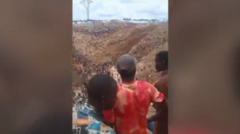
Freetown — In what has rapidly unfolded as one of the most devastating humanitarian and industrial accidents in recent memory within the Central African Republic, a catastrophic landslide at an artisanal gold mining site near the border with Cameroon has claimed the lives of more than 100 people. As rescue operations grind forward under arduous conditions, the sheer magnitude of the disaster has thrown a harsh, unblinking spotlight on the perilous intersection of unregulated mineral extraction, systemic economic desperation, and severe regulatory deficits plaguing the resource-rich heart of the African continent.
The tragedy, which struck in a remote and densely forested pocket of western Central African Republic, highlights the profound dangers routinely faced by informal miners who extract precious metals under life-threatening conditions. According to senior regional authorities directly monitoring the unfolding crisis, rescue teams have been locked in a relentless race against time, sifting through massive volumes of displaced earth, heavy mud, and collapsed mining pits. The remote nature of the terrain, combined with compromised infrastructure and seasonal weather patterns, has severely hampered the deployment of heavy excavation machinery, leaving emergency responders heavily reliant on manual labor, basic tools, and sheer determination to locate survivors and recover the deceased.
As the death toll continues to climb past the grim milestone of one hundred casualties, international humanitarian agencies, regional economic bodies, and governance experts are intensifying their scrutiny of the structural factors that routinely lead to such catastrophic loss of life. This comprehensive report delves deeply into the multifaceted dimensions of the disaster, examining the historical backdrop of artisanal mining in the Central African Republic, the complex socioeconomic drivers compelling workers into perilous pits, the regional geopolitical and economic ramifications, and the urgent policy imperatives required to prevent a recurrence of such profound human suffering.
Anatomy of a Disaster: The Geology and Logistics of the Collapse
To fully comprehend the scale of the tragedy near the Cameroonian border, one must examine the distinct geographical and geological characteristics of the region. The western corridor of the Central African Republic is richly endowed with alluvial gold deposits, tucked away in river valleys and ancient sedimentary basins. These geological formations, while economically lucrative, are notoriously unstable, particularly during periods of intense rainfall or when subjected to unscientific, rapid excavation methods.
Artisanal and small-scale gold mining operations in this zone rarely adhere to standard geotechnical engineering principles. Miners frequently dig deep, vertical shafts without proper shoring, timbering, or structural reinforcement. Over time, as hundreds of individuals carve into the hillsides and riverbanks, the structural integrity of the earth is fatally compromised. When a collapse occurs, it is rarely a minor cave-in; rather, entire hillsides shear off, burying active work sites under thousands of tons of wet earth and debris in a matter of seconds.
In the immediate aftermath of the disaster, local administrative officials on the ground faced an overwhelming logistical nightmare. The sheer isolation of the mining site meant that word of the collapse took precious hours to reach urban centers capable of dispatching help. Telecommunication networks in the border regions are sparse and unreliable, compounding the communication breakdown during emergencies. When initial rescue teams finally arrived, they were met with a scene of utter devastation: a sprawling crater of mud where a bustling, makeshift mining community had stood only hours prior.
Medical infrastructure in the vicinity is critically under-resourced, forcing overworked health professionals to triage severely injured survivors under primitive conditions. Field hospitals and regional clinics have been stretched far beyond capacity, lacking basic trauma supplies, blood plasma, and specialized orthopedic care. The psychological toll on the local population, many of whom lost multiple family members in a single sweep of earth, is described by mental health workers as catastrophic and long-lasting.
Historical Context: The Long Shadow of Informal Mining in the CAR
The Central African Republic has long struggled to harness its vast mineral wealth for broad-based national development. Despite sitting on immense reserves of gold, diamonds, uranium, and timber, the country remains one of the least developed nations on Earth, consistently ranking near the bottom of the United Nations Human Development Index. This cruel paradox—abundant natural riches juxtaposed with pervasive, grinding poverty—forms the historical bedrock upon which the informal mining sector has flourished.
Decades of political instability, civil conflict, and institutional decay have severely weakened the central government's ability to exercise effective territorial control, let alone regulate a sprawling, decentralized mining industry. For generations, mining has served as the primary economic lifeline for rural populations disenfranchised from formal employment markets. As traditional agricultural sectors faced mounting pressures from climate variability, market fluctuations, and insecurity, hundreds of thousands of citizens turned to artisanal mining as their sole means of economic survival.
Historically, regulatory oversight of the mining sector has been hampered by a lack of state capacity, pervasive corruption, and the remote geography of extraction sites. While the government maintains a legal framework governing mining permits and environmental standards, enforcement mechanisms are virtually nonexistent outside major urban centers. Consequently, a shadow economy has evolved, operating entirely outside the purview of the state. In these lawless zones, safety standards are non-existent, child labor is rampant, and environmental degradation runs unchecked.
Furthermore, the revenue generated from these informal operations frequently bypasses state coffers, depriving the national treasury of critical tax receipts that could otherwise be invested in public infrastructure, healthcare, and education. Instead, wealth flows through illicit supply networks, enriching local middlemen, armed factions, and international syndicates while leaving the actual laborers to shoulder 100 percent of the physical and mortal risk.
Socioeconomic Pressures: The Desperation Driving Workers into the Pits
To understand why individuals knowingly subject themselves to the lethal hazards of artisanal gold mining, one must examine the profound socioeconomic desperation that defines daily life for millions in the region. In a landscape devoid of formal job opportunities, industrial investment, or social safety nets, artisanal mining represents the ultimate lottery ticket—a grueling, dangerous gamble for a fleeting chance at escaping absolute destitution.
Inflation, currency devaluation, and the cascading economic shocks of regional conflicts have decimated the purchasing power of ordinary Central Africans. Basic foodstuffs, fuel, and medicine have become increasingly unaffordable for the average household. In this high-pressure environment, men, women, and even children flock to gold-rich regions, willing to risk their lives in unstable shafts simply to put food on the table for a single week.
Sociological research into artisanal mining communities reveals a deeply entrenched culture of risk-taking born of necessity. Miners are acutely aware of the dangers; stories of cave-ins, mudslides, and toxic exposures are perennial features of local folklore. Yet, the immediate imperative of survival invariably supersedes long-term risk calculations. As one regional labor expert noted in an offline assessment, when a person is faced with the certainty of starvation through inaction, the statistical probability of a landslide becomes an acceptable gamble.
Moreover, the localized supply chains of gold provide immediate liquidity. Unlike agricultural commodities that require months to harvest and transport to distant markets, gold can be panned, cleaned, and sold to itinerant buyers for cash within hours. This rapid turnaround time makes gold the preferred currency of survival for cash-strapped rural populations, cementing its role as the dominant economic engine of the borderlands despite its staggering human cost.
Regional and Cross-Border Dimensions: The Cameroon Connection
The geographical positioning of the disaster near the border with Cameroon adds a complex transnational layer to the crisis. Borderlands in Central Africa are porous, fluid zones where national jurisdictions often blur, and economic activity flows organically regardless of formal demarcations. The mining site in question is part of a broader cross-border mineral belt that attracts transient populations from both sides of the international boundary.
This cross-border dynamic complicates emergency response, regulatory enforcement, and victim identification. Many of the miners working the pits are migrant laborers who cross back and forth between the Central African Republic and Cameroon depending on seasonal yields and security conditions. Consequently, verifying the identities of the deceased and notifying their families requires unprecedented coordination between consular offices, local chiefs, and law enforcement agencies of both nations.
From an economic perspective, the porous borders facilitate the illicit trafficking of extracted gold out of the Central African Republic into neighboring trade hubs, where it is laundered into international markets. Cameroon serves as a major transit corridor for goods and minerals originating from the CAR's interior. The informal nature of this trade means that a significant portion of the gold extracted at the disaster site was likely destined for cross-border smuggling networks, bypassing export duties and regulatory tracking systems entirely.
Diplomatically, the tragedy underscores the necessity for enhanced bilateral cooperation between Bangui and Yaoundé. Managing shared resource corridors, curbing illegal cross-border mining syndicates, and establishing joint disaster response protocols are tasks that neither country can achieve in isolation. Regional security analysts emphasize that porous borders have long been exploited by criminal enterprises; thus, the humanitarian catastrophe should serve as a wake-up call for deeper integration and intelligence sharing regarding borderland management.
Political Fallout and Governance Challenges
In the halls of power in Bangui, the disaster has triggered an intense political reckoning. Opposition politicians and civil society organizations have sharply criticized the government for its perceived failure to protect vulnerable citizens and enforce basic environmental and labor laws within the mining sector. Critics argue that successive administrations have turned a blind eye to the illegal exploitation of natural resources, prioritizing short-term economic appeasement over sustainable regulatory reform.
In response to the public outcry, government representatives have expressed profound grief and promised a thorough investigation into the circumstances surrounding the collapse. State officials have reiterated their commitment to cracking down on unauthorized mining operations, reviewing safety protocols, and providing emergency assistance to the affected families. However, skeptics remain deeply doubtful regarding the state's capacity to translate political rhetoric into meaningful, on-the-ground transformation.
Enforcing regulations across a vast, heavily forested country with limited infrastructural reach is an enormous administrative hurdle. The state lacks the personnel, equipment, and financial resources to police thousands of isolated mining pits scattered across hostile terrain. Furthermore, deep-seated corruption at various levels of local administration often undermines enforcement efforts, as corrupt officials routinely accept bribes to permit illegal extraction to continue unhindered.
Political analysts suggest that real reform can only be achieved if the government shifts its strategic paradigm from punitive prohibition to structured integration. Simply banning artisanal mining without offering viable alternative livelihoods is destined to fail, as economic desperation will inevitably drive workers back into the clandestine pits. Instead, experts advocate for a comprehensive formalization strategy—bringing artisanal miners into the legal fold, organizing them into cooperatives, providing them with basic safety equipment, and offering technical training in sustainable extraction.
Global Perspectives and Ethical Supply Chains
The tragedy in the Central African Republic resonates far beyond its immediate geographic borders, touching upon global debates regarding ethical supply chains, responsible sourcing, and corporate social responsibility within the international precious metals market. Gold extracted from artisanal and small-scale operations in conflict-affected and high-risk areas frequently finds its way into global supply chains, ultimately ending up in jewelry, electronics, and investment bullion worldwide.
International consumer markets and regulatory bodies—particularly in the European Union and the United States—have increasingly demanded rigorous supply chain transparency to ensure that imported minerals do not finance armed conflict or human rights abuses. However, the vast majority of artisanal gold from countries like the CAR is effectively laundered through regional intermediaries, obscuring its bloody provenance before it reaches international refineries.
Global human rights organizations argue that multinational corporations, jewelry retailers, and financial institutions bear a moral and ethical obligation to trace the origins of their gold and invest in the upliftment of mining communities. When disasters like the one near the Cameroonian border occur, they lay bare the human cost of consumer indifference. Activists are calling for international pressure and financial assistance to help developing nations formalize their artisanal mining sectors, arguing that ethical mining is impossible without heavy investment in local safety infrastructure and regulatory enforcement.
Without international support and fair-trade frameworks that guarantee equitable compensation for artisanal miners, the cycle of exploitation and catastrophe will persist. Global consumers must confront the uncomfortable reality that the luxury goods they purchase may be inextricably linked to the suffering and deaths of marginalized workers laboring in primitive conditions in remote corners of Central Africa.
Expert Opinions and Recommendations for the Future
To synthesize a path forward, leading economists, geologists, and humanitarian experts have put forward a series of urgent recommendations aimed at preventing future tragedies. These insights emphasize that piecemeal responses and temporary expressions of grief are wholly inadequate in addressing a systemic crisis of this magnitude.
First, experts universally stress the necessity of immediate humanitarian intervention and long-term psychosocial support for the survivors and families of the victims. Ensuring that grieving families receive adequate financial compensation, food security, and medical care is an indispensable moral imperative that must be spearheaded by the state in partnership with international aid organizations.
Second, governance specialists advocate for the implementation of a national artisanal mining formalization program. By creating simplified, low-cost licensing procedures, the government can encourage miners to register their operations. Registration facilitates better monitoring, allows for the introduction of mandatory safety standards, and brings illicit mineral flows under state purview, thereby boosting national revenues.
Third, geologists and environmental engineers recommend the establishment of regional technical advisory units equipped to assess the structural stability of active mining sites. Providing basic training to artisanal miners on how to identify geological hazards, reinforce pit walls, and avoid operating during peak weather events can drastically reduce fatality rates without necessarily shutting down economic activity.
Finally, economic development strategists argue that the ultimate solution lies in diversifying the rural economy. So long as artisanal mining remains the only viable escape from poverty, people will continue to risk their lives in the pits. Investing in sustainable agriculture, rural infrastructure, vocational training, and light manufacturing can create alternative employment avenues, gradually reducing the over-reliance on perilous extractive labor.
Conclusion: A Somber Turning Point for the Nation
As rescue and recovery operations slowly wind down near the border with Cameroon, the Central African Republic is left to mourn more than one hundred of its citizens whose lives were snuffed out in a horrific instant of mud and stone. This disaster is not merely an unfortunate natural accident; it is the tragic culmination of decades of systemic poverty, institutional neglect, and the dangerous realities of unregulated informal extraction.
The souls lost in those unstable gold pits serve as a poignant, haunting reminder of the human cost exacted by a global economic order that profits from raw resources while abandoning the human beings who unearth them. For the government of the Central African Republic, regional partners, and the international community, this catastrophe must serve as a definitive turning point. The status quo—defined by lawlessness, peril, and preventable carnage—is no longer tenable. Only through courageous policy reform, genuine economic diversification, and unwavering commitment to human dignity can the nation honor the memories of the fallen and ensure that such a catastrophe is never repeated.


