

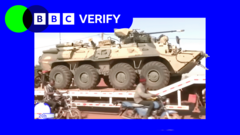
Freetown — In an operation that underscores the shifting geopolitical fault lines running across the African continent, maritime tracking intelligence and corroborating satellite imagery have confirmed that a heavily sanctioned Russian cargo vessel successfully traversed some of Europe’s most heavily monitored strategic waterways, transporting a consignment of military vehicles directly to the military junta in Mali.
The voyage of the vessel, which operated in blatant defiance of sweeping Western trade restrictions and international maritime scrutiny, highlights a rapidly evolving security architecture in the Sahel. As traditional Western partners recalibrate or curtail their military cooperation with Bamako, Moscow has stepped into the strategic vacuum, positioning itself as an indispensable security guarantor for the ruling junta. This latest maritime transfer is not merely a logistical milestone for bilateral military trade; it serves as a glaring testament to the porous nature of contemporary sanctions regimes and the enduring capacity of state actors to bypass multilateral controls when geopolitical imperatives align.
Anatomy of a Sanctions-Busting Voyage: Through the English Channel to the African Coast
The journey of the transport vessel began under a cloud of secrecy, yet it quickly drew the attention of independent naval analysts and intelligence networks. According to detailed satellite observations and maritime transit data reviewed by our newsroom, the ship was loaded with a substantial inventory of heavy-duty military hardware, prominently featuring armored personnel carriers (APCs) and heavy logistics trucks. These assets are explicitly designed to enhance the tactical mobility and operational reach of the Malian Armed Forces (FAMA), who have been locked in a protracted, multi-front counter-insurgency campaign against jihadist groups affiliated with both Al-Qaeda and the Islamic State, as well as intermittently confronting separatist movements in the country's restive north.
What makes this particular transit uniquely audacious is the geographic route traversed by the vessel. To reach its final destination on the African continent, the ship was tracked passing directly through the English Channel—one of the busiest, most intensely monitored maritime choke points in the world, flanked by NATO members the United Kingdom and France. Despite the dense web of naval surveillance, radar tracking, and stringent trade embargoes imposed on the Russian maritime sector following the escalation of the conflict in Ukraine, the vessel managed to execute its passage without direct physical interdiction. Maritime experts suggest that the ship may have utilized deceptive navigation tactics, such as switching off its Automatic Identification System (AIS) transponder at critical junctures, flying flags of convenience, or operating under a legal shield that complicates the unilateral boarding and search of commercial vessels on the high seas under international maritime law.
The successful completion of this leg of the journey exposes profound vulnerabilities in the enforcement mechanisms of Western sanctions. While the European Union and the United States have enacted rigorous financial and trade prohibitions aimed at starving the Russian defense-industrial complex of revenue and logistical capability, the global maritime commons remain vast, and enforcement is frequently fragmented. Ships registered in compliant jurisdictions or those willing to engage in ship-to-ship transfers and falsify cargo manifests continue to find loopholes. The arrival of these armored vehicles in West Africa serves as tangible proof that sanctions, in the absence of absolute naval enforcement and universal international compliance, remain porous when pitted against determined state actors seeking to project power or secure lucrative resource deals.
The Geopolitical Shift in Bamako: From Western Partnership to Moscow's Embrace
To understand the full significance of this military shipment, one must examine the dramatic pivot in Mali’s foreign policy and security alliances over the past several years. Following successive military coups in August 2020 and May 2021, led by Colonel Assimi Goïta, Bamako’s relations with traditional Western and regional allies deteriorated rapidly. For decades, France and its European partners had spearheaded counter-terrorism operations in the Sahel, most notably through Operation Barkhane and the European-led Taktask force. However, mounting civilian casualties, the persistent expansion of jihadist insurgencies despite years of foreign military presence, and rising nationalist sentiment fueled a profound popular backlash against the French military footprint.
Seizing upon this wave of anti-colonial and anti-Western sentiment, the military junta systematically dismantled its historical security architecture. Bamako demanded the immediate withdrawal of French troops, expelled the French ambassador, and formally terminated defense cooperation agreements with Paris. Simultaneously, the junta severed ties with the United Nations Multidimensional Integrated Stabilization Mission in Mali (MINUSMA), forcing the complete drawdown and departure of thousands of international peacekeepers who had served as a stabilizing buffer across the northern and central regions for a decade.
In this vacuum, the ruling authorities turned decisively toward Moscow. The relationship has expanded at a breathtaking pace, moving far beyond traditional diplomatic pleasantries into the realm of deep security integration. Russian military instructors, technicians, and private security contractors—principally associated with structures formerly known as the Wagner Group and subsequently reorganized under the direct oversight of the Russian Ministry of Defense—have established a robust presence on the ground. These personnel have assumed critical advisory, training, and direct combat support roles, operating side-by-side with the Malian military. For the junta, Russia offers an uncompromising, transactional partnership that comes without the vexing Western lectures on human rights, democratic governance, or the scheduling of electoral transitions.
Implications for Regional Stability in the Sahel
The infusion of new armored personnel carriers and logistics trucks directly impacts the military balance within the Sahel, yet experts remain deeply divided on whether these hardware upgrades will translate into sustainable strategic victories against insurgents. The Malian military has long suffered from deficiencies in troop transport safety, mechanized mobility, and logistical sustainment—weaknesses that frequently left outposts vulnerable to asymmetric ambushes and improvised explosive device (IED) attacks orchestrated by militant factions.
Armored personnel carriers provide vital force protection for troops navigating hostile terrain, enabling faster reaction times and enhanced survivability against ambush tactics. Proponents of the junta’s strategy argue that these hardware acquisitions are essential for the state to reassert its sovereignty over remote territories that have effectively functioned as governance vacuums for years. By enhancing the operational capacity of the armed forces, the government hopes to demonstrate tangible security dividends to a war-weary civilian population.
However, regional security analysts and human rights organizations express profound apprehension regarding the operational deployment of these newly acquired assets. Past military operations conducted jointly by the Malian armed forces and foreign security contractors have been marred by persistent allegations of serious human rights abuses, including extrajudicial killings, arbitrary detentions, and systemic violence against civilian populations suspected of sympathizing with or providing logistical support to jihadist elements. The integration of heavier, more mobile military hardware risks intensifying the kinetic nature of the conflict without a corresponding emphasis on community-level engagement, intelligence-led policing, and political reconciliation. In asymmetric conflicts, an over-reliance on brute military force frequently alienates local communities, inadvertently driving vulnerable populations into the arms of insurgent networks seeking to exploit local grievances against the central state.
The Fracturing of Regional Multilateralism: The Alliance of Sahel States
The strengthening of military ties between Mali and Moscow must also be viewed through the broader lens of regional disintegration within West Africa. Mali, alongside its neighbors Niger and Burkina Faso—both of which are also governed by military juntas facing severe jihadist insurgencies—has systematically distanced itself from the Economic Community of West African States (ECOWAS). Frustrated by ECOWAS sanctions imposed following their respective coups, and accusing the regional bloc of acting under the undue influence of external Western powers, the three nations formally withdrew from ECOWAS and established their own mutual defense architecture: the Alliance of Sahel States (AES).
This new geopolitical bloc represents a decisive break from decades of regional integration efforts. The AES has signaled its intention to create a confederation that coordinates not only defense and security policies but also monetary and economic strategies, effectively creating a parallel sovereign zone in the heart of West Africa. Within this framework, Russian military hardware and strategic backing are viewed by the junta leaderships as the ultimate insurance policy against both internal rebellions and potential external military interventions by ECOWAS member states.
This fragmentation carries profound implications for the stability of the wider West African region. As traditional democratic norms and regional institutional oversight recede across the Sahel, the region is solidifying into a distinct geopolitical theater where great power competition between Russia, China, and Western nations plays out via proxy partnerships. The militarization of these regimes, fueled by external arms transfers that bypass international oversight, diminishes the prospects for negotiated political settlements and institutional reforms essential for long-term peace.
Global Perspectives: Moscow’s African Strategy and Western Retaliation
From Moscow’s perspective, the successful delivery of military vehicles to Mali represents a significant geopolitical victory. In the wake of extensive Western isolation resulting from the war in Ukraine, the Kremlin has aggressively prioritized the expansion of its diplomatic, economic, and security footprint across the Global South, with Africa serving as a primary focal point. Through a combination of state-backed security agreements, resource extraction contracts—particularly in mining and hydrocarbons—and targeted diplomatic outreach, Moscow has positioned itself as an alternative partner that respects national sovereignty and does not condition aid on governance metrics.
For Russian state planners, projecting power into West Africa achieves multiple strategic objectives. It demonstrates global reach, challenges Western hegemony in regions historically tied to European spheres of influence, secures access to valuable natural resources that can help mitigate the impact of international sanctions, and creates diplomatic blocs within international forums such as the United Nations General Assembly that consistently vote in alignment with Russian interests.
Conversely, Western capitals—particularly Paris and Washington—view these developments with mounting alarm, albeit with limited immediate leverage to reverse the trend. While Western governments continue to issue diplomatic condemnations and highlight the documented abuses committed by Russian security personnel in Africa, their ability to influence the calculations of the Bamako junta is severely constrained. Having already severed deep institutional ties, Western powers face a stark diplomatic reality: threats of aid cuts or diplomatic isolation hold little sway over regimes that have explicitly chosen to pivot away from traditional Western alliances.
Intelligence agencies across Europe and North America are, however, sharply focused on monitoring the secondary financial and logistical networks that facilitate these sanctions-busting voyages. There is growing pressure within policy circles to tighten maritime enforcement, enhance intelligence sharing regarding suspect cargo vessels, and impose secondary sanctions on private maritime entities, port operators, and shell companies that facilitate the transit of military hardware destined for sanctioned regimes. Yet, diplomatic analysts caution that aggressive maritime interdiction risks escalating direct confrontations between NATO navies and Russian commercial or auxiliary vessels, presenting a delicate balancing act for policymakers seeking to enforce international law without triggering unintended military escalations.
Economic and Humanitarian Fallout: The Cost of Endless Militarization
While military hardware arrives in Malian ports to bolster the junta’s tactical capabilities, the broader socioeconomic and humanitarian situation within the country continues to deteriorate at an alarming rate. Years of persistent conflict have displaced hundreds of thousands of civilians, severely disrupted agricultural production, and triggered acute food insecurity across vast swathes of the northern and central provinces.
Critics of the junta’s heavy reliance on military solutions and foreign security partnerships point out that billions of francs are being channeled away from essential public services, health care, education, and economic development to fund high-cost military acquisitions and foreign contractor services. The prioritization of kinetic operations over grassroots peacebuilding, community dialogue, and socioeconomic investment risks deepening the structural grievances that originally fueled the insurgencies. Economic hardship, compounded by inflation and the fallout from regional trade disruptions, leaves ordinary citizens caught in the crossfire between heavily armed state forces, foreign contractors, and ruthless jihadist factions.
Furthermore, the lack of transparency surrounding these military procurement deals raises serious governance concerns. In the absence of parliamentary oversight—suspended indefinitely by the military authorities—contracts involving millions of dollars in state funds are negotiated behind closed doors, leaving ample room for corruption and misallocation of resources. The true financial cost of these Russian arms shipments, and the precise nature of the concessions granted in exchange—whether in mineral exploration rights, mining concessions, or strategic real estate—remains opaque to the Malian public.
Looking Ahead: The Long-Term Trajectory of the Sahel Conflict
As the newly delivered armored personnel carriers and logistics trucks are integrated into the operational formations of the Malian Armed Forces, the trajectory of the Sahelian crisis enters a critical new phase. The unhindered transit of this military cargo through heavily monitored European waters serves as a stark reminder of the limits of international sanctions and the fluid, opportunistic nature of modern geopolitical competition.
For the military leadership in Bamako, the arrival of these assets provides a temporary psychological and tactical boost, reinforcing their narrative of defiant national sovereignty and self-reliance. However, military hardware alone cannot resolve the complex tapestry of ethnic tensions, economic marginalization, governance deficits, and radical ideologies that sustain the insurgencies across the region. Without a comprehensive political strategy that addresses the root causes of instability and rebuilds fractured social cohesion between the state and its marginalized communities, the infusion of more lethal equipment risks perpetuating a protracted cycle of violence.
Ultimately, the unfolding situation in Mali reflects a profound transformation in international relations, where traditional multilateral norms, Western-led sanctions regimes, and regional security architectures are increasingly challenged by determined authoritarian partnerships. As long as geopolitical rivalries continue to supersede collective security cooperation, nations navigating internal security crises will find alternative patrons willing to supply the instruments of war—leaving the long-suffering civilian populations of the Sahel to bear the heavy human cost of a shifting global order.


