
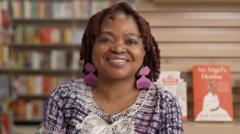

The transformation of contemporary African literature from marginalized regional curiosities to globally consumed streaming phenomena represents one of the most significant cultural shifts of the twenty-first century. At the heart of this evolution is a quiet yet profound reckoning regarding who holds the financial keys to creative production, the structural barriers facing independent authors across the continent, and the insatiable global hunger for authentic African narratives that resonate across cultural boundaries.
When Zimbabwean novelist Sue Nyathi took the immense financial risk of self-funding her debut novel, she did so in an industry fraught with systemic hurdles, geographic disadvantages, and a stark scarcity of institutional backing. Today, as her compelling exploration of polygamy finds a massive new audience through the global reach of Netflix, that entrepreneurial leap of faith has been vindicated on the world stage. Yet, her journey from a self-published debutante to an internationally recognized voice has sparked an urgent, overdue conversation across the literary community: in an era dominated by corporate conglomerates and high-stakes media acquisitions, exactly who can afford to write at all?
The Genesis of a Continental Masterpiece: Navigating the Complexities of The Polygamist
To understand the profound impact of Nyathi’s work, one must examine the socio-cultural landscape that birthed her storytelling. *The Polygamist*, a deeply nuanced exploration of marital dynamics, patriarchal expectations, and female agency within the framework of plural marriage, did not emerge from a vacuum. It was born from acute observation of African societal structures, where tradition frequently collides with modernity. Nyathi crafted a narrative that refused to caricature its subjects, choosing instead to dive headfirst into the psychological interiority of women navigating the precarious balance of sharing a husband.
In traditional African settings, polygamy has long been examined through either romanticized anthropological lenses or purely condemnatory Western viewpoints. Nyathi, however, bypassed these tired dichotomies. She focused intensely on the emotional economy of plural marriage—the quiet rivalries, the negotiated alliances, the solidarity found among co-wives, and the inescapable weight of societal expectations placed upon women to maintain domestic harmony at all costs. It is precisely this unflinching honesty that allowed the story to transcend its specific Zimbabwean setting, striking a universal chord with female audiences across the African continent and the diaspora.
When the adaptation rights were acquired and subsequently transformed into a visual phenomenon on Netflix, the characters that once lived quietly on the pages of a self-funded book were suddenly brought to vibrant, living color for millions of global viewers. For many women watching the screen, the experience was startlingly revelatory. They saw their own complex realities, their quiet compromises, and their hidden strengths reflected back at them with dignity and psychological depth.
The Economics of African Literature: The High Cost of Self-Funding
However, the celebratory narrative of a successful adaptation often masks a harsher, foundational truth about the economics of writing in contemporary Africa. Nyathi’s initial decision to self-fund her debut novel highlights a pervasive systemic failure within the traditional publishing ecosystem across much of the continent. Publishing infrastructure in many sub-Saharan nations remains critically underdeveloped, hampered by a lack of venture capital, weak distribution networks, high printing costs, and a general reluctance among risk-averse publishing houses to back unproven literary voices, particularly those addressing challenging social themes.
For an aspiring writer in Zimbabwe, South Africa, or anywhere else across the region, the path to publication is frequently paved with personal financial sacrifice. Writers must often choose between feeding their families and paying exorbitant fees for editing, proofreading, cover design, and self-distribution. This economic reality creates an invisible yet formidable gatekeeper: class. When the cost of producing a book falls entirely on the shoulders of the creator without institutional safety nets, writing risks becoming an exclusive luxury accessible only to those with independent wealth or stable corporate day jobs.
This dynamic raises a profound ethical and cultural question: how many brilliant, transformative stories are currently locked away in the minds of talented individuals who simply cannot afford the upfront costs of bringing them to light? The democratization of literature, often promised by the digital age, remains severely constrained by the hard realities of capital accumulation and disposable income. Nyathi’s retrospective inquiry—asking who can truly afford to write at all—strikes directly at the heart of global literary inequality. It challenges a system where the Global North maintains dominance over distribution, intellectual property valuations, and grant-making bodies, leaving African creators to fight for scraps in underfunded local markets.
The Streaming Revolution: Netflix as a Cultural Catalyst
The intersection of African literature and global streaming giants like Netflix represents a paradigm shift in how cultural products are consumed, validated, and monetized. Historically, African stories had to undergo a process of sanitization or exoticization to appeal to Western literary markets, which frequently demanded trauma porn or simplistic morality tales as the price of admission. The rise of African-led streaming content changes this equation entirely.
When a platform with the global reach of Netflix invests in adaptations of African literature, it bypasses traditional gatekeepers. It signals to international audiences that African narratives are not niche ethnographic studies, but rather compelling, universally relatable human dramas. The visual adaptation of *The Polygamist* allowed viewers who might never step foot in a bookstore to immerse themselves in the rich emotional textures of urban and peri-urban African life. The aesthetic choices, the linguistic cadences, the fashion, and the architectural backdrops all contributed to a multi-sensory validation of African modernity.
Moreover, this digital pivot offers a vital commercial lifeline to authors. While traditional book sales in local currencies can be severely undermined by inflation, currency devaluation, and limited retail infrastructure, global licensing deals and royalties from streaming adaptations provide creators with financial stability. This capital injection does more than reward past labor; it finances future creativity. It grants authors the luxury of time—the rarest and most valuable commodity in the creative process.
Societal Reflections: Why Women See Themselves in the Narrative
The profound resonance of Nyathi’s work among female audiences points to a deeper psychological and sociological phenomenon. Across many African societies, women have traditionally been expected to serve as the silent custodians of culture, tradition, and moral continuity. Their personal desires, frustrations, and internal conflicts are frequently subordinated to collective familial and societal expectations.
By placing the internal lives of women at the very center of the narrative, *The Polygamist* provides a mirror that reflects both the beauty and the burden of womanhood in changing societies. The characters grapple with jealousy, autonomy, economic survival, and the desire for genuine emotional connection within structures that were never explicitly designed to prioritize their happiness. When female viewers see these struggles depicted without moralizing or patronizing judgment, a powerful therapeutic and validating effect occurs.
Sociologists and cultural critics have noted that popular culture often acts as a safe conversational space for societies undergoing rapid transformation. Issues that are considered taboo or impolite to discuss openly over family dinner tables—such as the psychological toll of marital infidelity, the complexities of co-wife dynamics, and the subtle ways power is negotiated within patriarchal frameworks—can be safely explored through the shared experience of watching a television series or reading a novel. Nyathi’s work acts as a cultural lightning rod, sparking vital conversations in living rooms, coffee shops, and digital forums across the continent.
The Broader Economic and Political Implications for African Creative Industries
The success story of Sue Nyathi carries significant implications for regional economic policies and the broader creative economy across Africa. Governments and regional economic bodies have historically overlooked the creative and cultural sectors, viewing them as secondary leisure activities rather than primary drivers of gross domestic product and job creation. This shortsightedness starves the ecosystem of necessary infrastructure, tax incentives, and protective intellectual property legislation.
However, the explosive global appetite for African content demonstrates that storytelling is a major export commodity with immense economic potential. Countries that invest in their creative sectors—by establishing robust national film boards, subsidizing publishing houses, protecting copyright laws, and facilitating access to international markets—are positioning themselves to reap substantial economic rewards. The soft power generated by cultural exports like *The Polygamist* enhances national prestige, boosts tourism, and fosters a favorable environment for foreign direct investment.
Conversely, countries that fail to support their artists risk severe brain drain and cultural erasure. When writers and filmmakers are forced to self-fund their projects under crushing financial pressure, many simply abandon their creative pursuits altogether. The resulting cultural deficit is immeasurable. A nation that does not tell its own stories consigns itself to viewing its identity through the distorted lenses of foreign creators.
Global Perspectives: The Changing Landscape of International Publishing
On the global stage, the traditional publishing establishment is slowly waking up to the reality that the center of gravity in literature is shifting southward. For decades, the global literary canon was rigidly policed by publishing houses located in New York, London, and Paris. Manuscripts were evaluated based on how easily they could be marketed to Western sensibilities, often requiring extensive editorial compromises that stripped stories of their authentic local flavors.
The democratization of media production, accelerated by digital self-publishing platforms, social media marketing, and global streaming services, has severely disrupted this monopoly. Authors like Nyathi, who bypass traditional gatekeepers to find their audience directly, are proving that global readers are increasingly hungry for unmediated, authentic voices. International publishers are now finding themselves playing catch-up, desperately seeking out independent African successes to acquire and translate for global markets.
Yet, this globalization of African literature comes with its own set of complex challenges. There is an ongoing tension between the desire for global market appeal and the need to maintain absolute creative integrity. When multinational conglomerates enter the space, there is always a commercial temptation to homogenize local narratives, ironing out the difficult linguistic and cultural particulars in pursuit of mass, cross-cultural consumption. Authors navigating this terrain must exercise extreme vigilance to ensure their stories remain anchored in their authentic cultural contexts.
Expert Opinions: Navigating the Future of African Storytelling
Leading voices within the African literary and academic communities have been quick to analyze the broader ramifications of Nyathi’s trajectory. Cultural economists point out that the financial risk taken by early-career authors is symptomatic of a broader market failure that requires structural intervention from both the public and private sectors.
Renowned literary critics emphasize that while digital streaming and self-publishing have opened new doors, they cannot entirely replace the rigorous editorial development traditionally provided by professional publishing houses. An author self-funding a book often operates in an echo chamber, lacking the vital developmental editing, aggressive marketing, and distribution muscle that established institutions provide. Therefore, the goal cannot simply be to push all writers into the treacherous waters of self-funding, but rather to reform the domestic publishing industry so that indigenous publishing houses are financially empowered to invest in raw, untested talent.
Furthermore, educational institutions across Africa are being urged to integrate creative writing, media literacy, and the business of the arts into their curricula. By equipping young minds with not only the artistic skills required to craft a compelling narrative, but also the commercial acumen needed to navigate contracts, copyright law, and digital distribution, society can foster a sustainable generation of creative entrepreneurs.
Potential Future Consequences: Towards a Sustainable Literary Ecosystem
Looking ahead, the trajectory ignited by works like *The Polygamist* and their subsequent visual adaptations points toward several potential future scenarios for African literature. On an optimistic note, the proven profitability of African content is likely to attract increased venture capital and philanthropic investment into the continent's creative industries. Foundations focused on social development are beginning to recognize that funding the arts is not merely a charitable endeavor, but a crucial tool for social transformation, empathy-building, and political discourse.
We may see the emergence of localized venture funds specifically designed to provide micro-loans and grants to independent authors, shielding them from the crushing debt of self-funding. Additionally, as digital platforms expand their infrastructure across the African continent, local subscription models and localized content monetization are improving, allowing creators to earn sustainable livings directly from their immediate consumer base without relying exclusively on Western validation or international streaming payouts.
However, darker prognostications warn that without intentional structural reforms, the wealth generated by African stories may continue to be funneled primarily to foreign-owned media conglomerates, leaving local creators undercompensated relative to the immense value they generate. If the cost of entry into the writing profession remains prohibitively high, the literary landscape will remain elitist, silencing vital working-class and marginalized perspectives that lack the capital to break through the noise.
Conclusion: The Enduring Power of the Written Word
Sue Nyathi’s journey—from the solitary, financially precarious gamble of self-funding a debut novel about the intricate realities of polygamy to seeing those very characters come alive on screens worldwide—serves as both an inspiring triumph and a sobering cautionary tale. It underscores the extraordinary resilience, creativity, and emotional depth of African writers who refuse to be silenced by geographic disadvantage or institutional neglect.
Yet, her poignant question regarding who can afford to write at all remains an urgent challenge for governments, publishers, financial institutions, and global audiences alike. A society that truly values its literature must create the economic and systemic conditions that allow its storytellers to thrive without risking financial ruin. Until that ideal is realized, every published African book remains a testament not only to the talent of its author, but to an extraordinary act of economic defiance against overwhelming odds. As global audiences continue to look to Africa for fresh, authentic perspectives, the imperative to democratize the literary space has never been more critical to the cultural health of the continent and the world.


