
Rising Costs Threaten Africa’s Push for $30 Smartphones
The affordability gap is becoming a bigger obstacle to mobile internet use in Africa, with higher component, tax, logistics, energy and currency-related costs making low-priced smartphones harder to...

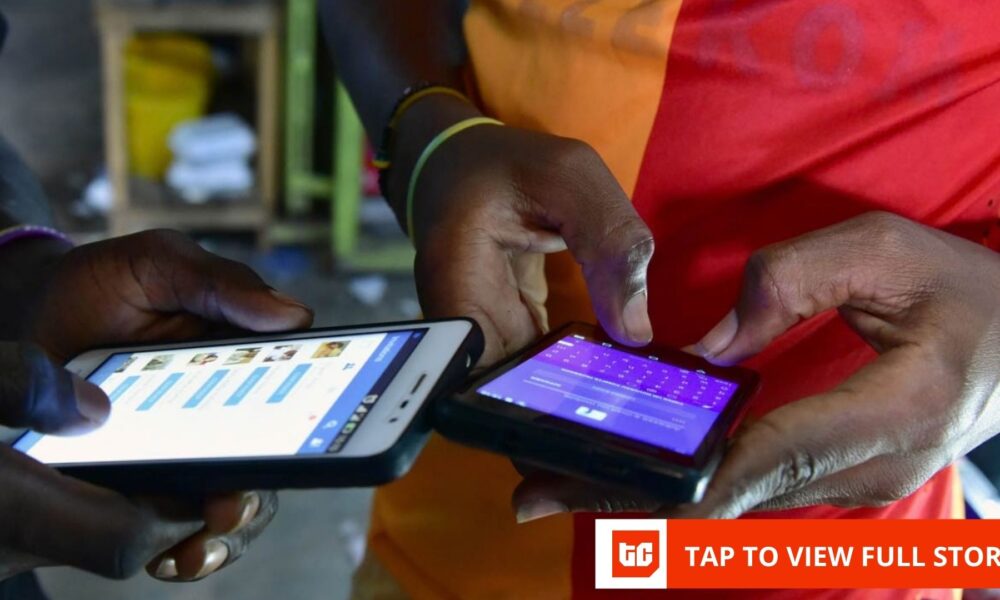
Africa’s mobile internet challenge is increasingly shifting from network availability to affordability, as rising device and operating costs make the goal of a smartphone priced at about $30 harder to achieve.
Table Of Content
The GSMA’s 2026 State of Mobile Internet Connectivity report says 906 million people in Africa—nearly 60% of the continent’s population—live within reach of 3G, 4G or 5G networks but remain offline. Globally, 3.1 billion people have mobile-broadband coverage but do not use mobile internet, while 3.4 billion people remain offline.
Caroline Mbugua, a senior GSMA official, said the continent had made substantial progress in expanding networks, but many people still could not afford the devices and services needed to use them.
“Africa has built the networks,” Mbugua said. “But not enough people can afford to use them.”
Device prices move higher
Costs across the smartphone supply chain have increased. Memory prices more than doubled between the third quarter of 2025 and the first quarter of 2026, before rising by a further 80% to 90% in the second quarter.
Omdia estimates that the average smartphone selling price in Africa increased by $41 year-on-year to $202. At the same time, shipments of smartphones priced below $100 declined by 34%.
Chipsets are also putting pressure on manufacturers seeking to produce cheaper devices. Mbugua said the price of chipsets was the biggest challenge in reaching a $40 price point, adding that “the prices have skyrocketed.”
Foreign-exchange movements, logistics, taxation and other supply-chain expenses can further raise the final price paid by consumers. For the poorest households in Sub-Saharan Africa, the burden is particularly severe.
According to GSMA affordability analysis, an entry-level internet-enabled handset represented 44% of average monthly income for the poorest 20% of people in low- and middle-income countries by the end of 2025. In Sub-Saharan Africa, the figure reached 76% for the poorest fifth of the population.
Coverage has not translated into use
Mbugua said only 25% of the population in Sub-Saharan Africa uses mobile internet, while 66% lives within mobile-broadband coverage but does not use it.
That gap exists even as coverage has expanded across the continent. About 97% of Senegal’s population is reached by 4G, along with approximately 98% of Uganda’s population and more than 80% of Nigeria’s population.
Affordability is not the only barrier. Data prices, digital skills, electricity reliability, network quality, fraud and safety concerns, language barriers and limited local content can also affect adoption.
“It’s almost as if the government has built a road, but there’s no car on it,” Mbugua said, warning that networks may deliver limited economic returns when people cannot afford devices or services.
Policy options
GSMA modelling has estimated that a $30 entry-level smartphone could potentially be affordable for almost 1.6 billion people living within mobile-broadband coverage. A $20 device could potentially reach about 2.2 billion people in the same situation. The estimates describe affordability potential, not guaranteed purchases or usage.
Mbugua identified spectrum, taxation and energy as three areas where governments can influence connectivity costs. Energy can account for up to 30% of a mobile operator’s operating expenditure in some markets, while spectrum charges can add to the cost of providing services.
“Governments in the region continue to treat spectrum as a revenue resource, a revenue earner,” she said. “At the end of the day, these costs are passed on to the consumer.”
The GSMA recommends longer spectrum licence terms, local-currency pricing where appropriate, staggered payments and coverage obligations to reduce large upfront fees. It also supports lower taxes on entry-level smartphones, device-financing schemes, improved distribution, a stronger second-hand market and measures to reduce network operating costs.
South Africa removed a 9% excise duty on smartphones priced below 2,500 rand in April 2025. The GSMA reported that entry-level smartphone sales rose by 80% during the following 11 months, although Mbugua acknowledged that the increase cannot be attributed entirely to the tax change.
The GSMA expects Africa to attract $76 billion in mobile-network investment between 2025 and 2030. It argues that coordinated action by governments, operators, manufacturers and financial institutions will be needed to ensure that network expansion is matched by affordable access.





No Comment! Be the first one.