
Lamu Refinery Project Faces Protests Over Land and Environmental Concerns
Ground has been broken for a planned $16 billion refinery on Kenya’s Lamu Island, where residents and environmental organisations are challenging the project over land rights, public participation...

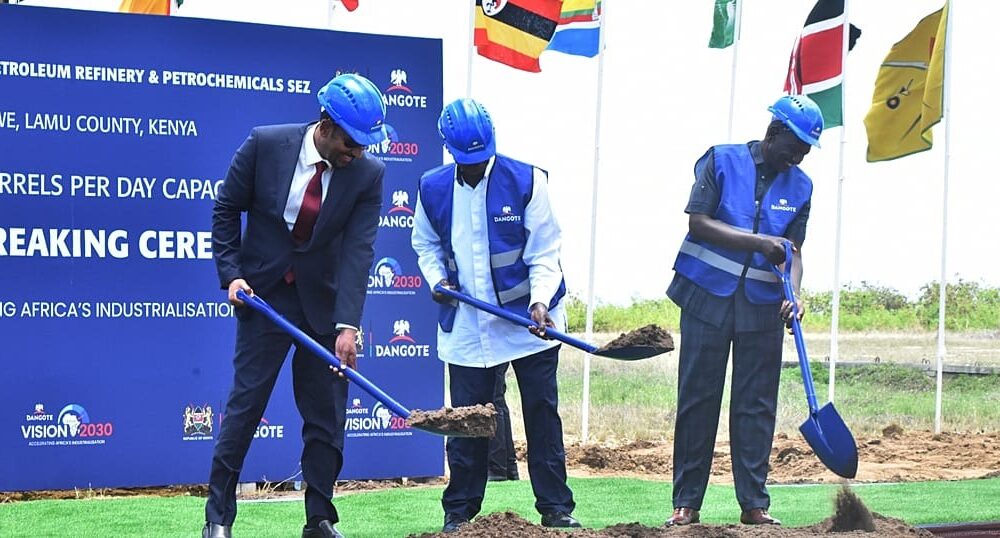
Ground has been broken for a planned $16 billion refinery on Kenya’s Lamu Island, opening a new phase in a project that has drawn promises of industrial growth as well as protests over land rights, the environment and local livelihoods.
Table Of Content
Nigerian businessman Aliko Dangote participated in Wednesday’s groundbreaking alongside multiple heads of state. The refinery is described as Africa’s second-biggest and is being presented as Kenya’s largest industrial project to date.
Dangote’s company plans to have the facility operating by 2030. Project proponents have also promised 60,000 direct and indirect jobs and a training centre for 1,000 young people.
Residents challenge the project
The development has faced opposition in Lamu, a coastal destination known for its 12th-century Old Town, traditional dhow sailing boats and beaches.
Dozens of people gathered in Lamu Old Town on Tuesday to protest, chanting “Haki Yetu”, which means “Our rights”. Some people have also taken the project to court because they fear their land rights will not be respected. The report does not state the outcome of those court challenges.
Aliko Dangote described opponents as “people who don’t want the development of Africa”. He also said: “Anybody who wants to cause trouble, we are ready for his trouble and will give him a headache.”
President William Ruto has promised that a rigorous environmental study will be carried out and told residents: “Your rights will be protected. Your voice will be heard.” He referred to people challenging the project in court as “extortionists”.
Concerns over consultation and the coast
Environmental organisations, including Greenpeace, say the refinery threatens to damage one of East Africa’s most fragile coastal ecosystems. The project has been described as a fossil fuel complex, raising concern among groups focused on the island’s coastal environment.
Salwa Mahmoud questioned the timing of the environmental review, saying, “The study was to be conducted before the excavation and digging.” She also said promises made by President Ruto had yet to be fulfilled.
Khelef Khalifa said negotiations should have taken place before the project was agreed, stating: “You don’t negotiate after signing a contract. You negotiate before.”
Said Hassan said there had been no public participation and that communities had not been involved from the beginning. “It is too late,” Hassan said, adding that residents did not believe all the promised measures would be implemented.
Livelihood fears
Fishermen and tourism workers are among those concerned about the project’s possible effect on their incomes. Tourism operator Famau said tourism supports 90 percent of the island.
“Tourists come here for the culture,” Famau said. “Not for the oil tankers.”
Lamu is also known for its beaches and is visited by celebrities including Mick Jagger, Kate Moss and the Obamas. Cars are described as non-existent on the island, with transport mostly taking place by donkey.
The idea of building a Dangote refinery in East Africa was first raised in April, while Lamu was selected as the site in July. The rapid selection of the location has added to concerns about consultation among residents and community organisations.
The project’s promised jobs and training opportunities have attracted interest, but it remains unclear whether those commitments will be delivered or how they will be allocated. Environmental organisations and local residents continue to raise concerns, while the government has pledged to protect their rights and conduct an environmental study.




No Comment! Be the first one.