
Dangote Refinery IPO to Test Nigeria’s Capacity for Startup Exits
Dangote Refinery’s proposed IPO is being watched as a test of whether Nigeria’s public markets have enough liquidity to support venture-backed startups seeking exits.


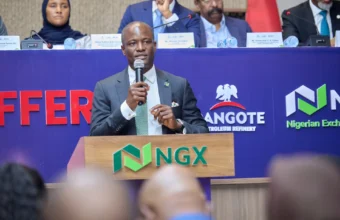
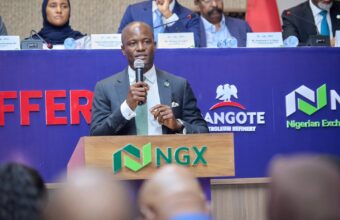
Dangote Refinery’s proposed initial public offering is set to test whether Nigeria’s public markets can absorb a major fundraising and eventually provide a credible exit route for venture-backed startups.
Table Of Content
The refinery is seeking up to $1.62 billion through an offering of 4.1 billion shares. It is also targeting as many as 10 million retail investors through digital investment platforms, according to the available information.
If completed successfully, the transaction could rank among the largest liquidity events in Nigeria’s stock-market history. It could also add approximately $60 billion to the Nigerian Exchange’s equity-market capitalisation, although the final outcome will depend on pricing and investor participation.
A test for local liquidity
The proposed offering is significantly larger than the fundraisings typically associated with Nigerian startups. It is approaching half the amount Nigerian banks raised during their largest capital-raising exercise, which generated ₦4.65 trillion, or $3.49 billion, over 24 months. Local investors contributed $2.54 billion to that exercise.
That scale has turned the Dangote transaction into a closely watched test of the depth of Nigeria’s public markets. A strong response from retail and institutional investors could provide evidence that sufficient domestic capital exists to support companies as they move from private funding to public ownership.
Nigerian Exchange Limited operates a Growth Board for smaller, growth-focused companies and a Technology Board for technology businesses seeking to raise capital and list publicly. The Nigerian Startup Act also contains provisions intended to facilitate listings for labelled startups. However, no Nigerian startup has yet completed a venture-capital-backed IPO.
Mergers and acquisitions remain the main exit route for venture-backed companies in Africa. The continent recorded 63 such deals in the first half of 2026, while the African Private Capital Association recorded only one venture-capital-backed IPO exit in Africa in 2025.
Barriers for technology companies
Industry advisers say a successful refinery listing would not automatically resolve the challenges facing startups that may consider the Nigerian Exchange.
A 2025 report by TLP Advisory found that 53% of surveyed founders had not considered an NGX listing. The firm also reported that 76.5% of funded startups raise capital in US dollars even though much of their revenue is generated in naira. That mismatch can create difficulties for companies seeking dollar-denominated returns while operating in a currency exposed to depreciation.
TLP Advisory has also argued that public-market investors in Nigeria often rely on measures such as price-to-earnings ratios and dividend yields, which may not fit high-growth technology companies as neatly. In one illustrative calculation, the firm said a private technology company valued at $100 million could potentially be valued at $60 million on the NGX.
JP Morgan has pointed to the deeper and more diversified investor base in US public markets, where investors are generally more willing to accept risk and favour growth and innovation. The United States recorded 44 venture-capital-backed IPOs in 2026, according to the source, compared with 50 in 2025, a figure it is on track to surpass.
Retail participation and market concentration
Nigerian retail investors have shown they can participate in large public offerings. The MTN Nigeria offer was oversubscribed by 139.7% and attracted 126,720 retail investors. The Dangote proposal, however, is targeting up to 10 million retail participants against an estimated 2.7 million retail investors currently in Nigeria.
The listing could also increase concentration on the Nigerian Exchange. With the market’s equity capitalisation at ₦163.11 trillion, or $122.72 billion, as of September 30, an estimated $60 billion addition could push the total closer to $200 billion while leaving Dangote Refinery accounting for about one-third of the market.
The offering is expected to cost at least $31.22 million and involve more than 50 investment intermediaries. Its success, however, remains uncertain, as final pricing, completion and the level of investor demand have not been stated.
Nigerian Exchange Group says reforms introduced since 2023 have improved price discovery and capital mobility. In April, Group Managing Director Temi Popoola said: “Nigeria’s markets are not yet frictionless, but they are no longer static.”
For Nigerian founders and investors, the proposed Dangote IPO may therefore serve as an important indicator—but not a guarantee—that public listings can eventually complement acquisitions as an exit option.




No Comment! Be the first one.