
Kenyan Survivors Challenge British Military Immunity Over Alleged Abuses
Kenyan survivors and lawyer Kelvin Mugambi Kubai are challenging sovereign-immunity claims involving the British Army Training Unit Kenya as disputes continue over alleged abuses, compensation and...

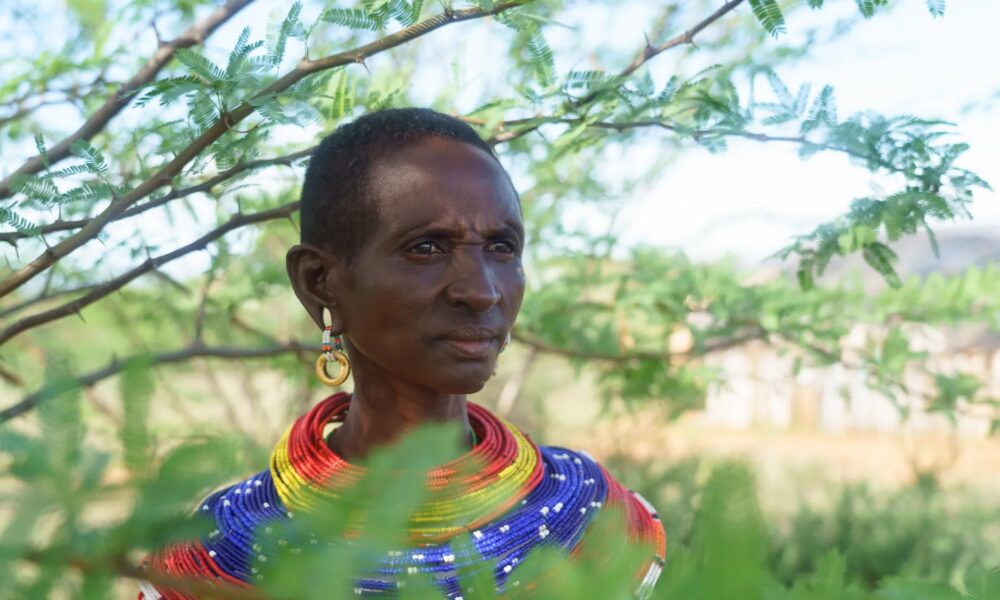
Kenyan survivors and lawyer Kelvin Mugambi Kubai are challenging the British Army Training Unit Kenya’s reliance on sovereign immunity as they seek accountability for alleged abuses linked to British military training.
Table Of Content
The allegations span decades and include sexual violence, deaths, injuries caused by unexploded ordnance, road collisions, environmental damage and children allegedly fathered and abandoned by British personnel. The disputes have also exposed unresolved questions over compensation, jurisdiction and the future of the UK-Kenya defence relationship.
Cases spanning decades
In Samburu County, Noldonyo Piro said a British soldier attacked her in the mid-1990s while she was herding livestock. She said the man broke her arm and raped her, while her pregnant sister, Mantoi Lekoloi Kaunda, was found dead nearby.
Kenyan investigators later exhumed Mantoi’s body. A pathologist cited in the investigation reported seven unhealed rib fractures and injuries indicating considerable force had been applied to her back. An unidentified pubic hair was also recovered, while a Royal Military Police interim summary recorded that a British military-type battery had been found about two feet above the grave.
No one has been charged over Mantoi’s alleged murder. It remains unclear whether forensic testing was completed or whether DNA comparisons with British soldiers were carried out. Kenyan investigator Gideon Kibunja said the findings supported Piro’s account that the sisters had been attacked by a British soldier.
A Royal Military Police investigation known as Operation Tasker, launched in March 2003, recorded more than 2,000 allegations of rape and sexual violence involving British soldiers over the preceding four decades. The United Kingdom Ministry of Defence said in 2006 that the investigation found no reliable evidence supporting any single allegation and that no one was prosecuted.
Other cases include the death of Robert Swara Seurei in 2007 after an object taken from a BATUK training area exploded. The Ministry of Defence said liability was admitted in 2008 and that the family’s claim was settled in 2010.
Agnes Wanjiru was last seen in 2012 at a Nanyuki hotel with British soldiers. Her body was found two months later in a septic tank. A Kenyan inquest in 2019 concluded that she had been unlawfully killed by one or more soldiers. Former UK soldier Robert James Purkiss has been charged in Kenya and is contesting extradition in the United Kingdom. He denies the charge.
Immunity and compensation disputes
In 2021, a fire during a British military training exercise at Lolldaiga Conservancy in Laikipia scorched about 12,000 acres of grazing land and crops, killed livestock and sent smoke across nearby communities.
Kubai filed a class-action lawsuit on behalf of affected residents. In March 2022, Kenya’s Environment and Land Court ruled that the UK had waived immunity to the extent set out in the defence agreement. The court nevertheless required claimants to first use the Intergovernmental Liaison Committee mechanism established under the agreement.
The UK later agreed to pay £2.9 million to 7,723 claimants under a confidential settlement that included no admission of liability for the fire. Kubai has argued that the agreement expressly waived immunity and is seeking a permanently staffed BATUK claims office in Nanyuki, as well as legal support for victims unable to afford representation.
Chaula said she was struck by a speeding BATUK vehicle in 2019 and suffered injuries that included the amputation of her right leg. The Ministry of Defence said it was aware of the claim and that a compensation offer had been made, although the amount and timing were not disclosed. Ruth Getobai Nchagwa of the Kenya National Commission on Human Rights said the case had not been addressed by the commission and that it was not aware of discussions about compensation.
Unresolved defence agreement
A 94-page inquiry by a Kenyan parliamentary defence committee documented allegations of shootings, rape, deaths and injuries caused by unexploded ordnance, and children allegedly fathered by British soldiers. Witnesses also alleged that police files disappeared and complainants were intimidated, claims the Ministry of Defence said were not supported by evidence in its possession.
The committee said some affected residents viewed BATUK as an occupying presence rather than a development partner. The unit trains approximately 10,000 soldiers each year in Laikipia and Samburu.
Kenya’s Parliament conditionally approved a replacement defence agreement in 2023, requiring murder to be added to offences over which Kenyan courts would have primary jurisdiction. The UK did not accept that condition, and Kenya has not completed ratification. The 2015 agreement therefore continues to govern the relationship pending the 2021 agreement’s entry into force.
On August 12, survivors, bereaved families and residents from communities affected by BATUK marched to Parliament and petitioned lawmakers not to ratify the agreement until the alleged abuses were addressed. The Ministry of Defence said BATUK is responding to concerns raised by Kenyan authorities and communities, cooperates with local authorities and Kenyan police, and submits to Kenyan court jurisdiction where claims are made.





No Comment! Be the first one.