
Renewed Tigray Fighting Exposes Ethiopia’s Federalism Dispute
Renewed fighting in and around Tigray has brought Ethiopia’s unresolved debate over regional autonomy, federal authority and disputed territory back into focus.

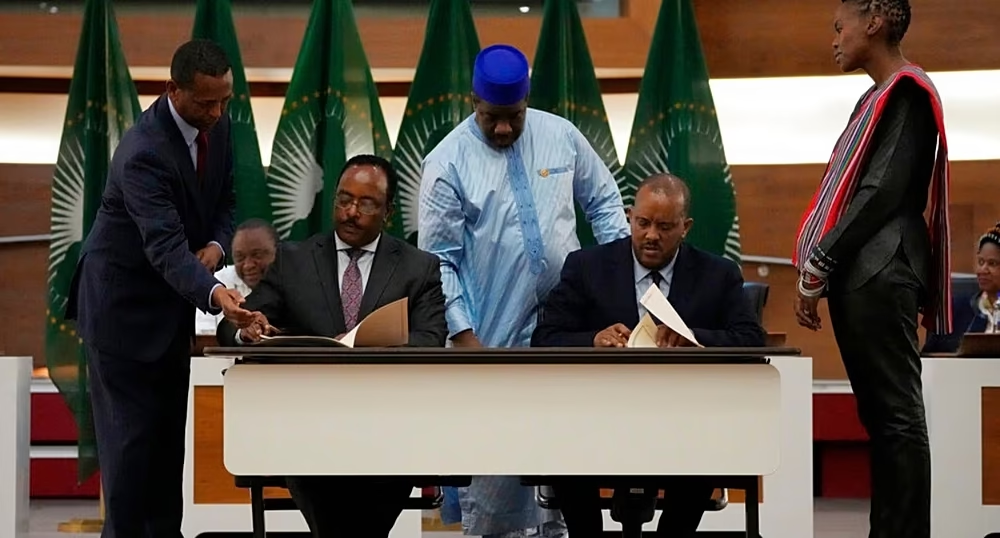
Renewed fighting in and around Ethiopia’s Tigray region has revived unresolved disputes over regional autonomy, federal authority, territory and political representation, nearly four years after a peace agreement ended large-scale hostilities.
Table Of Content
Ethiopian officials said Tigrayan forces had seized control of airports in the northern region and that clashes had been reported in Tigray, Afar and Amhara. Tigrayan authorities said their actions were a response to attacks by federal forces, while the federal government described the military activity as an offensive.
The competing accounts have not independently established which side triggered the latest escalation. No current casualty figures, or a detailed count of the airports involved, have been provided.
A federal system under strain
Ethiopia’s current multinational federal system was established in the 1990s after the fall of Mengistu Haile Mariam’s military government. The 1995 constitution divided the country into regional states and recognised the rights of its “nations, nationalities and peoples”.
Article 39 provides rights to self-determination, including a constitutional route to secession, as well as protections for language, culture and self-government. The system was intended to give Ethiopia’s diverse communities a measure of political authority in their own regions, but disputes over the limits of that authority have remained central to national politics.
The Tigray People’s Liberation Front was the dominant force in Ethiopia’s ruling coalition for about three decades before Prime Minister Abiy Ahmed came to power in 2018. Relations between the federal government and Tigray deteriorated after national and regional elections were postponed because of the COVID-19 pandemic. Tigray held its own regional election in September 2020, which the federal government rejected.
Peace agreement left key issues open
The war in Tigray lasted two years and caused hundreds of thousands of deaths, according to estimates cited by the African Union and international organisations. The November 2022 Pretoria agreement ended large-scale fighting, but did not settle all questions surrounding territory, displacement, accountability and political authority.
Western Tigray, also known as Welkait, remains linked to competing Tigrayan and Amhara claims and was a major area of fighting during the war. Its future administration and the status of displaced populations are among the issues that continued to complicate the post-war political landscape.
The renewed violence also comes amid wider disputes over the organisation of security in Ethiopia. In 2023, the federal government announced plans to dismantle regional special forces and integrate them into federal or regional security structures, saying the move would help create a more coherent national security system.
Fighting subsequently broke out between federal forces and Fano groups in Amhara and has continued. Fano is a collection of Amhara armed groups and networks rather than a single organisation with one universally recognised command structure. In Oromia, the Oromo Liberation Army has fought government forces, and the federal government considers it a security threat.
Opposition alliance
On 20 September, seven Ethiopian armed and political groups announced an alliance seeking to remove Abiy’s government. The alliance includes the TPLF, the Amhara Fano National Movement and groups from Oromia, Afar and Benishangul-Gumuz. It said it opposed what it described as excessive centralisation of power and the marginalisation of Ethiopia’s regions.
The federal government accused the alliance of receiving support from Eritrea, an allegation Eritrea denied. The alliance’s formation does not establish that its members share a single political programme; the groups have different histories, territorial interests and political objectives, and some previously fought on opposite sides.
Abiy’s government has increasingly emphasised national cohesion and stronger federal institutions. Analysts, however, have argued that Ethiopia’s political disputes require an inclusive national dialogue and constitutional discussion addressing the future of federalism, transitional justice and the role of armed groups in political competition.
The latest clashes underline the difficulty of resolving Ethiopia’s conflicts through military outcomes alone. The country’s disputes involve historical grievances, contested territories, political competition, economic interests, security concerns and decisions by political and military actors. The fighting around Tigray has brought those unresolved pressures back to the centre of national politics.




No Comment! Be the first one.