
DR Congo Ebola Death Toll Passes 4,000 as Containment Efforts Falter
The Democratic Republic of Congo’s Ebola outbreak has surpassed 4,000 reported deaths, with insecurity, weak infrastructure and mistrust hindering efforts to contain the disease.
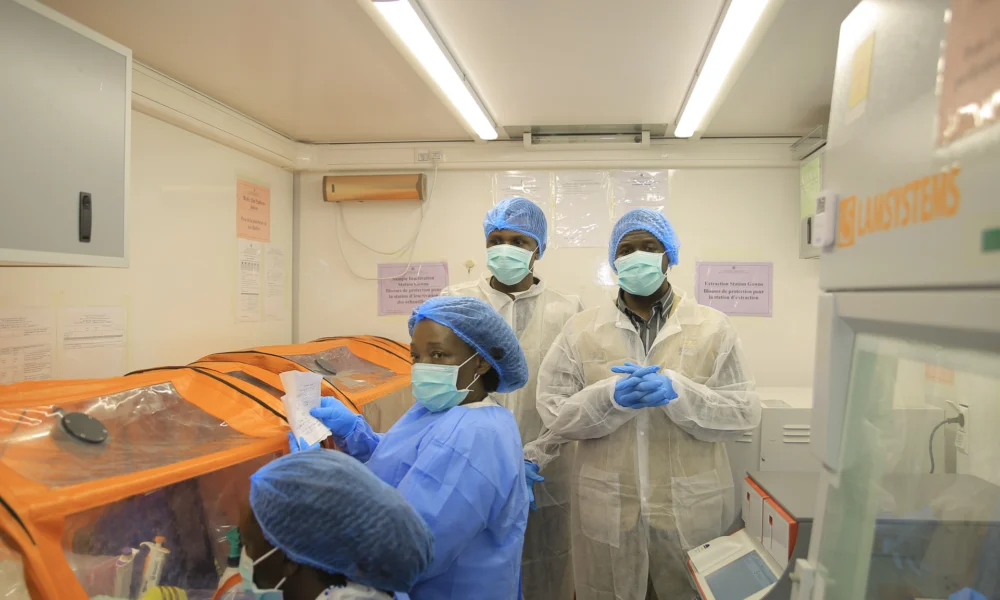
The Democratic Republic of Congo’s Ebola outbreak has passed 4,000 reported deaths, according to government figures released on Friday, as violence, mistrust and logistical difficulties continue to obstruct the response.
The data recorded 4,018 deaths and 8,300 confirmed cases across seven provinces. The outbreak, caused by the Bundibugyo strain, is the country’s 17th and has become its largest and deadliest after surpassing the 2018–2020 epidemic.
Conflict and displacement complicate response
Health authorities have faced major challenges reaching affected communities quickly. Weak infrastructure, the remoteness of eastern Congo and continuing conflict involving armed groups have all hindered efforts to identify and respond to cases.
The United Nations reported that soldiers searching for weapons burned an Ebola-affected camp containing a transit centre for infected patients on the outskirts of Bunia in Ituri Province earlier this week. The incident forced 19,000 people to flee the camp.
The United Nations said the destruction of the centre made the challenge of slowing the outbreak even more difficult. Ituri has been identified as the epidemic’s epicentre, while North Kivu province remains another hotspot.
Public anger and mistrust directed at health workers and authorities have also made it harder to contain transmission. In Butembo, local official Marie-Celestin Karondwa was beaten to death after appearing on a radio programme to raise awareness about the epidemic. His home was later set on fire.
Concerns over reported decline in cases
The Africa Centres for Disease Control and Prevention said the number of confirmed cases was falling. However, it cautioned that the decline could be linked to insecurity and difficulties in securing cooperation from communities in outbreak hotspots, rather than a clear reduction in transmission.
The World Health Organization has warned that the epidemic is “far from over” and is on course to exceed the 2014–2016 Ebola outbreak in West Africa, which killed more than 11,000 people, mainly in Guinea, Liberia and Sierra Leone.
The current outbreak was officially declared on May 15 and has spread rapidly since then. More than 2,000 patients have reportedly recovered, but several treatments and vaccines are still being trialled against the Bundibugyo strain.
There is currently no approved vaccine or treatment for that strain, according to the available information.




No Comment! Be the first one.