
Bio Urges Africa to Put Its Interests First in Global Partnerships
President Julius Maada Bio has called on African countries to ensure international partnerships deliver skills, jobs, stronger local businesses and industrial development.

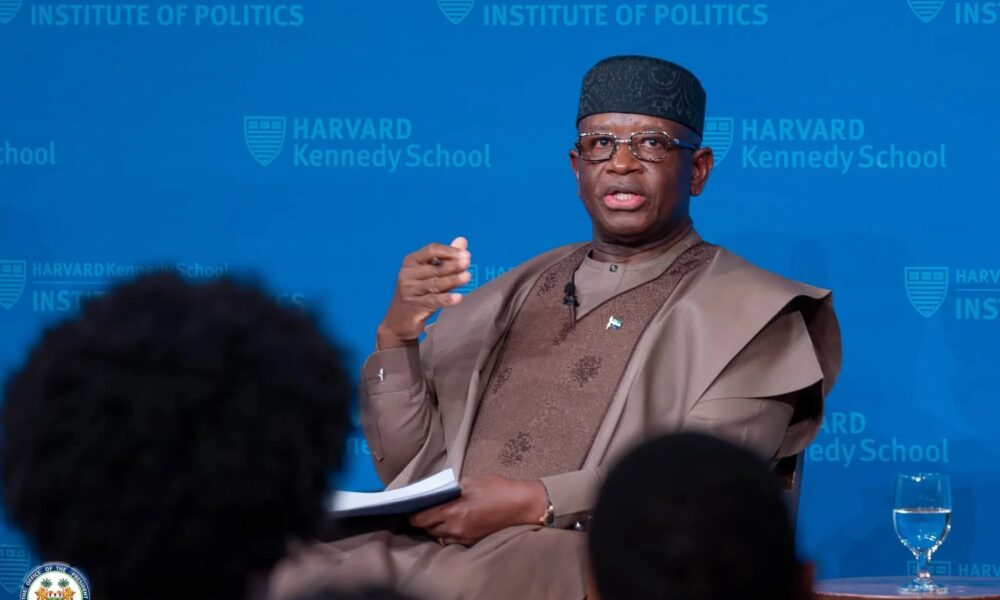
President Julius Maada Bio has called on African countries to place their own interests at the centre of relationships with international partners, saying agreements should produce practical benefits for citizens and economies.
Table Of Content
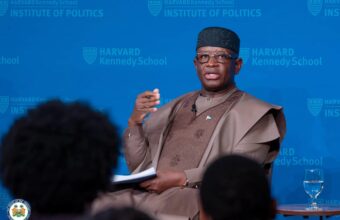
He made the appeal on Tuesday, September 29, 2026, while delivering a keynote address at the John F. Kennedy Jr. Forum at Harvard Kennedy School in the United States.
Bio said African governments should assess partnerships by asking whether they build skills, create employment, strengthen local businesses, support industrial development and improve the continent’s ability to make independent decisions.
Africa’s role in a changing world
The Sierra Leonean president said Africa’s importance was increasing amid competition among major powers, climate change, artificial intelligence and pressure on public trust in institutions. However, he cautioned that international attention directed towards the continent should not automatically be confused with influence.
He also argued that the presence of natural resources alone could not guarantee prosperity. In his view, partnerships involving major projects should be negotiated more effectively when they provide quick revenue but create few jobs locally or leave African professionals unable to maintain the technology introduced.
“For too long, the world has asked: What should we do about Africa?” Bio said. “This evening, I want to ask a different question, beginning with us: What will Africans do with our growing power?”
He linked Africa’s future to decisions taken by its leaders and citizens on governance, economic development and engagement with the wider world.
Governance and youth development
Bio referred to Sierra Leone’s 1996 elections, which took place during the country’s civil war despite calls from some quarters to delay the process. He said the elections did not end the conflict but established the principle that Sierra Leoneans should have a voice in choosing their leaders, even during uncertainty.
He also discussed measures undertaken by his administration, including Human Capital Development, Free Quality School Education and the Gender Equality and Women’s Empowerment Act.
According to Bio, Africa’s demographic dividend will depend on sustained investment in education, practical skills and economies capable of creating opportunities. He said young Africans should be equipped to develop and apply artificial intelligence to challenges in their own societies while also benefiting from its economic value.
His remarks also covered accessible justice, accountable institutions, political dialogue and constitutional order. He said political leaders should protect institutions, avoid treating opponents as enemies and ensure that citizens receive fair opportunities.
Regional integration and global representation
Bio addressed the departure of Mali, Burkina Faso and Niger from the Economic Community of West African States, describing the development as evidence of a serious loss of confidence in the regional bloc. He said ECOWAS should remain open to their return.
He called for deeper cooperation among African countries and identified the African Continental Free Trade Area as an opportunity to build a market serving more than one billion people. He said the agreement’s potential would depend on reducing unnecessary delays in cross-border trade.
Critical minerals were another focus of the address. Bio said African communities should benefit from the sector through employment, knowledge transfer and wider economic prosperity.
On relations between Africa and the United States, he said restrictions on study and travel had narrowed opportunities for exchanges, including for Sierra Leoneans. He also called for stronger African representation in global institutions, including reform of the United Nations Security Council.
Bio later held discussions with student leaders at Harvard University’s Center for African Studies, where he shared his vision for engaging African students at leading universities and preparing them for future leadership in government and the private sector.
He thanked Zoe Marks, Oppenheimer Faculty Director, and Chidi Blyden, Executive Director of the Center for African Studies, for facilitating the engagement.
Responding to whether Africa should align with the East or West, Bio said: “Africa will be pro-Africa.” He concluded: “Africa’s future will be shaped by Africans. And the measure of our success will be found in the lives of our people.”

No Comment! Be the first one.