
Sierra Leone Judiciary Shares War Crimes Court Experience with Liberia
Sierra Leone judicial officials have discussed transitional justice, specialized courts and anti-corruption prosecutions with a Liberian delegation examining plans for a War and Economic Crimes Court.

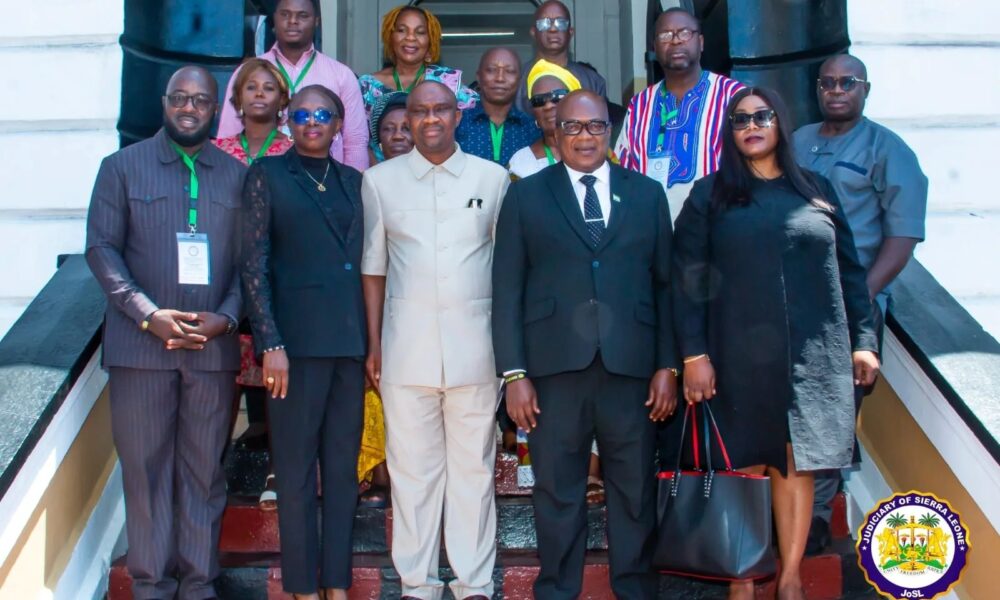
Sierra Leone’s Judiciary has shared its experience in transitional justice and specialized prosecutions with a Liberian delegation considering the establishment of a War and Economic Crimes Court.
Table Of Content
The delegation was received at the Chief Justice’s Chambers in Freetown on September 30 by Court of Appeal Judge Justice Jamesina E.L. King, who represented Chief Justice Komba Kamanda.
Discussions focused on Liberia’s plans for the proposed court and on lessons from Sierra Leone’s post-war accountability process. Justice King said Sierra Leone was prepared to share its expertise and experience, while emphasizing that Liberia would need to develop a process suited to its own circumstances and nationally owned.
Resources and institutional support
Justice King described Liberia’s initiative as laudable but cautioned that establishing and operating a War and Economic Crimes Court would require considerable resources, sustained commitment and adequate institutional support.
She also said Chief Justice Kamanda remained willing to provide experience, expertise and support to Liberia as the initiative develops.
According to Justice King, Sierra Leone and Liberia have similar histories involving devastating civil conflicts, widespread atrocities and suffering. She recalled that the Special Court for Sierra Leone was created through an agreement between the Government of Sierra Leone and the United Nations to prosecute people bearing the greatest responsibility for serious violations committed during Sierra Leone’s civil war.
She said the Special Court brought several accused persons to justice, with a number of those indicted later convicted. Some people convicted by the court continue to serve their sentences outside Sierra Leone because of security considerations associated with the trials.
Lessons from specialized courts
Justice King also pointed to Sierra Leone’s experience in handling corruption-related offences. Before relevant legislation was enacted, such matters were prosecuted through the Office of the Attorney-General. Sierra Leone later introduced specialized mechanisms, including the Anti-Corruption Court, where trained and experienced judges handle cases brought by the Anti-Corruption Commission.
She said those mechanisms offered a more focused approach to corruption-related offences, providing another area of experience that could inform Liberia’s considerations.
Court of Appeal Judge Justice John Bosco Allieu addressed the importance of accountability and healing in societies emerging from conflict. He said the effects of war continued after the fighting ended, particularly for families who lost loved ones and people who suffered permanent injuries.
“Many people were maimed and disabled as a result of the war,” Justice Allieu said.
High Court Judge Justice Isata Susan Sellu Tucker encouraged the Liberian delegation to pursue further engagements in Sierra Leone and consult other relevant institutions as it examines the proposed court.
Liberian delegation welcomes engagement
Rev. Amnimadab K. John, head of Liberia’s Office of War Crimes, expressed appreciation for the discussions and for the opportunity to learn from Sierra Leone’s experience.
Rev. John also said religious leaders in Liberia had joined efforts to help pioneer the War and Economic Crimes Court initiative.
The engagement did not set out a timetable or legal framework for the proposed Liberian court. It provided an opportunity for Liberia’s delegation to learn from Sierra Leone’s experience with post-war accountability, court administration and anti-corruption institutions, while Sierra Leone reiterated its willingness to offer further assistance.



No Comment! Be the first one.