
Cameroon Families Demand Justice as Femicide Reports Increase
Families and rights groups in Cameroon are calling for stronger action against gender-based violence as reports of femicide rise and lawmakers prepare to consider a bill creating a separate offence...

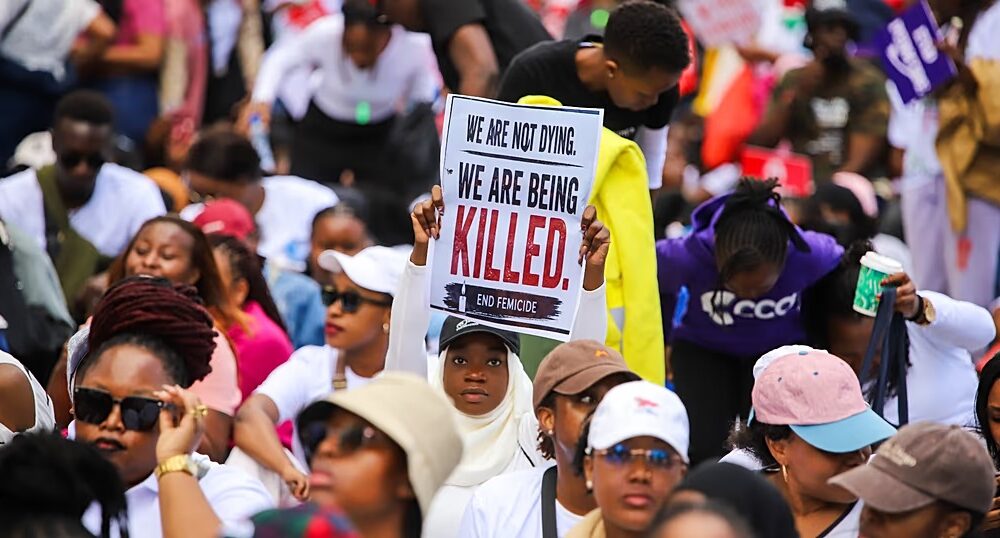
Families and rights groups in Cameroon are demanding accountability over reported femicides as pressure grows on the government to strengthen protection for women and improve access to justice.
Stop Feminicides 237 says at least 56 women have been killed in the country since the beginning of 2026. Separately, the Ministry for Women and the Family reported around 50 femicides between January and April. The figures come from different periods and sources, and no independently verified national total has been established.
The ministry has announced that Parliament will consider a bill during its November session to recognise femicide as a separate crime from murder. The proposed legislation has been under preparation for several years and has received broad support.
Teacher’s death draws attention
The case of Geraldine Achia has become a focus of calls for justice. Achia, a teacher in her 30s, was beaten to death between September 5 and 6. Her husband is the prime suspect and remains in detention after being arrested more than 300 kilometres from Yaounde several days after her death. He denies killing her.
Achia had met her husband in December and married him in a traditional wedding in July, according to the reported account. Her older sister, Regina Mbatiabuh Ngukum, said she found photographs on Achia’s phone showing her face covered in bruises.
“I saw her disfigured face, covered with bruises from the blows, her mouth torn up and her jaw broken,” Ngukum said.
The husband’s account of an argument after Achia returned from a night out with a half-empty beer bottle has been disputed by her sister.
Achia’s only son, 18-year-old Courage Anushuni, described the loss as overwhelming. “Having lost my mother is a nightmare. The shock is overwhelming. I cannot believe what happened,” he said, adding that he wanted “that justice be done.”
Calls for stronger protection
Stop Feminicides 237 also reported that nearly 10 women were killed during the previous month. Ministry figures cited in the report show 56 femicides in 2023, 67 in 2024 and 77 in the previous year.
Senator Francoise Puene attributed the increase to several factors, including the economic crisis, the aftermath of the Covid-19 pandemic and increased reporting by women. Viviane Tathi Yende of Stop Feminicides 237 cited alcohol and drug abuse, economic pressures, tensions between traditional and modern ways of life and a perception of impunity.
Psychiatrist Laure Justine Menguene said patriarchal attitudes and violent forms of education also contribute to violence against women.
Cameroon’s current law does not treat femicide as a distinct offence. Investigating magistrate Martine Ahanda Tana said that, without a specific law, judges rely on the facts presented and the criminal code. She said a separate legal definition could help ensure that the killing of women is punished appropriately.
“As long as there is no specific law, each judge will base their rulings on the facts presented to them and the criminal code,” Tana said.
Human Rights Watch has urged Cameroonian authorities to take immediate action against gender-based violence, saying women, including domestic violence victims and survivors, have limited protection and access to justice. The opposition MRC party has accused the government of what it called “criminal passivity.”
Ajara Nchout Njoya, a star striker for Cameroon’s national women’s football team, said: “Being a woman in Cameroon should never be a risk.”
The United Nations has reported that Africa has the world’s highest femicide rate, at three cases per 100,000 women, compared with 0.5 per 100,000 in Europe.


No Comment! Be the first one.