
Mekelle Comes Under Federal Control as Tigray Conflict Escalates
Ethiopian federal forces and allied Tigray Peace Force fighters have taken control of Mekelle after the TPLF withdrew, raising fears of renewed displacement and a wider conflict.

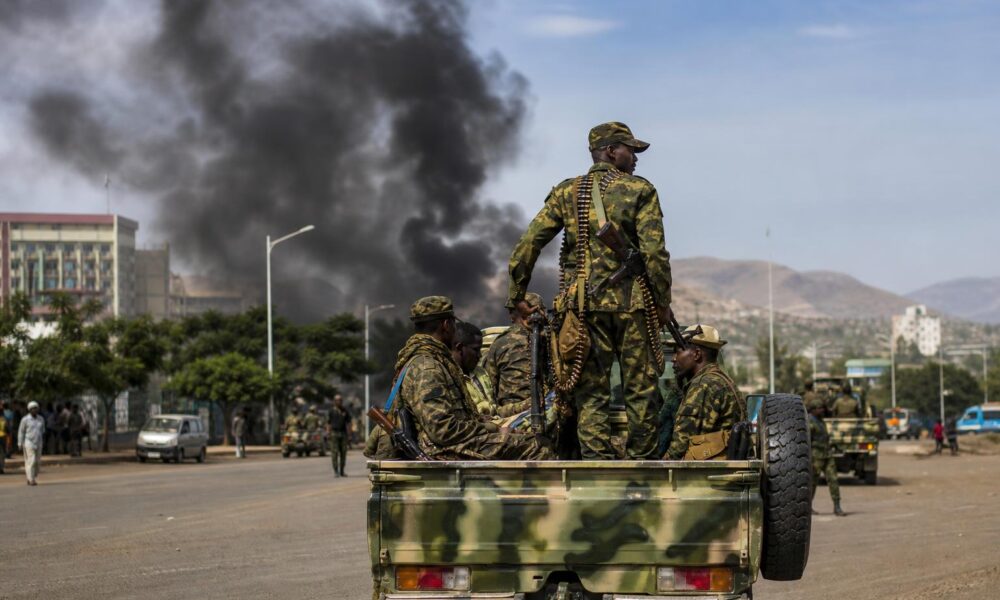
Ethiopian federal forces and allied Tigray Peace Force fighters have taken control of Mekelle after the Tigray People’s Liberation Front withdrew from the Tigray regional capital.
The TPLF confirmed on Saturday that it had left the city and said its regional administration would temporarily operate from another location. The group described the move as a tactical decision aimed at preventing further destruction, while indicating that its forces would continue fighting from other positions.
A pro-government militia source, a humanitarian worker and a resident cited by Reuters said federal forces and allied fighters were in control of Mekelle. Goitom, a resident, said government forces and their allies had taken key sites, including the airport.
Uncertainty after withdrawal
Goitom said residents experienced uncertainty after TPLF forces left the city. He reported a security vacuum and theft in some areas, including government offices.
“On Friday night, we were hearing gunfire but did not know what was happening,” Goitom said. “It feels like we are back to square one. We have already seen what war can do to this city and to our families. People are worried about what will happen next.”
The renewed fighting has revived concerns about displacement, damage to infrastructure and worsening economic conditions. Ethiopia’s previous Tigray war, fought from 2020 to 2022, was associated with estimates of hundreds of thousands of deaths and the displacement of millions of people.
“I feel very heartbroken knowing that Tigray has gone back to full-scale war,” said Berihu, a 32-year-old bajaj driver in Shire. “We have already seen what the last war did to our people, and now it feels like we are going through it all over again.”
Peace agreement under strain
The capture of Mekelle comes less than four years after the Ethiopian government and the TPLF signed the African Union-facilitated Pretoria agreement in November 2022. The accord ended large-scale fighting but left unresolved issues, including disputed territories, the return of displaced people and the disarmament of Tigrayan forces.
The TPLF said in July that the agreement had effectively collapsed and accused the federal government of failing to implement key provisions. The federal government rejected that assessment and said it remained committed to the Pretoria peace process.
Abraham Belay, the former president of the Tigray Interim Administration, said preparations were under way for a new interim administrative structure. He said regional elections were intended to take place within months.
“We are working to establish a new administrative structure that will enable the people of Tigray to govern themselves,” Abraham said.
Regional tensions rise
Military tensions had already increased before Mekelle changed hands, with reports of sporadic clashes, drone strikes, troop movements and preparations for renewed fighting. The wider conflict also involves an opposition alliance that includes armed groups from several parts of Ethiopia, while fighting has spread into Afar.
Diplomatic sources reported explosions in several parts of Addis Ababa, including near the headquarters of Ethiopia’s military. A source linked to an opposition alliance claimed the group carried out drone strikes in the capital, but that claim could not be independently verified.
Relations between Ethiopia and Eritrea have also deteriorated sharply. Ethiopia’s Ministry of Foreign Affairs announced the closure of its embassy in Asmara and declared 10 Eritrean diplomats persona non grata. Eritrea later announced that it was severing diplomatic relations with Ethiopia.
Residents in Addis Ababa expressed concern that a wider conflict could bring further hardship. “If the war becomes bigger, ordinary people will suffer,” said Abel, a 30-year-old shopkeeper. Bisrat, a college student, said he feared Ethiopia could experience a crisis similar to Sudan’s.
The scale and duration of the renewed conflict remain uncertain. The federal government says it seeks to restore authority, while the TPLF maintains that its forces will continue fighting from elsewhere. No independently verified casualty figures for the latest fighting have been provided.





No Comment! Be the first one.