
Amnesty alleges Morocco used Pegasus in wider surveillance of critics
Amnesty International has alleged that Moroccan authorities used Pegasus spyware and other surveillance methods against journalists, activists and critics between 2017 and 2021.

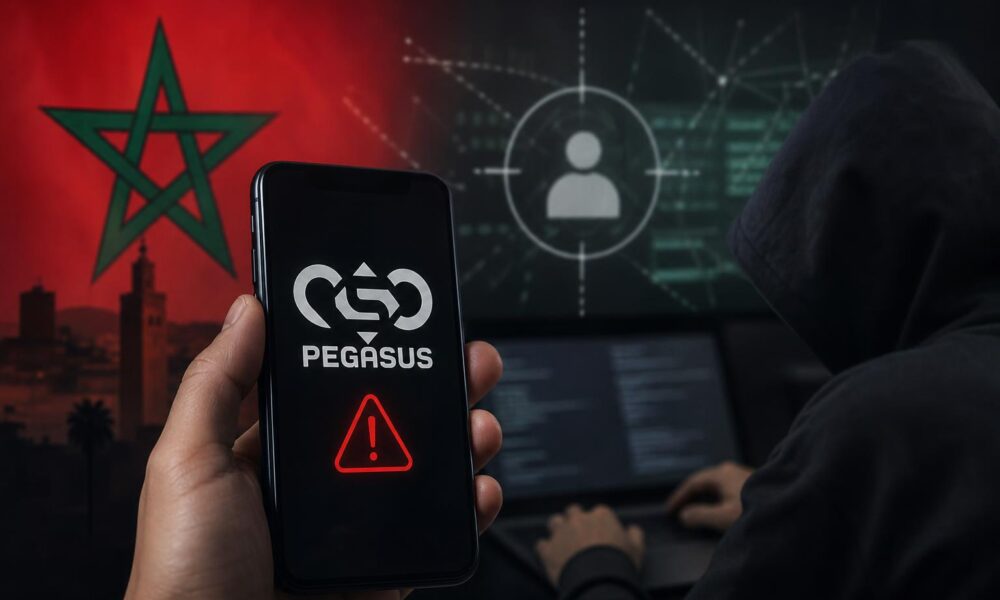
Amnesty International has accused Moroccan authorities of using Pegasus spyware alongside physical surveillance to monitor journalists, activists and other critics between 2017 and 2021.
Table Of Content
The allegations are contained in a report titled We Start With the Verdict: Inside Morocco’s Surveillance Machine. Amnesty said the report examines four cases involving journalist and human rights defender Omar Radi, veteran activist Fouad Abdelmoumni, human rights lawyer Abdessadak El Bouchattaoui and journalist Hicham Mansouri.
Amnesty identified Morocco’s General Directorate for Territorial Surveillance, known as the DGST, as the agency behind the alleged deployment of Pegasus. The mobile surveillance tool was developed by the Israeli company NSO Group.
Evidence cited by Amnesty
The organisation said its findings drew on testimony from a whistleblower known by the pseudonym Safir, technical evidence, independent sources and interviews with 10 people identified as surveillance targets. Amnesty said it corroborated key parts of Safir’s account through those sources.
According to the report, Safir described a system combining digital monitoring, physical observation, secret filming and informants. The former DGST employee allegedly said phone shops were co-opted to provide targets with spyware-infected devices, while remote-control systems at internet cafes were used to monitor activity on compromised machines.
Amnesty said 103 Moroccan telephone numbers appearing in records between September and December 2017 matched potential targets. Of those, the organisation said 65 could be identified as members of civil society, including 34 human rights defenders, 22 journalists and media workers, five lawyers and four academics.
Amnesty also said El Bouchattaoui’s number was entered into the Pegasus system in September 2017 and that Moroccan operations were fully active by October that year. It alleged that Abdelmoumni was secretly filmed at home in 2021.
Accounts from alleged targets
Radi, who was based in Germany at the time of the source report, said he noticed signs of surveillance between 2018 and 2020 while investigating land dispossession in Morocco. He told Al Jazeera that he later learned he had been a Pegasus target.
“I was surveilled not because of a specific article. I was investigating land dispossession in Morocco,” Radi said. He also described alleged monitoring by people who gathered information from parking attendants, shops and his friends.
Radi said Amnesty’s report helped explain what he experienced during surveillance, police interrogations and his trial. He said many of his rights were not respected.
Mansouri, described as a journalist in exile, was imprisoned in 2015 on charges of adultery and sexual exploitation. Amnesty described those charges as trumped-up.
Authorities previously rejected allegations
Moroccan authorities have previously denied allegations that they used Pegasus to target journalists, activists and other critics. They challenged Amnesty to provide material evidence supporting its claims.
Amnesty said it wrote to Moroccan authorities four weeks before releasing the report and invited a response. The organisation said it received none. Al Jazeera also said Moroccan officials had not responded to its requests for comment by the time of publication.
Moroccan media outlet Le360 argued that the report did not provide the conclusive technical and material evidence demanded by the authorities. It also said that a telephone number appearing in Pegasus targeting records does not, by itself, prove that a device was infected or establish who ordered an alleged attack.
Concerns over pressure on journalists
The report also discusses journalist Taoufik Bouachrine, the founder of Akhbar Al-Youm and host of the Talk on Politics podcast. Bouachrine was arrested in 2018 on charges of rape and human trafficking, which he denied, saying the case was connected to his journalism.
The United Nations Working Group on Arbitrary Detention found his detention arbitrary and said he had faced judicial harassment. The European Parliament later adopted a resolution calling for his release along with other journalists tried on similar charges.
Bouachrine said criminal cases, online smear campaigns and the withdrawal of advertising revenue were used to silence journalists and weaken investigative reporting. He was sentenced to 15 years in prison and served more than six years before being released under a royal pardon. By then, Akhbar Al-Youm had closed.



No Comment! Be the first one.