
UAE Backs Ethiopia as Saudi Arabia Stays Silent on Renewed Tigray Fighting
The UAE has expressed support for Ethiopia’s federal government and urged de-escalation in Tigray, while Saudi Arabia has not publicly stated its position on the renewed fighting.

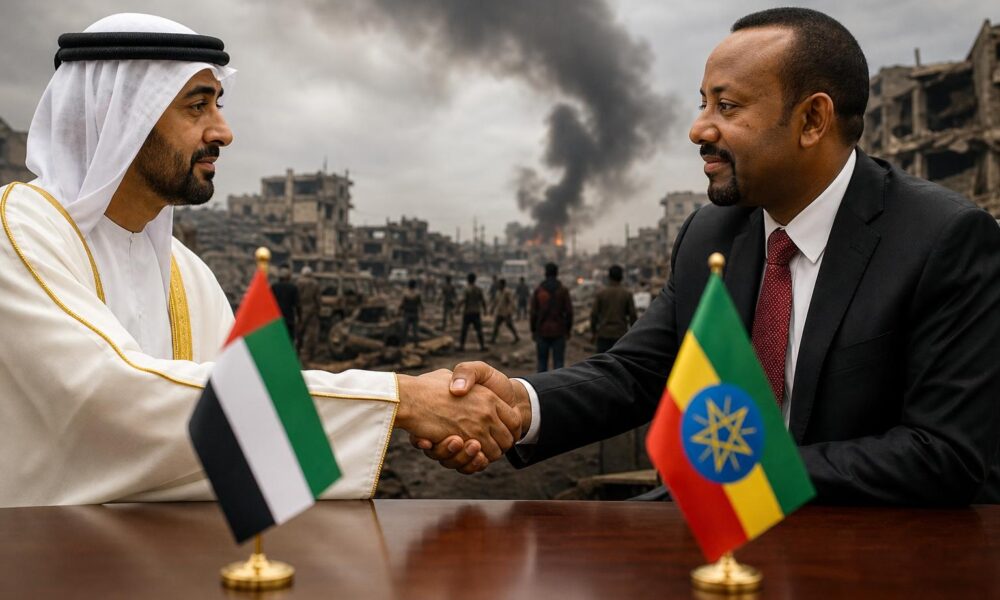
Renewed fighting in Ethiopia’s Tigray region is placing the November 2022 Pretoria peace agreement under strain and raising concerns about wider instability in the Horn of Africa.
Table Of Content
The conflict has also drawn attention to the positions of the United Arab Emirates and Saudi Arabia, two regional powers with diplomatic, commercial and strategic interests linked to Ethiopia, Eritrea and the Red Sea.
UAE statement supports Addis Ababa
On September 25, the UAE condemned attacks attributed to the Tigray People’s Liberation Front and allied armed groups, as well as the seizure of airports in Tigray and reported escalation in the Afar and Amhara regions.
Sheikh Shakhboot bin Nahyan Al Nahyan, the UAE minister of state, expressed solidarity with Ethiopia’s government and people and reaffirmed Abu Dhabi’s support for Ethiopia’s sovereignty and territorial integrity.
At the same time, the UAE called for an end to hostilities, protection of civilians, compliance with the Pretoria Agreement, de-escalation and dialogue.
The statement indicates public backing for Ethiopia’s federal government, but it does not establish whether the UAE is providing military assistance or has obtained commitments from the parties to stop the fighting. Public evidence also does not show that Abu Dhabi currently has decisive influence over Ethiopia, the TPLF or Eritrea.
The UAE has commercial interests in the region. Dubai Ports World operates Berbera port in Somaliland, and a shipping route launched in 2025 connects Berbera with Jebel Ali in the UAE. Those links help explain Abu Dhabi’s interest in regional stability but do not, on their own, demonstrate an ability to influence the conflict.
Saudi position remains undisclosed
Saudi Arabia had not publicly announced its position on the latest fighting in Tigray, according to an analysis cited from Critical Threats.
Riyadh has previously been involved in diplomatic efforts concerning Ethiopia and the TPLF. Chatham House reported in November 2025 that sources said Saudi Arabia had offered to mediate between Ethiopia and Eritrea.
However, a June 2026 analysis by Germany’s SWP think tank said earlier Saudi mediation efforts had failed in part because they did not address Ethiopia’s interest in Eritrea’s port of Assab.
An August 2026 assessment by the Soufan Center described Saudi Arabia and Egypt as backing Eritrea in opposition to Ethiopia’s ambitions for access to the Red Sea. That assessment described a regional alignment and did not establish direct Saudi military support for Eritrea or the TPLF.
Wider regional tensions
Ethiopia has relied heavily on Djibouti for international trade since Eritrea’s independence in 1993 left it landlocked. Addis Ababa’s interest in reliable sea access has become a major factor in its relations with Eritrea, which rejects what it views as threats to its sovereignty.
Ethiopia has accused Eritrea of sending troops across the border and supporting armed groups. Eritrea denies those allegations and has called on the United Nations Security Council to intervene. The claims remain contested.
Egypt’s role is also shaped by its dispute with Ethiopia over the Grand Ethiopian Renaissance Dam and its expanding ties with Eritrea. Egyptian President Abdel Fattah el-Sisi met Eritrean President Isaias Afwerki in Cairo on June 8, 2026, with discussions covering bilateral cooperation, developments in the Horn of Africa and Red Sea security.
Ethiopian army chief Field Marshal Birhanu Jula accused Egypt and Sudan of supporting armed groups fighting Ethiopia’s federal government, including the TPLF, in remarks reported on September 28. No evidence substantiating the accusation was provided.
Egyptian Foreign Ministry spokesperson Nader Zaki reaffirmed Cairo’s stated commitment to state sovereignty and non-interference, but did not directly address the specific allegation concerning support for the TPLF.
For now, available public information does not establish that either the UAE or Saudi Arabia is leading an effort to contain the crisis or has decisive influence over the fighting. It also remains unclear whether either country can make a meaningful contribution to renewed de-escalation.




No Comment! Be the first one.