
Ghanaian Agritech Founder Says Farmer Trust and Affordability Matter as Much as Innovation
Isaac Sesi, founder of Ghanaian agritech company Sesi Technologies, says agricultural innovation will have limited impact unless farmers can afford it, trust it and see clear benefits.

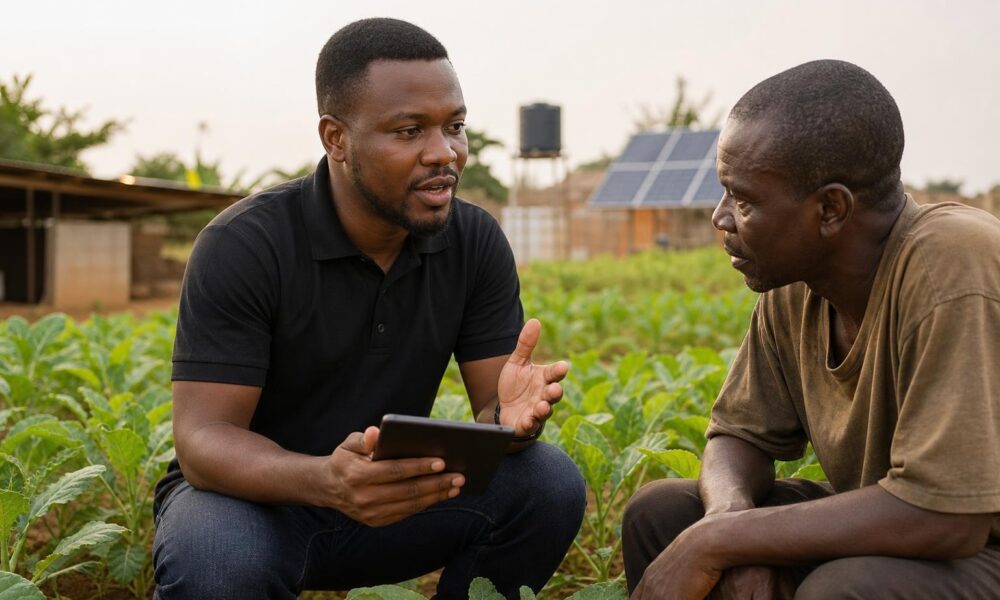
Ghanaian engineer and agritech entrepreneur Isaac Sesi says the success of agricultural technology depends on more than invention, arguing that affordability, farmer trust and viable business models are essential to achieving impact.
Table Of Content
Sesi made the comments in an interview discussing his work at Sesi Technologies, a Ghanaian company that develops tools intended to reduce post-harvest losses, improve soil health and raise agricultural productivity.
From family farming to agricultural technology
Sesi said he grew up farming with his parents while developing an early interest in electronics and technology. He later studied at Kwame Nkrumah University of Science and Technology, where he joined a project focused on measuring grain moisture for farmers.
That experience brought together his interests in engineering, technology and agriculture and helped shape the work of Sesi Technologies. He said many of the company’s direct customers are agribusinesses rather than smallholder farmers, although the effects of their products can reach farmers through those businesses.
Among the solutions he discussed were a soil intelligence product and a grain moisture meter. Sesi said farmers did not always accept the reports or readings immediately, particularly when the results appeared to challenge their own experience.
Trust and affordability remain barriers
Recalling one reaction to the company’s soil solution, Sesi said an unnamed farmer told him: “You are lying. There is no way you can walk around my farm and tell me what is in the soil.”
He also recalled a farmer rejecting a moisture reading of 13%, saying the farmer relied on the sound of maize when tossed to judge whether it was ready.
Sesi said the company found that physical sensors could make the process more believable to farmers. He also stressed that technology should be presented as an improvement to existing farming knowledge rather than as a replacement for it.
“You respect the farmers; they respect you back. You think they’re idiots; they’ll think you’re an idiot,” he said.
Affordability is another challenge, according to Sesi. He said a farmer’s inability to pay can prevent adoption regardless of how persuasive the explanation is. He added that farmers generally care less about the technology itself than about outcomes such as preserving grain, earning more money and getting better results from their land.
“That you can’t rely on logic alone to sell something,” was the lesson he said farming had taught him about human nature.
Rethinking growth and African agriculture
Sesi said his own ambitions have changed. He once focused on building a billion-dollar company, but now places greater value on useful work, family, enjoyment of life and encouraging other African inventors.
He also criticised what he described as excessive attention among African founders to shaping companies around investor preferences, rather than building businesses that generate revenue. In his view, many African companies may never reach a value of $100 million, but a profitable business valued at $5 million can still contribute to national development.
Sesi said recognition and awards had not always translated into sales, partnerships or broader business progress. An unnamed adviser from Uganda warned him during that period, “Don’t snatch defeat from the jaws of victory.”
On farming, Sesi said he does not believe the current smallholder model in Africa is scalable without practical changes. He proposed approaches that would cluster and aggregate farmers, including a model in which 50 farmers could work together across a larger area.
He also said that, if given control of Ghana’s agriculture budget with complete political backing, he would stop funding imports of products Ghana could produce, including poultry and grains. He said investment should instead focus on irrigation, technologies that reduce losses and more coordinated farming models.
Sesi said the career outcome he would value most is “Inspiring thousands of young African inventors.” He added that he wants to use his abilities to improve as many lives as possible and inspire people to build businesses that achieve more than he has.





No Comment! Be the first one.