
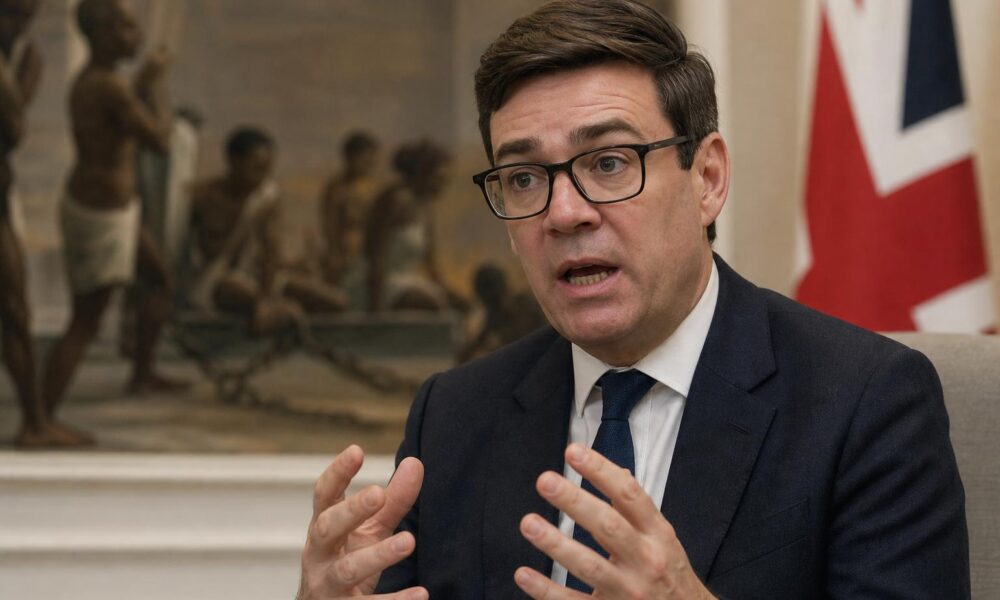
UK Prime Minister Andy Burnham has said Britain is open to apologising for its role in the transatlantic slave trade, while ruling out reparations for slavery.
In an opinion article published in The Guardian ahead of a four-day Commonwealth summit, Burnham expressed sorrow and regret for the suffering of millions and said the legacy of slavery continues to shape the world.
“I want to express my sorrow and regret for the pain and suffering of so many millions of people, and to recognise the way it still shapes our world today,” Burnham wrote.
He said the United Kingdom would offer structured dialogue with affected parties and pursue debt restructuring to give the poorest and most vulnerable countries longer periods to repay their debts. Former Chancellor Gordon Brown was described as leading the debt-restructuring effort.
Reparations remain a point of disagreement
Burnham rejected financial reparations, arguing that people in Britain today should not be held liable for historical wrongs committed under different laws and in an earlier era in which they had no personal involvement.
His position drew opposition from Caribbean and African officials and from campaigners seeking reparatory justice. Philip J Pierre, the prime minister of Saint Lucia and current chair of the Caribbean Community and Common Market, said reparatory justice concerns the responsibility of states and institutions rather than individual guilt.
“That responsibility does not expire with the passing of generations,” Pierre said, describing an apology without repair as “incomplete”.
Ghanaian President John Dramani Mahama welcomed Burnham’s statement cautiously. He called for a formal apology, targeted investments and an international commitment to dismantle systemic racism and Afrophobia.
Bell Ribeiro-Addy, chair of the All-Party Parliamentary Group for Afrikan Reparations, welcomed Burnham’s steps but said further action was still lacking. Denis O’Brien, founder of The Repair Campaign, said the United Kingdom should provide a full and formal apology.
CARICOM has called since 2013 for Western countries involved in slavery to acknowledge their role and introduce monetary reparations. Campaigners argue that there is both a legal and moral case for financial payments and debt cancellations because of the harms caused by enslavement.
Commonwealth summit
Burnham’s comments came before the Commonwealth summit scheduled to begin on Sunday in St John’s, the capital of Antigua and Barbuda. King Charles was due to host leaders from more than 50 Commonwealth nations at the four-day meeting.
Burnham said the Commonwealth remained vital to Britain’s interests and could provide opportunities for trade and economic collaboration. He also said Britain intended to maintain diplomatic and trade ties with Commonwealth allies.
Conservative Party leader Kemi Badenoch opposed Burnham’s position. She said British taxpayers should not be financially responsible for slavery that occurred generations ago and criticised the proposed approach as spending on “global welfare”.
The debate comes amid renewed international attention to the legacy of the transatlantic slave trade. About 12 million Africans were forcibly transported to the Americas, with Britain and Portugal accounting for approximately 70 percent of those exported, according to the supplied historical figures.
Britain passed the Slave Trade Act in 1807 and banned slavery in its entirety in 1834. Former Prime Minister Tony Blair expressed deep sorrow for Britain’s role in the slave trade in 2006 but did not issue an apology or discuss reparations.



No Comment! Be the first one.