
Kamara Warns Sierra Leone Spectrum System Could Enable Surveillance
Joseph Fitzgerald Kamara has raised concerns that Sierra Leone’s new Spectrum Monitoring System could affect privacy and press freedom if deployed without stronger legal oversight.

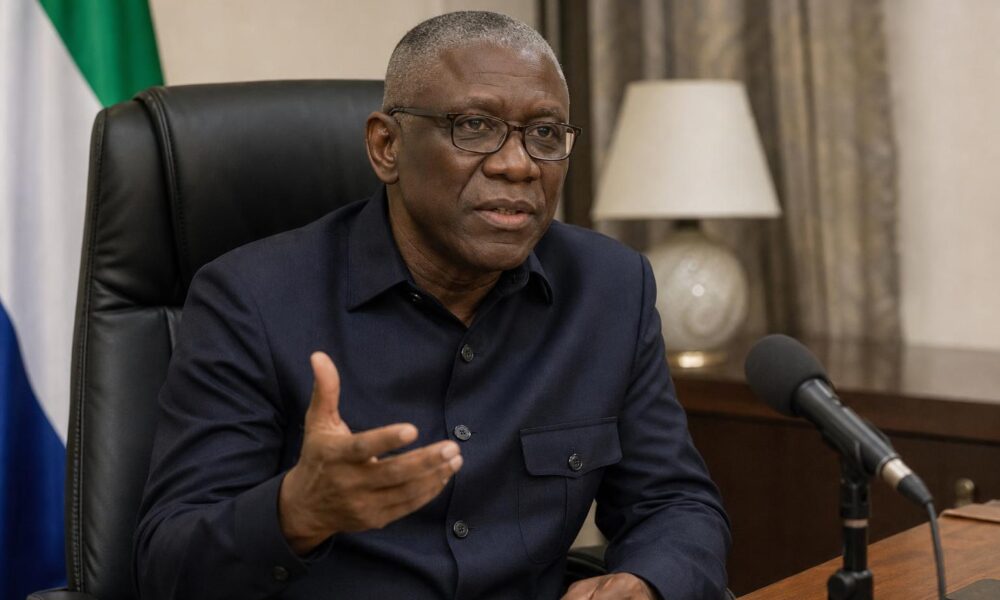
Joseph Fitzgerald Kamara has warned that Sierra Leone’s new Spectrum Monitoring System could create privacy, press freedom and surveillance risks if it is introduced without effective legal safeguards.
Kamara said the system is being promoted for technical purposes, including clearer airwaves, improved call quality and reduced interference. However, he cautioned that the equipment’s ability to identify the location of radio transmitters could have wider consequences.
Concerns over transmitter tracking
According to Kamara, a mobile spectrum monitor also functions as a direction-finding device. That capability can locate transmitters and could, by extension, help identify broadcasters, sources and critics.
“But a mobile spectrum monitor is also a direction finder. It can locate transmitters, and, by extension, broadcasters, sources, and critics,” he said.
The concerns are presented as an assessment of the system’s possible implications. The available information does not provide technical specifications, deployment details or documented cases involving the new monitoring equipment.
Legal and oversight gaps
Kamara argued that the potential risks are heightened by Sierra Leone’s existing legal and institutional framework. He said the country has no comprehensive data protection law in force and no independent privacy regulator.
He also pointed to the Cyber Security and Crime Act 2021, which he said permits the real-time collection of traffic data and interception. Kamara further said the law has been used against journalists.
In addition, he raised concerns about the National Security and Central Intelligence Act 2025, saying it places surveillance powers under presidential authority while providing weak judicial safeguards and no independent intelligence oversight.
Kamara said the combination of transmitter location, user identification and communications interception could change the character of the system. “When these powers converge, that is, locate a transmitter, identify a user, intercept communications; a regulatory tool easily becomes a surveillance tool,” he said.
Calls for safeguards
Kamara has called for the enactment of the Data Protection Bill and the creation of an independent regulator. He also called for judicial warrants for any surveillance use, parliamentary oversight with access to audit logs, and conditions requiring donor support to be tied to the introduction of these protections.
He maintained that the system’s technical benefits should not be considered separately from its possible impact on rights. “Technical merits do not outweigh these risks until safeguards exist,” Kamara said.
Summing up his position, he said: “Better networks, yes. But not at the price of privacy, press freedom, and constitutional rights. Sierra Leoneans deserve both.”



No Comment! Be the first one.