
Somalia Supreme Court Rejects President’s Term Extension
Somalia’s Supreme Court has ruled that the constitutional changes used to extend President Hassan Sheikh Mohamud’s term were unlawful and called for elections within 90 days.

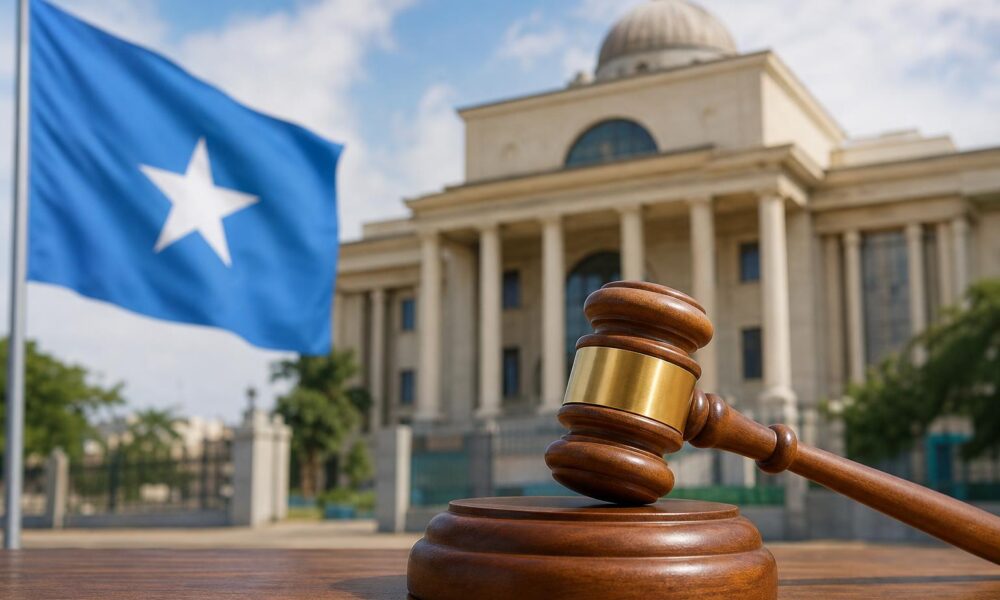
Somalia’s Supreme Court has ruled that the extension of President Hassan Sheikh Mohamud’s mandate was unlawful, escalating a political and judicial confrontation in the country.
Table Of Content
In its decision, the court said constitutional amendments passed by parliament should not have applied to Mohamud’s current term. It said the president should have left office in May and called for a new agreement among political parties within 30 days, followed by elections within 90 days.
The ruling challenges the president’s position that the amendments authorised him to remain in office during a one-year “transition period”. Mohamud has argued that the arrangement was necessary to prepare Somalia’s first nationwide democratic elections, which he says are planned for April and May 2027.
Chief justice dismissed before ruling
Before the Supreme Court decision was published, the president’s office announced the dismissal of Chief Justice Bashe Yusuf Ahmed and the appointment of a replacement. The office said the move followed “concerns… about the need for an efficient and fair judiciary”.
The Supreme Court responded that the president had no authority to dismiss the chief justice. It accused him of attempting “to obstruct the administration of justice in the constitutional case filed before the Supreme Court”.
The source information does not identify the replacement chief justice.
Opposition allegations remain unverified
Former Prime Minister Hassan Ali Khaire accused the president of launching an assault on the Supreme Court and deploying troops to its premises. He also alleged that the chief justice and lawyers were pursued in their homes for arrest, subjected to torture and that the court’s operations had been halted.
Those claims could not be independently verified. Somali media published images that they said showed military forces inside the court compound, but the images and the alleged deployment were not independently established.
Khaire described the situation as “a dangerous juncture” and said the dismantling of the judiciary would threaten the rule of law. He called on Somali society to defend the country’s constitutional order.
Political and security pressures
The dispute follows a parliamentary vote in March on constitutional amendments. Most opposition and regional parties boycotted the vote, while some said they had been prevented from attending. Political factions later clashed in Mogadishu, where violence broke out in June over the issue.
Mohamud has promoted a shift away from Somalia’s clan-based political system, in which elders select representatives, toward fully democratic elections. His opponents view the reforms as an attempt to consolidate power.
The political dispute is unfolding alongside a security crisis linked to the long-running Al-Shabaab insurgency. The armed group controls swathes of Somalia, while international donors have reduced support for the military mission amid frustration over limited progress against militants and continuing political instability.
Uganda, described as the African Union force’s largest contributor, has announced that it will withdraw all its troops from the force by the end of 2027. Washington has also cut all donations to a United Nations logistics mission on which the military coalition relies.
Reactions to the court ruling were divided in Mogadishu. Resident Abdullahi Hassan Sheikh said, “The Supreme Court is right and its decision is right,” adding that court decisions and the rule of law should be respected. Another resident, Mohamed Farah Ahmed, disagreed, saying he viewed the decision as wrong because the court had been operating when the new constitution was approved.



No Comment! Be the first one.