
South Korea Seeks to Extend Anti-Piracy Mission Toward Strait of Hormuz
South Korea plans to seek parliamentary approval to extend the Cheonghae unit's mandate and expand its patrol area toward waters near Duqm, Oman, closer to the Strait of Hormuz.

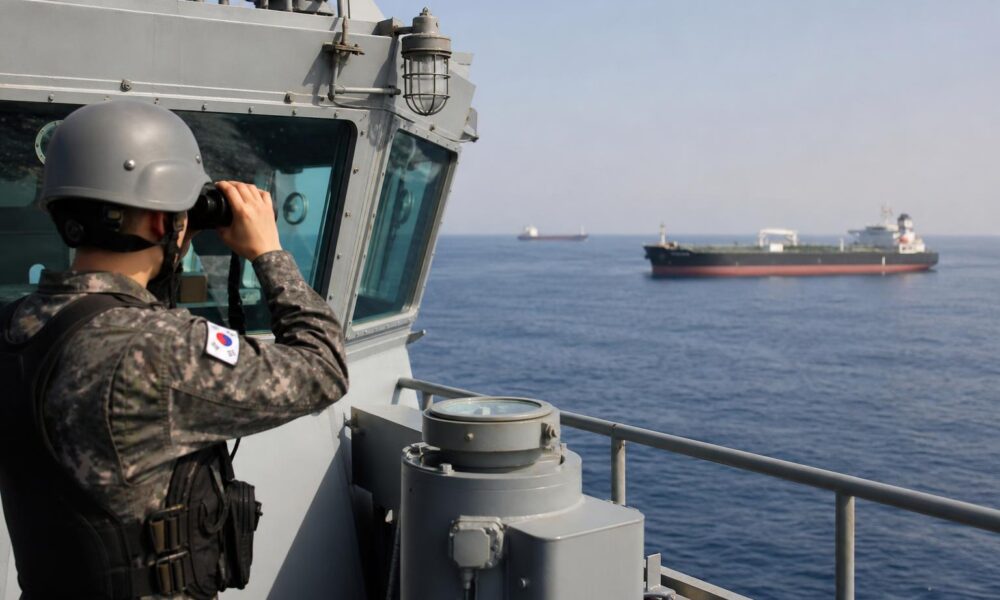
South Korea plans to ask its National Assembly to extend the mandate of the Cheonghae naval unit and broaden its anti-piracy patrol area toward waters near Duqm, Oman, bringing the mission closer to the Strait of Hormuz.
Table Of Content
The unit’s current mandate is scheduled to expire at the end of 2026. The proposed operating area near Duqm would be about 650km (403 miles) from the Strait of Hormuz, according to the information supplied by the South Korean government.
A South Korean Defence Ministry spokesperson told Reuters that the government would seek approval for both the mandate extension and the wider area of operations. Yonhap news agency reported that the proposal is expected to be submitted to lawmakers after the cabinet endorses it the following week.
Expanded patrol area
The Cheonghae unit has operated in the Gulf of Aden since 2009, where it has been tasked with protecting commercial shipping. Under the proposed arrangement, the unit would move into the Arabian Sea south of Oman and roughly double its operating radius to about 1,930km (1,200 miles).
The planned reinforcement would include 75 additional personnel and a P-8A maritime patrol aircraft. The latest contingent left Busan on October 2 aboard the 4,400-tonne destroyer Chungmugong Yi Sun-sin. The vessel carried a maritime helicopter and about 300 service members.
South Korean officials told Yonhap that the expanded mission would remain strictly noncombat, with the unit under South Korean command and operating independently of allied forces. An unnamed South Korean defence official said the purpose of strengthening the mission was to protect South Korean citizens and economic interests.
The same official said operations would be limited to open waters south of Oman. The proposed maritime patrol aircraft would not be permitted to target or monitor Iranian territory, Iranian territorial waters or the interior of the Strait of Hormuz.
Political opposition
The proposal has drawn criticism from opposition lawmakers, who have argued against enlarging the Cheonghae unit’s mission. Kim Joon-hyung, floor leader of the Rebuilding Korea Party, said at a news conference in Seoul that expanding the operational area amounted to a troop deployment.
Kim described the plan as “not a clever solution but a deceptive workaround” and warned that it could expose South Korean forces to possible Iranian retaliation. He also said the move could make South Korea the first country to join the Middle East war if United States President Donald Trump claimed Seoul had dispatched troops.
Those warnings are political assessments and have not been independently verified. The proposed restrictions and the mission’s noncombat status are also statements from South Korean officials, while the National Assembly has not yet approved the extension or the expanded patrol area.
Balancing shipping protection and military involvement
The plan follows earlier statements by President Lee Jae Myung about maritime security and overseas deployments. In April, Lee pledged to help safeguard shipping during talks led by the United Kingdom and France. In September, however, he said he would avoid any deployment that could draw South Korea into the war.
The proposal emerged amid reported pressure from Trump for South Korea to support Washington’s war on Iran, according to the supplied source. South Korean officials have presented the Cheonghae expansion as a measure focused on protecting citizens and commercial interests, while opponents say it could increase the country’s exposure to the regional conflict.


No Comment! Be the first one.