
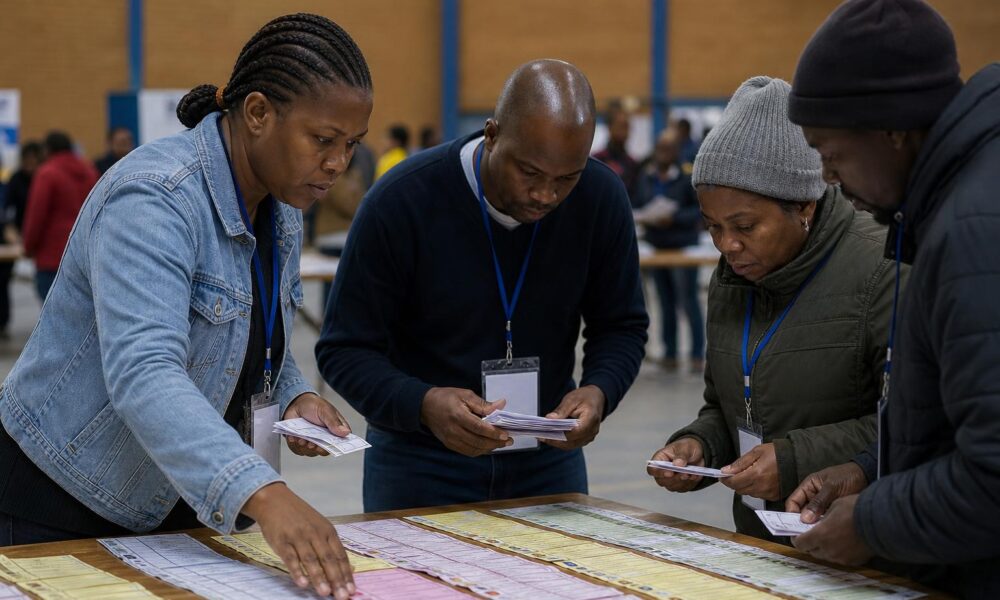
Partial results from South Africa’s local elections have pointed to difficult coalition negotiations in several of the country’s major cities, with no outright winner projected in any of the eight metropolitan municipalities.
Table Of Content
The African National Congress (ANC) remained the largest party nationally, but its support had fallen to nearly 31% after about 90% of the votes were counted. The figures were preliminary, and final results were expected on Sunday.
ANC faces losses in urban centres
The results indicated that the ANC would not secure an outright majority in any of the eight major metros, including Johannesburg and Pretoria. That outcome would leave parties needing to negotiate alliances before administrations can be formed in several urban areas.
The party has been described as once dominant in South Africa, but its support has steadily weakened amid voter frustration over corruption and unemployment. The unemployment rate referenced in the results coverage was above 34%.
Coalition administrations in South Africa have often faced instability, internal disputes and difficulties with basic-service delivery, adding to the uncertainty surrounding the post-election negotiations.
DA gains ground as MK rises
The Democratic Alliance (DA), the country’s second-largest party, had won around a quarter of the vote. Although that represented progress, it remained below the level of support the party attracted at its 2016 peak.
The DA had moved ahead in several urban contests, including Johannesburg. Helen Zille, the party’s 75-year-old mayoral candidate in the city, was competing as negotiations loomed over the shape of the next municipal administration.
uMkhonto weSizwe (MK), led by former president Jacob Zuma, was taking part in a municipal election for the first time since the party was formed in 2023. The party was projected to finish third nationally, ahead of the Economic Freedom Fighters, which is led by Julius Malema.
Analysts cited in the election coverage said MK had been the biggest beneficiary of the fragmentation of the ANC vote. Its performance added another factor to negotiations in municipalities where no party had enough support to govern alone.
Coalition choices remain uncertain
Political analyst Daniel Silke said existing coalition arrangements at national level could make municipal negotiations more complicated. He also said voters in Gauteng would probably prefer a DA government working with ActionSA.
However, Silke highlighted the difficult relationship between the two parties, saying: “But the animosity between those two parties is extreme.”
That tension could make it harder to translate electoral gains into stable governing agreements, particularly in Gauteng’s major urban areas. The eventual composition of the city administrations remained unknown while counting continued.
The electoral commission estimated that 54.5% of South Africa’s 29.2 million registered voters had cast ballots. That was higher than the 46% turnout recorded in the 2021 local elections.
Despite the increased participation, the partial figures showed a fragmented political landscape. The final results will determine the balance of seats and provide the basis for negotiations in Johannesburg, Pretoria and other major metropolitan municipalities.



No Comment! Be the first one.