
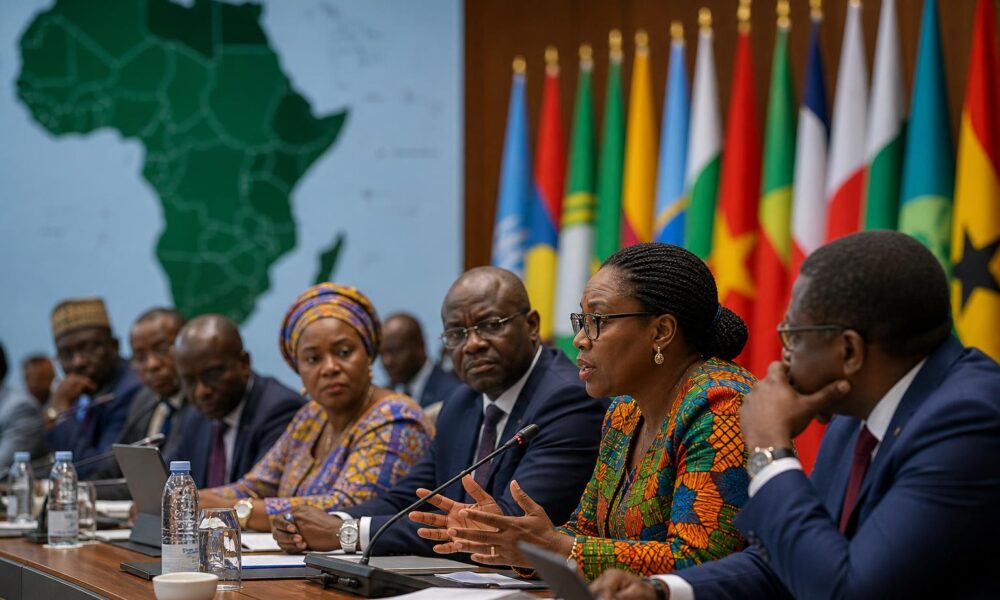
Experts at Moonshot 2026 in Lagos have called for urgent reforms to make Africa’s single-market ambition work in practice, pointing to regulatory obstacles, fragmented financial systems and expensive cross-border payments.
Intra-African trade currently accounts for less than 17 per cent of the continent’s total trade, compared with more than 60 per cent of trade taking place within Europe. The figures highlight the gap between the goal of greater regional integration and the current reality for businesses operating across African borders.
The African Continental Free Trade Area, or AfCFTA, promises a market valued at $3.4 trillion. However, barriers affecting market access and transactions continue to limit the agreement’s impact on companies seeking to expand across the continent.
Implementation remains a challenge
Adetola Onayemi, Chairman of Norebase, said the difficulties reflect a wider gap between trade agreements and their implementation. He pointed to persistent obstacles at borders, ports and banks, where businesses can face processes that make cross-border activity slower and more costly.
Onayemi advocated technology-based measures to simplify market entry and lower transaction costs. Among the proposals were standardised business documentation and interconnected digital payment systems that could make it easier for companies to operate in multiple African markets.
He also urged businesses to use the AfCFTA to identify bottlenecks and press governments to address them. The call places responsibility on both private-sector participants and public authorities to translate the agreement’s objectives into more effective trading conditions.
Funding pressures add to business challenges
The discussions took place as Africa’s technology ecosystem faces tighter funding conditions. As cheap capital dries up and international investors reassess their exposure to the continent, start-ups are under increasing pressure to show profitability, financial discipline and sustainable business models.
The shift may encourage a move away from rapid expansion and towards building companies with greater resilience and long-term economic value. But the broader business environment remains affected by institutional weaknesses and governance concerns.
A report by the Mo Ibrahim Foundation found that nearly half of Africa’s population lives in countries where governance has deteriorated over the past decade. Weak governance can undermine the conditions businesses need to operate and can slow economic development, while stronger institutions, transparency and accountability are considered important to sustainable growth.
Experts at the Lagos event called for urgent action to remove the practical barriers standing between the AfCFTA’s promise and wider cross-border trade. No specific implementation timeline or government response was identified.







No Comment! Be the first one.