
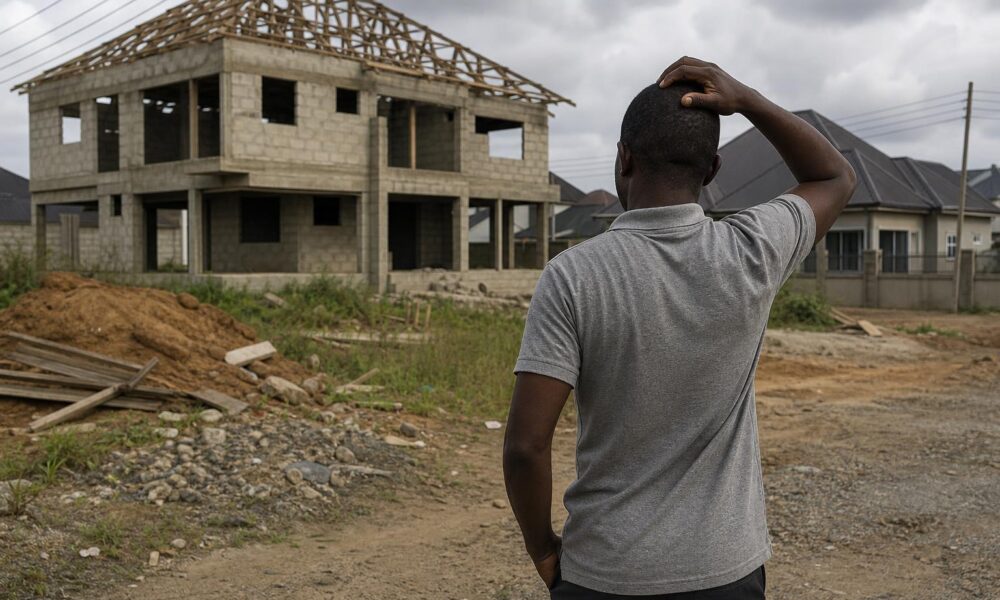
Ghana’s housing sector needs greater investment, but participants at the Africa Real Estate Conference & Expo in Accra said more funding alone will not solve the affordability crisis facing ordinary households.
Table Of Content
The country requires more than 1.8 million additional housing units, according to figures cited at the conference. Yet high land, infrastructure, construction and financing costs, combined with limited household purchasing power, continue to restrict access to homes.
“Africa’s housing challenge is not a lack of demand,” said Bako Ambianda, chief executive of Backbone Capital Ventures and a keynote speaker at the event. He described the central problem as “a mismatch between the cost of delivering homes, the financing available to build them, and the purchasing power and payment patterns of households.”
Finance and land remain major barriers
Developers, policymakers, investors and technology entrepreneurs discussed ways to expand construction, improve housing finance and use new technologies in the sector.
Samuel Amegayibor, executive director of the Ghana Real Estate Developers Association, identified access to finance and secure land as two of the industry’s biggest obstacles. He said land ownership complications and inadequate infrastructure add uncertainty and expense to projects.
Construction costs are also affected by imports. Amegayibor estimated that about 70 percent of housing inputs are imported. “Apart from sand, gravel and water, most of the things are import-based,” he said, arguing that the gap creates an opportunity for domestic manufacturing.
Mortgage access remains limited. About 90 percent of Ghana’s housing is reportedly financed through personal savings and incremental construction, while mortgage penetration stands at 0.3 percent of gross domestic product. Borrowing costs, although reported to have fallen from around 30 percent to a range of 9 to 15 percent depending on the bank, remain a challenge for many households and developers.
The National Homeownership Fund has reduced mortgage rates from 13.5 percent to 8.4 percent. Other measures presented or announced include a three-billion-cedi revolving fund aimed at public-sector workers, with repayment periods of 15 to 20 years, and a one-billion-cedi allocation for the National Housing Fund in Ghana’s 2027 budget.
Informal workers and renters face exclusion
President John Dramani Mahama has urged banks to develop alternative methods for assessing borrowers, particularly people working in the informal economy. Such workers may have regular incomes but often lack payslips and conventional banking records required for mortgage applications.
“A system that cannot recognise these livelihoods excludes a substantial part of our nation from the opportunity to own a home,” Mahama said.
Rental conditions are another concern. Landlords reportedly often request one or two years of rent in advance, although Ghana’s Rent Act of 1963 limits advance rent to six months. A proposed Easy Rent programme would have the National Housing Fund pay rent advances directly to landlords, with workers repaying the amount monthly. The FirstKey app is also intended to help identify non-compliant landlords and verify rental listings.
About 70 percent of Ghanaians are in the low- and middle-income bracket, while much housing development targets higher earners. The source material cited at the conference said only about 5 percent of Ghanaians can afford housing without state support.
Technology offers savings, but not a complete solution
Thirty PropTech startups presented tools designed to improve building performance, reduce operating expenses and modernise property management.
Isaac Ayitey Chris-Quaye, co-founder of NeuraHomes, cited a case in which property managers reduced energy costs by 20 percent annually, with the system paying for itself within four years. He said conventional homes can appear inexpensive initially while creating higher costs over time.
William Atitso Amankwah, founder of AWA Roofing Sheets, said the company’s Cool Roof coating can reflect up to 60 percent of sunlight. The company estimates that it can reduce indoor temperatures by 2 to 5 degrees Celsius and cut cooling-energy consumption by 11 to 27 percent.
However, Ambianda cautioned that technology cannot resolve the sector’s structural problems by itself. “A beautifully designed app will not make an overpriced plot affordable, provide a road or drainage system, lower the cost of capital by itself, or resolve an unclear title,” he said.
He called for secure, serviced land, transparent processes and financing models that consider transaction histories, savings behaviour, mobile-money activity and rental-payment records, with borrowers’ consent.
Authorities are also seeking to revive the Saglemi Housing Project, with an initial target of 700 units by March 2027, and have announced plans for a 200-acre Green City Project at Dedesua. The Ghana Real Estate Developers Association has proposed a National Housing Authority led by technocrats and insulated from political cycles.
Whether these initiatives make homes more attainable will depend on how effectively funding reaches households in need and whether developers can deliver housing at sustainable prices.






No Comment! Be the first one.