
Somalia expels UAE ambassador amid escalating federal-regional tensions
Somalia has ordered the United Arab Emirates ambassador to leave the country and recalled its envoy from Abu Dhabi, deepening a dispute linked to sovereignty, security agreements and tensions with...

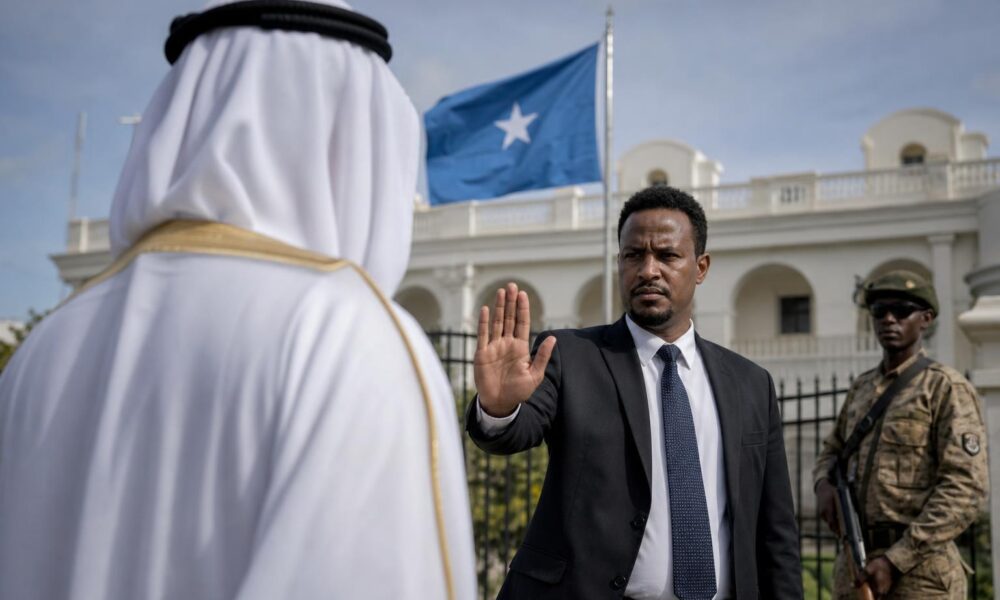
Somalia has ordered the United Arab Emirates ambassador to leave the country and recalled its own envoy from Abu Dhabi, marking a major deterioration in relations between the two countries.
Table Of Content
The move, announced on November 19, followed Somalia’s cancellation of several commercial, defence and security agreements with the UAE. The agreements had been annulled 10 months earlier, as the dispute widened over Abu Dhabi’s relationships with Somali regional administrations.
The UAE said it had already withdrawn its diplomatic staff from Mogadishu in January. Anwar Gargash, a senior Emirati official, said the relationship would nevertheless “remain deeper and stronger” despite criticism from Somalia’s president.
Competing accusations
President Hassan Sheikh Mohamud accused the UAE of worsening political divisions, financing rival regional administrations and supporting armed groups operating outside the control of Somalia’s federal government.
“A brother does not burn your house. A brother does not buy your property without your knowledge. A brother does not divide your family,” Mohamud said while denouncing the UAE’s role in Somalia’s political disputes.
Somalia’s national security adviser, Awes Hagi Yusuf Ahmed, said in a post on X that the government had concluded that UAE policies posed a threat to national security. He also described port agreements involving Berbera, Bosaso and Kismayo as a security issue because they were concluded outside federal authority.
The UAE, in response, accused Mogadishu of allowing internal political disputes to damage bilateral ties. The Emirati position has been that its relationship with Somalia remains important despite the confrontation.
Regional administrations reject Mogadishu’s decision
Somaliland, Puntland and Jubbaland rejected Somalia’s cancellation of the UAE agreements. The three administrations said their arrangements with Abu Dhabi, particularly those involving ports, would continue.
The UAE has developed commercial, security and diplomatic links with the administrations. DP World invested in Berbera Port in Somaliland and developed the Berbera Corridor, which connects the port with Ethiopia and the wider region. Abdirahman Dahir Adam, Somaliland’s foreign minister, said the investment had created jobs, improved connectivity and given Berbera a stronger role as a regional gateway.
P&O Ports operates Bosaso port in Puntland, while the UAE helped establish and fund the Puntland Maritime Police Force, initially as an anti-piracy unit. A regional security official also said the UAE supported Puntland’s campaign against ISIL with drone strikes and carried out an attack against al-Shabab in support of Puntland forces. Those security claims were not independently verified.
A senior Puntland official, speaking anonymously, said the UAE’s support had helped regional administrations strengthen their authority. “It is obvious why on that level the UAE is a more important partner,” the official said.
A domestic power struggle
The diplomatic rupture has unfolded alongside a prolonged contest between Somalia’s federal government and regional leaders resisting efforts to restore greater authority to Mogadishu.
Somalia’s federal government has faced opposition from Puntland and Jubbaland over proposed constitutional and electoral changes. Somaliland has long rejected Mogadishu’s authority, while disputes with other regional administrations have included clashes over leadership and control of federal institutions.
Aweis Ahmed, a Somalia expert at Chatham House, said Emirati backing had delivered practical benefits to regional states while strengthening their position against the federal government. He also argued that the UAE’s support for opponents of Mohamud had helped block proposed constitutional and electoral changes.
Ahmed said the dispute was driven more by Somalia’s internal political dynamics than by a broad sovereignty question. Abdinor Dahir, director of the Adkaysi Institute for Research, Peace and Inclusive Resilience, offered a wider warning, saying ties between regional administrations and the UAE weakened federal authority, undermined counterterrorism cooperation and risked making foreign policy a continuing source of domestic conflict.
Somalia has increasingly aligned itself with Turkiye, Qatar and Egypt, while some regional administrations have cultivated relationships with the UAE and Ethiopia. The competing alliances have added to the strain between Mogadishu and the country’s regional authorities.





No Comment! Be the first one.