
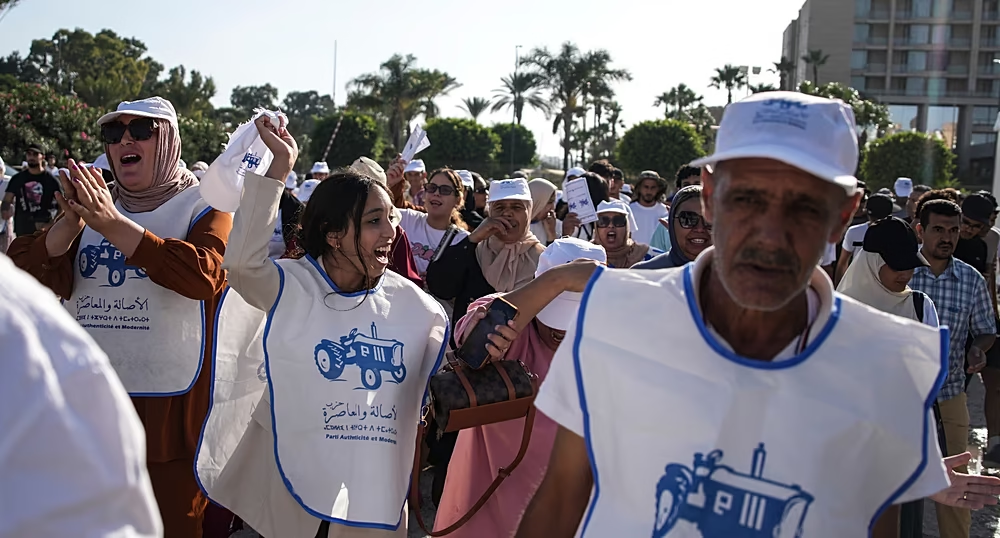
Morocco’s parliamentary election on Wednesday will test whether the country’s political system can regain the confidence of young people increasingly disenchanted with public life.
Table Of Content
Nearly 16 million Moroccans are registered to elect 395 members of the House of Representatives. The vote is taking place against a backdrop of social disparities, youth unemployment and wider concerns about living conditions.
Young voters divided
For some young Moroccans, the election represents an opportunity to seek change. Haitham Arakchou, 28, said he planned to vote and encouraged others to go to the polls. He said he wanted the next government to improve the social situation and raise the minimum wage while addressing Morocco’s “numerous problems”.
Others remain unconvinced that voting will bring meaningful improvement. Haitham Atifi, a 20-year-old newly graduated electrical engineer, said he would not vote. He described campaign promises as “just empty words” and said, “I don’t think there is a party capable of creating jobs for young people.”
Zoubaida, a 34-year-old mother who works small jobs in Tangier and did not provide her full name, also said she would not vote. “I expect nothing,” she said. She urged the next government to make employment and housing its priorities.
Only 4 percent of registered voters are aged between 18 and 24, according to the information surrounding the election, highlighting the challenge parties face in attracting younger citizens.
Pressure over services and jobs
Political scientist Mohamed Chiker said the election faced two central tasks: rebuilding trust in political life, especially among young people, and bringing forward what he called an honest political elite.
The concerns come about a year after youth-led demonstrations known as the Gen Z movement called for better health and education services. Reported deaths of pregnant women at a hospital in Agadir in 2025 helped spark those protests, according to the source material.
Morocco’s economy grew by about five percent last year, based on official figures cited in the election coverage, but unemployment was reported at 13 percent. The country is also undertaking major development projects ahead of the 2030 World Cup, which it will co-host with Spain and Portugal.
The contrast between economic growth and persistent employment concerns has contributed to public frustration. Political parties contesting the election are seeking to draw support from those concerns, although some young voters say they have yet to see convincing answers.
Migration adds to political pressure
Another issue affecting relations and public debate is the movement of people into Ceuta. Tens of thousands of people, predominantly young Moroccans, crossed into the Spanish enclave in July.
Former prime minister Abdelilah Benkirane, who leads the opposition Justice and Development Party, described the migrant rush as a “major scandal” during a campaign rally. The episode heightened tensions between Rabat and Madrid but received limited attention during the election campaign.
The election result and turnout will indicate whether Morocco’s parties can mobilise voters who feel excluded from political decision-making. For the country’s young population, the vote is also a measure of whether promises on jobs, housing and public services can restore confidence in the political system.


No Comment! Be the first one.