
Bio Presents Sierra Leone’s Shared-Sovereignty Vision for AI
President Julius Maada Bio has called for stronger African cooperation on artificial intelligence, while announcing that Sierra Leone is developing its first national AI strategy with World Bank...
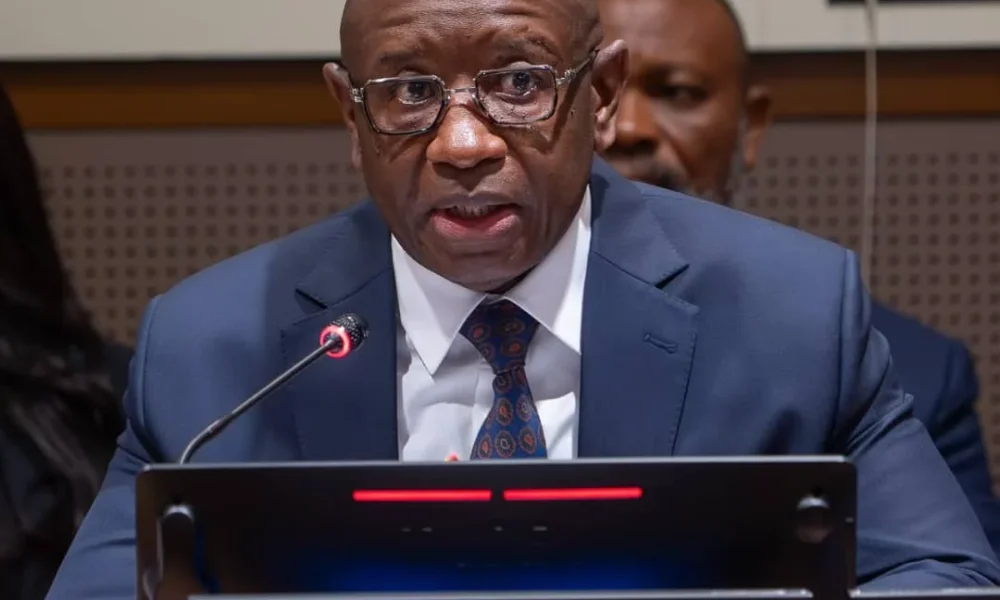
President Julius Maada Bio has urged African countries to take a stronger role in developing, governing and benefiting from artificial intelligence, while retaining control over matters of national interest.
Table Of Content
Bio made the remarks on September 21 at a high-level AI roundtable in New York, convened by Kenyan President William Ruto on the margins of the 81st Session of the United Nations General Assembly.
He described cooperation between African countries that preserves control over sovereign interests as “shared sovereignty”.
Sierra Leone preparing national AI strategy
Bio said Sierra Leone is developing its first national AI strategy with support from the World Bank Group. He did not provide a completion date or identify the specific World Bank Group programme involved.
According to the president, AI solutions developed for Sierra Leone should work on mobile devices, operate in low-bandwidth environments and understand African languages and contexts. He said the technology should be judged by whether it improves people’s lives.
“For me, that is the real test. Can a farmer get better information about his crops? Can a health worker make a better-informed decision? Can a teacher use these tools to help a child learn? Can a citizen access a public service more easily?” Bio said.
Limited internet access, particularly outside urban centres, remains a challenge identified in the discussion about adapting AI to Sierra Leone’s local conditions.
Call for African control of data and infrastructure
Bio called for new approaches to digital infrastructure, including properly governed regional infrastructure where it could offer greater security, resilience and capacity for smaller economies.
He also said Sierra Leone had been exploring the concept of regional data embassies. Under the proposed arrangement, critical public data could be hosted in another participating state while remaining subject to clearly defined legal jurisdiction and control.
“The principle is simple: sovereignty should travel with the law, not simply with the building,” Bio said.
The president warned African countries against repeating economic patterns in which raw materials are exported while much of the value created from them is captured elsewhere. He said the same risk could arise with data.
Bio said African minerals would help power AI infrastructure, while African people would generate data used by AI systems. He called for greater investment in talent, research institutions, languages, datasets and innovation ecosystems, alongside protections for privacy and rights.
Proposed cooperation on AI governance
Bio urged African countries to participate actively in setting global rules for artificial intelligence and proposed practical cooperation among interested states on computing capacity, data governance, interoperability, capacity-building, safety and regulatory approaches.
“That is why I believe there is merit in beginning work among interested African countries on a practical framework for shared AI sovereignty,” he said.
He invited governments, investors and businesses to continue the conversation at the inaugural West Africa Integration and Investment Summit in Sierra Leone on November 17 and 18, 2026. Digital transformation will be one of the summit’s four principal pillars.
Bio said the principles discussed in New York should lead to practical initiatives in Sierra Leone, adding: “So, what we discuss here in New York as principle, let us begin testing in Freetown as practice.”



No Comment! Be the first one.