
Trump and Xi extend trade truce as Taiwan and Iran tensions remain
Donald Trump and Xi Jinping agreed to extend their US-China trade truce by two months during talks in Washington, while disagreements over Taiwan, Iran and technology remained.

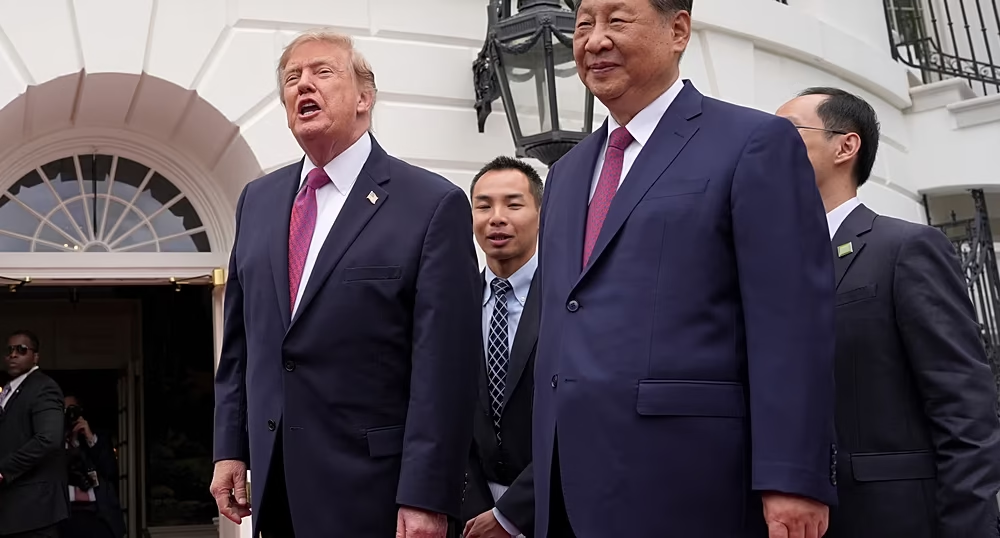
US President Donald Trump and Chinese President Xi Jinping held talks at the White House during Xi’s state visit to Washington, focusing on trade, Taiwan, the conflict involving Iran and artificial intelligence.
Table Of Content
The two countries agreed to extend their one-year trade truce by two months while continuing to seek a longer-term arrangement. The truce had been due to expire on November 10, although the full terms of the extension were not provided.
Taiwan and Iran on the agenda
Taiwan was among the most sensitive issues discussed by the leaders. Xinhua reported that Xi urged Trump to “prudently handle the Taiwan issue” during a private conversation.
China regards Taiwan as part of its territory and has said it could use force to annex the island if necessary. The United States is legally required to provide Taiwan with sufficient military equipment to deter an armed attack from the mainland, while Washington has said it opposes unilateral changes to the status quo by either side.
The report said Xi also wanted Washington to permanently stop arms sales to Taiwan and ease restrictions on exports of advanced chips. Trump previously described arms sales to Taiwan as a negotiating tool and said he was delaying final approval of a $14 billion arms package for the island.
Iran was another major point of discussion. China had resisted requests and economic pressure from the Trump administration to use its influence over Iran to help secure US terms for ending the war, according to the report.
China Central Television said Xi supported the United States and Iran returning to an interim agreement intended to help wind down the conflict. The earlier agreement, signed in June, later broke down as the two countries exchanged renewed fire over control of the Strait of Hormuz.
Cooperation and competition
Xi said US and Chinese interests were “deeply intertwined” and argued that competition between the countries should remain healthy and limited. He also warned Washington and Beijing to avoid what he called the “Thucydides trap”—the risk of conflict between an established power and a rising one.
“It should be a race of catching up with one another, not a wrestle in which one either wins or loses,” Xi said.
Artificial intelligence was also discussed. Xi said AI development should remain under human control and serve public well-being. During finance-minister discussions earlier in the week, the United States proposed a mechanism for notifying each other about AI-related incidents. The report did not say whether China accepted the proposal.
China also announced plans to invite 100,000 American young people to the country for studies and exchanges over five years. Xi said two pandas would be sent to a zoo in Atlanta, describing them as an “envoy of friendship” and saying they would meet the American public in a few days.
State visit draws criticism
Trump and Xi delivered opening remarks before formal talks and later held a private discussion. Their meeting lasted about 90 minutes before Trump took Xi to the White House South Lawn to see the new helipad and Marine One.
Trump said the two leaders had developed a strong relationship since 2016, built on mutual respect and the interests of their peoples. After showing Xi the aircraft and helipad, Trump told reporters, “We had a great meeting.”
The welcome also drew criticism from lawmakers in both parties and some White House allies. Senator Roger Wicker of Mississippi said he would have advised against inviting Xi to Washington for what he called a lavish welcome, citing concerns about the Chinese president and the Chinese Communist Party.
While Trump and Xi sought to highlight cooperation, the talks left major differences over Taiwan, Iran and technology unresolved.






No Comment! Be the first one.