
Young men leave Tigray amid disputed forced recruitment claims
Young men are leaving Tigray or moving within the region amid fears of forced recruitment and renewed fighting, while Human Rights Watch and the TPLF offer conflicting accounts.

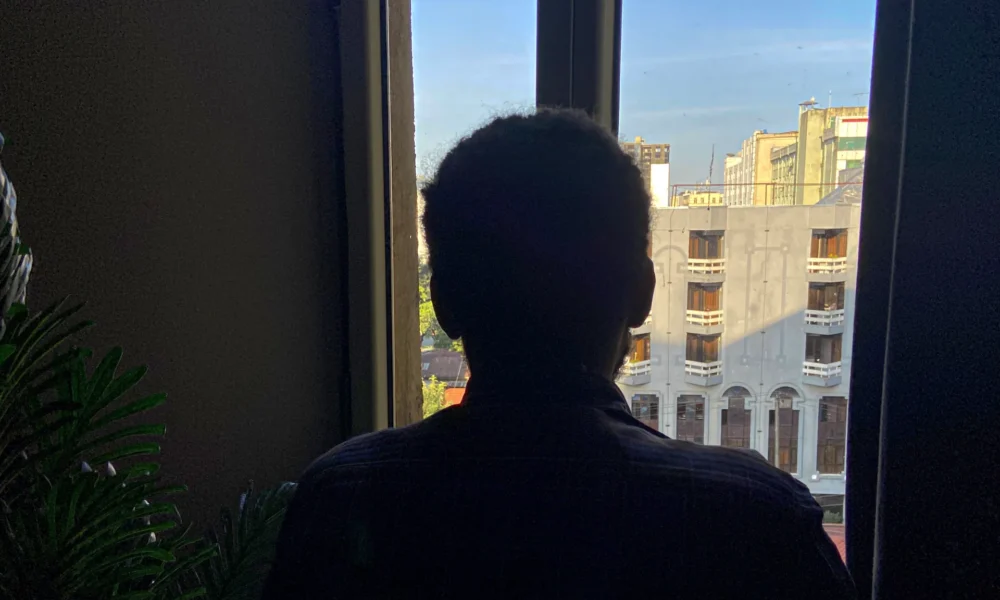
Young men are leaving Tigray or relocating within the region amid fears that they could be forcibly recruited into renewed fighting, according to interviews reported by Al Jazeera.
Gebru, 27, said he was taken from his neighbourhood with other young men to a local administration office. He said his parents secured his release after paying 20,000 Ethiopian birr in cash.
Afterward, Gebru left Tigray for Addis Ababa because his parents feared he would be detained again. “My parents were afraid that if I stayed, I would be taken again,” he said.
Shewit, 24, also moved to Addis Ababa, leaving his family, studies at Mekelle University and a language-class business he had operated for about a year. “I didn’t leave because I wanted to. I left because I wanted to have a chance to build a future,” he said.
Gebrehiwot, 28, who fought in the previous war, moved from his hometown to Mekelle after hearing that former combatants were being called back to the army. He said he feared being identified and forcibly returned to military service.
“I know what the battlefield looks like. I don’t want to go back there and risk not coming home,” Gebrehiwot said.
Conflicting accounts over recruitment
Human Rights Watch said Tigrayan authorities and forces had forcibly recruited civilians, including children as young as 15, since at least April. The organisation said cases involved former combatants as well as men and boys taken from streets, homes, workplaces and gold-mining areas.
Laetitia Bader, Human Rights Watch’s Horn of Africa director, said young people continued to try to leave the region because of reported forced conscription and the severe humanitarian situation.
The Tigray People’s Liberation Front disputes the allegations and says young people are joining voluntarily. Its spokesman, Michael Asgedom, has described the claims as a “mistaken narrative”. Al Jazeera reported that Asgedom did not respond to calls or text messages seeking comment for the story.
Human Rights Watch also said a mobilisation proclamation introduced in June criminalised desertion and attempts by relatives to prevent loved ones from being conscripted.
Unresolved post-war tensions
The developments come amid rising tensions between Ethiopia’s federal government and the TPLF, with both sides accusing the other of military mobilisation. Heavy fighting was also reported near Ethiopia’s border with Sudan in August, although the account of that fighting has not been independently verified.
The November 2022 Pretoria Agreement, brokered by the African Union, ended two years of war between the federal government and the TPLF. However, disputes over territory, the return of displaced people and the disarmament of Tigrayan forces remained unresolved.
Muauz Gidey Alemu, an assistant professor of political science and lead researcher at the Tigray Institute of Policy Studies, said the reported recruitment should be viewed as part of a broader political and security crisis linked to incomplete implementation of the agreement.
“The present situation demonstrates that Pretoria produced an effective cessation of large-scale warfare but an incomplete peace settlement,” Gidey said.
He warned that continued mobilisation could create a cycle in which political insecurity encourages military recruitment, while recruitment further deepens insecurity.
For those who survived the previous conflict, the prospect of renewed mobilisation has intensified fears about the future. Shewit said he did not want to return to Tigray without his family, while Gebrehiwot said he wanted only to live peacefully and never pick up a gun again.




No Comment! Be the first one.