
Africa Renews Push for Permanent UN Security Council Seats
African leaders have renewed calls for permanent representation and veto power on the UN Security Council, though negotiations over the Council's future composition remain unresolved.
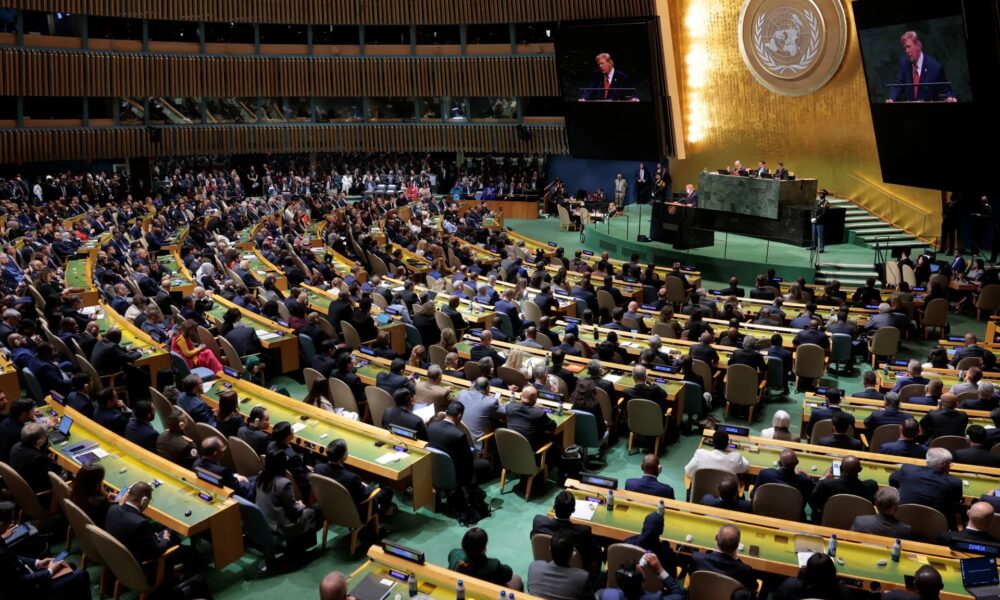
African leaders have renewed demands for permanent representation on the United Nations Security Council, including veto rights and additional elected seats, as the 81st UN General Assembly considers the institution’s unresolved reform agenda.
Table Of Content
UN Secretary-General Antonio Guterres also renewed his appeal for changes to the Council, saying it must become more representative and better reflect current geopolitical realities.
Nigeria’s Vice President Kashim Shettima, delivering President Bola Tinubu’s national statement, called for at least two permanent African seats with veto powers for as long as the veto remains part of the system. He also sought five non-permanent African seats.
Ghanaian President John Mahama made a similar appeal, describing reform as essential to the United Nations’ future.
“Security Council reform is not a favour to Africa; it is an imperative for the legitimacy, credibility and survival of the United Nations,” Mahama said.
Long-running negotiations
The Security Council currently has 15 members: five permanent members and 10 non-permanent members elected by the General Assembly for two-year terms. China, France, Russia, the United Kingdom and the United States hold the permanent seats and can veto substantive resolutions.
The five permanent members have remained unchanged since 1945, while no African country holds a permanent seat. The General Assembly began intergovernmental negotiations on reform in 2008, but the discussions have not produced agreement on the main questions surrounding the Council’s future.
Those questions include how many new permanent members should be created, which countries would occupy them, whether they would receive veto powers and whether the existing permanent members would accept the changes.
Under the African Union’s common position, an expanded Council should include at least two permanent African seats and five non-permanent African seats. The AU’s Ezulwini Consensus supports giving new permanent African members the same rights and privileges as existing permanent members, including veto power for as long as the veto remains in place.
However, the AU has not selected specific countries to fill the proposed permanent positions. Nigeria has consistently presented itself as prepared to take on such a role, while Egypt and South Africa have also pursued permanent representation. Other African countries have expressed interest.
Influence and resistance
Ibrahim Gambari, discussing the reform debate, said the existing system had little interest in changing. “The status quo is not really interested in change,” he said, arguing that the five permanent members were unwilling to give up their privileges.
Gambari also said Africa’s exclusion was difficult to justify because the continent is the largest single bloc in the United Nations and is central to much of the Council’s work. Of 44 Security Council resolutions adopted in 2025, 24 were issued under Chapter VII of the UN Charter and 18 of those concerned Africa.
“In the case of Africa, we have a whole continent that has the largest single bloc, yet has no permanent seat on the Security Council,” Gambari said.
Dr Fola Aina said a permanent position would strengthen Nigeria’s international diplomatic influence while giving Africa a continuous voice in global security decisions. He described the timing of Nigeria’s campaign as strategic amid what he called an era of strategic competition.
Favour Aniezi said the issue extended beyond formal representation to the influence Africa could exercise over decisions affecting the continent.
“Africa should have a voice with the weight to influence what happens at it,” Aniezi said, arguing that the continent should have a meaningful role in determining how its challenges are addressed.
Charter amendment hurdle
Any change to permanent membership would require an amendment to the UN Charter under Article 108. Such an amendment must be approved by two-thirds of the General Assembly and ratified by two-thirds of UN members, including all five existing permanent members.
That requirement leaves the reform effort dependent not only on support for greater African representation but also on agreement from the countries that currently hold the strongest institutional privileges. For now, negotiations over Council expansion, veto rights and the selection of African representatives remain unresolved.




No Comment! Be the first one.