
EAC Expands Infectious Disease Preparedness Training Across East Africa
The East African Community is training 120 health professionals in Nairobi under a Germany-supported programme focused on responding to high-consequence infectious diseases and strengthening...


The East African Community is strengthening regional capacity to respond to serious infectious disease outbreaks through specialised training for 120 doctors, nurses and other frontline health professionals from all eight Partner States.
Supported by the Government of Germany, the training is taking place this week at the Aga Khan University Centre for Innovative Medical Education in Nairobi under the Training in the East African Community for High-Consequence Infectious Diseases programme, known as tEACh.
The initiative is being implemented by the EAC and the German Agency for International Cooperation (GIZ). The series of workshops and related activities is scheduled to continue until November 2026.
Practical outbreak-response skills
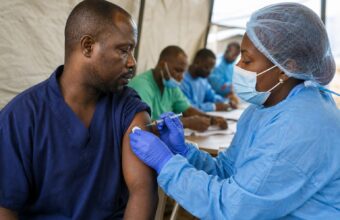
Participants are receiving instruction through practical exercises and simulations covering the identification and isolation of suspected cases, infection prevention and control, the safe use of personal protective equipment, sample collection, patient management and emergency response.
Training is being delivered by clinical experts from Charité – Universitätsmedizin Berlin, East African clinicians who completed the tEACh Training-of-Trainers programme, representatives of national Emergency Operations Centres and the World Health Organization.
The programme is designed not only to prepare participants to manage high-consequence infectious diseases, but also to enable them to pass the training on to colleagues in their respective countries.
Dr. Dorcas Omukhulu, the EAC’s Acting Director of Social Sectors, said the regional approach was intended to build a shared pool of professionals able to detect, manage and contain outbreaks while improving the ability of Partner States to respond collectively during public health emergencies.
“Through this regional training, the EAC is building a common pool of health professionals with the practical skills to detect, manage and contain outbreaks while strengthening the ability of Partner States to respond together when a public health emergency occurs,” Omukhulu said.
Dr. Pius Mutuku, a medical epidemiologist at the Kenya National Public Health Institute and one of the training participants, said the practical emphasis was improving the readiness and confidence of frontline workers.
“This training strengthens the practical skills and confidence we need to respond safely and effectively during an outbreak,” Mutuku said.
Mobile laboratories and additional German support
The EAC has also established a Mobile Laboratory Network consisting of 10 laboratories operating across seven Partner States. The network has supported responses to Ebola, Marburg, COVID-19 and Mpox, with deployments including Beni, Busia, Nimule-Elegu, Kobero and Bwera.
The EAC plans to increase the network to 34 mobile laboratories by the end of 2027. It estimates that approximately USD 45 million is needed to respond effectively to Ebola and other viral haemorrhagic fever outbreaks in the region.
Germany has committed an additional €4.8 million to support the EAC’s Ebola preparedness and response efforts. According to GIZ Programme Manager Burkard Kömm, the assistance is focused on trained personnel, equipment and systems capable of operating across national borders.
“Effective response to a high-consequence infectious disease depends on trained people, the right equipment and systems that work across borders,” Kömm said.
The additional support will facilitate training for 500 frontline health workers, community sensitisation for 15,000 people in eastern DRC and the procurement of 20,000 sets of personal protective equipment. It will also support the registration of new Bundibugyo Ebola vaccines in EAC Partner States once they are approved by the WHO.
The EAC has called on development partners and other stakeholders to contribute to regional preparedness and response efforts as it continues expanding its outbreak-response systems.




No Comment! Be the first one.