
Sudan Refugee Arrivals to Chad Surge as UN Warns of Aid Shortfall
The United Nations says refugee arrivals from Sudan into eastern Chad have accelerated sharply, with more than 400 people crossing daily through Adre and Tine as humanitarian funding falls far short...

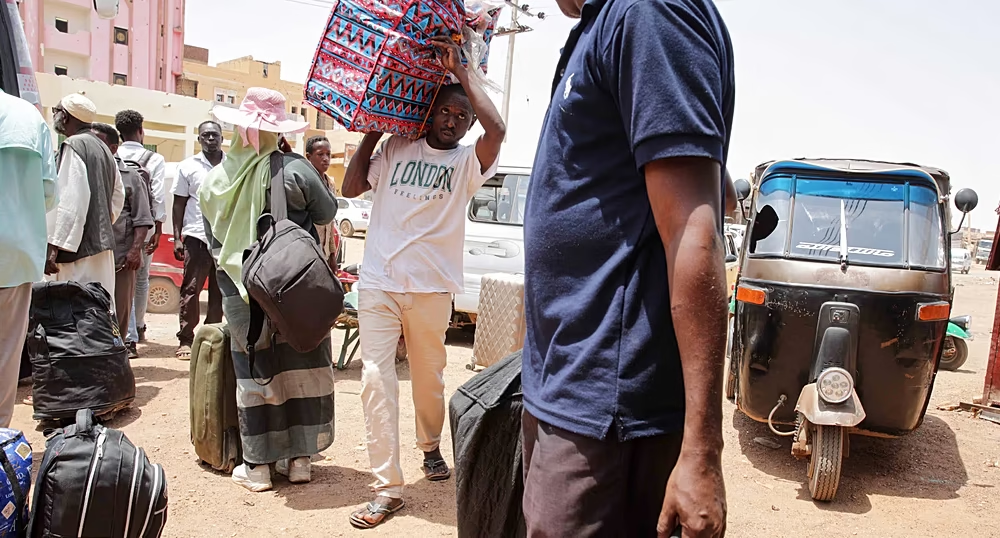
More than 55,000 Sudanese refugees have fled to eastern Chad since the start of the year, with the United Nations warning that new arrivals are rising faster than humanitarian assistance can respond.
Mamadou Dian Balde told reporters in Geneva that the pace of arrivals had increased sharply over the past week. More than 400 people a day were crossing through the border areas of Adre and Tine, he said, a rate around 20 times higher than the daily average recorded during the previous few months.
Fighting drives new displacement
Balde linked the increase to continuing violence and worsening insecurity in Sudan. Fighting, including airstrikes and drone attacks, was forcing more people to leave their homes and was making humanitarian access more difficult in parts of Darfur, Kordofan and Blue Nile.
The conflict between Sudan’s regular army and the Rapid Support Forces began in April 2023. United Nations figures cited in the report estimate that 11.3 million people remain forcibly displaced because of the war, including 6.4 million who are displaced within Sudan and 3.5 million who have crossed international borders as refugees.
According to the United Nations High Commissioner for Refugees, nearly one million people who fled the conflict have crossed into Chad. UNHCR said continued fighting and insecurity were pushing more families to seek safety across the border.
Services and funding under pressure
Conditions for refugees in Chad’s border areas remain difficult. Balde said more than 190,000 refugees were still living in challenging circumstances, with most reportedly receiving less than half of the minimum daily amount of water.
The Tine transit centre was hosting more than 4,300 people and urgently needed shelter, water, sanitation and protection services, he said.
“Humanitarian support is not keeping pace with needs,” Balde said.
UNHCR had received only 18 percent of the 1.6 billion dollars required that year to address regional refugee needs linked to the Sudan crisis. The funding gap is adding pressure to a response already dealing with large numbers of displaced people and deteriorating conditions along the border.
UNHCR has also warned that declining support could encourage refugees to move onward in search of safety, legal status and a viable future. Balde said people could “vote with their feet” if they were unable to find adequate protection and prospects where they had sought refuge.






No Comment! Be the first one.