
Koroma’s Return Puts APC Reconciliation and Renewal in Focus
Ernest Bai Koroma’s return to Sierra Leone after criminal proceedings against him were discontinued has prompted calls for reconciliation and stronger institutions within the APC.


Former President Ernest Bai Koroma returned to Sierra Leone from Nigeria on 6 September 2026, following the Government’s decision to discontinue criminal proceedings against him.
The return was welcomed by ECOWAS, which connected the development to national reconciliation, unity and lasting peace. Koroma has since reaffirmed his commitment to national cohesion, peace and Sierra Leone’s continued development.
Scenes of public celebration accompanied his arrival, particularly in Makeni, according to Yoni Emmanuel Sesay. The response was described as evidence of the continuing identification many people have with Koroma and the political history he represents.
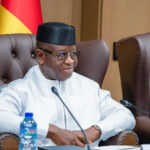
On the day after his return, Koroma and sitting President Julius Maada Bio were seen together at State House. The public language surrounding the moment focused on peace, cohesion and national unity, although no further details of their interaction were provided.
A significant moment for the APC
Koroma’s return carries particular significance for the All People’s Congress, the party he led to State House after winning the 2007 presidential runoff. He was re-elected in 2012, securing 58.7% of the valid vote, before his constitutional presidency ended in 2018 when political authority passed to Bio.
Sesay describes the APC as facing a new political wilderness, in which it must demonstrate that it can govern itself before seeking to govern Sierra Leone again. The party’s current questions include the authority of its constitution, internal elections, succession, litigation, institutional legitimacy and the arrangements for its National Delegates Conference.
The analysis calls for credible internal elections, legitimate delegates, trusted mechanisms for resolving disputes and a conference outcome that is accepted as sufficiently legitimate for the APC to continue functioning.
It also distinguishes between the role of the courts and the responsibilities of the party. Courts may interpret legal questions, the article argues, but they cannot create political trust or reconcile divided members.
Reconciliation rather than control
The discontinuance of the criminal proceedings ended the case, but did not amount to a judicial determination that every allegation connected to it was either true or false. The source does not provide details of the proceedings, the allegations or the legal basis for their discontinuance.
Against that background, Sesay argues that Koroma’s possible contribution should be that of an elder supporting reconciliation and institutional development, rather than a commander, kingmaker or political owner. The analysis suggests that his most enduring contribution could be helping the APC build institutions capable of functioning without depending on him.
That view presents Koroma’s return as more than a personal homecoming. It is portrayed as a test of whether the APC can convert the goodwill surrounding its former leader into reconciliation, internal legitimacy and stronger party structures.
The broader argument is that Koroma can be welcomed while the party’s future remains subject to its members and institutions. His return may therefore open space for healing, but it does not settle the APC’s questions over leadership, succession or organizational authority.



No Comment! Be the first one.