
Morocco’s Youth Participation Takes Centre Stage Ahead of Parliamentary Vote
Morocco is preparing for parliamentary elections on Wednesday, with youth participation and representation under renewed scrutiny after Gen Z protests spread across several cities in late 2025.

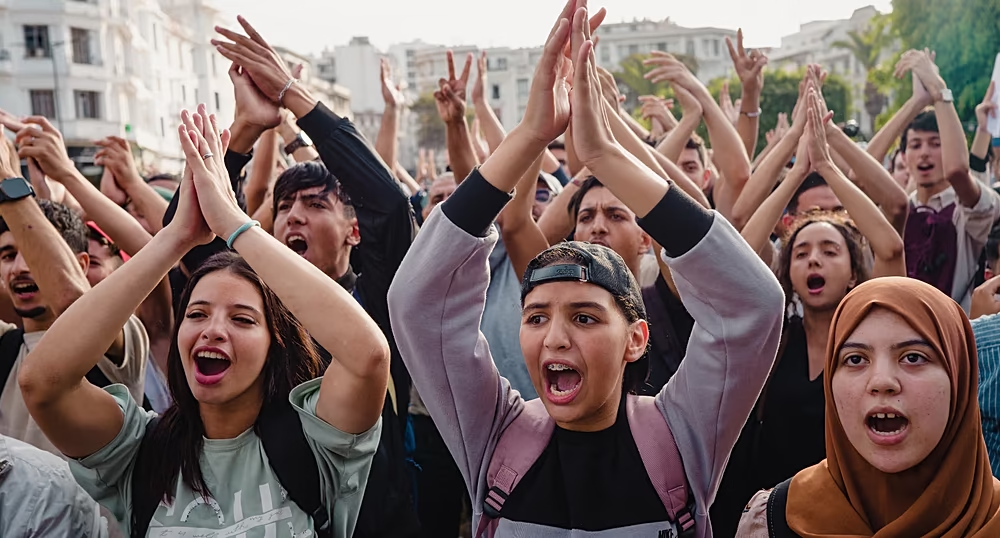
Morocco is preparing to hold parliamentary elections on Wednesday, with the participation and representation of young people emerging as central issues after deadly Gen Z demonstrations shook the country.
The vote is being described as the first since protests spread across several Moroccan cities in late 2025. Demonstrators called for improvements in healthcare, education, employment and public services, while also criticising corruption.
Former participants in the protests are among those seeking seats in the House of Representatives. A total of 7,288 candidates from 27 political parties are competing for 395 parliamentary seats.
Young candidates and voters
Younes Belaidi, 29, is standing for the Progress and Socialism Party in Casablanca’s Ain Chock district. He also works for the Moroccan Organization for Human Rights and took part in the Gen Z protests.
“To solve the problem, we, young people, must participate strongly and in large numbers,” Belaidi said while discussing youth involvement.
Aymane Saissi, another former protest participant, said he had limited confidence but still hoped the next government would respond to the concerns raised by young people.
“I cannot say that I have a lot of hope, but there is hope that the next government will launch projects that will enable us to achieve our basic demands, especially health, education and a decent life,” Saissi said.
People aged between 18 and 24 make up approximately 12 percent of Morocco’s population. However, they account for only 4 percent of the country’s 15.8 million registered voters.
Official data shows that unemployment among people aged 15 to 24 stood at 37 percent in 2025, compared with an overall unemployment rate of 13 percent.
Migration and youth frustration
The concerns surrounding young people also include employment opportunities and the desire to build better lives, issues reflected in the experience of Ayoub Belaidi, 23.
Ayoub crossed into Ceuta during a mass migration in the summer before later returning to Morocco. He said his decision was driven by a search for freedom, exposure to new cultures, personal development and new opportunities.
“The decision to migrate came from a search for freedom and new cultures, and to be able to develop myself and find new opportunities,” he said.
He also described difficult conditions after arriving in Ceuta. “But I faced difficulties in Ceuta. We experienced a state of emergency during the first three days. We had no food and no place to sleep,” he said.
With former demonstrators now among the parliamentary candidates, the election will place renewed attention on whether young Moroccans participate in the vote and how effectively their concerns are represented in the House of Representatives.




No Comment! Be the first one.