
Renewed Tigray Fighting Threatens Ethiopia’s 2022 Peace Deal
Fighting in southern Tigray and neighbouring regions has raised fears that Ethiopia’s 2022 peace agreement could collapse, while both sides dispute responsibility for the latest escalation.

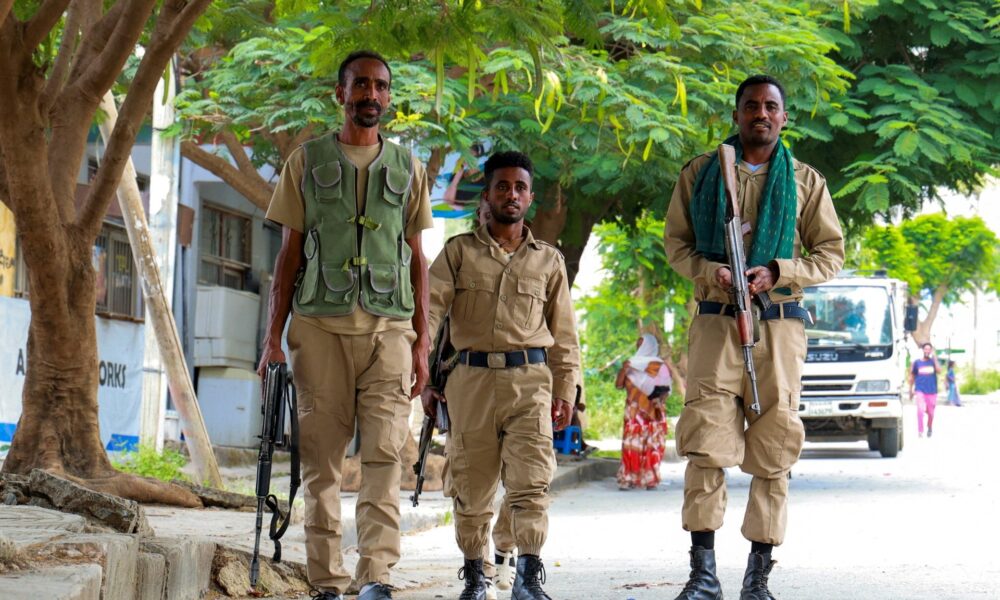
Fighting between Ethiopia’s federal army and forces from Tigray has intensified, raising concern that the agreement that ended the country’s 2020–2022 war could unravel.
Table Of Content
The latest clashes have been reported in southern Tigray and have spread into the neighbouring Afar and Amhara regions. Both sides have blamed the other for starting the latest round of violence, while claims about territorial control and individual attacks remain difficult to verify independently.
Alliance challenges Abiy’s government
The escalation follows the announcement of the Ethiopian Peoples’ Forces Alliance for Survival, a coalition formed by seven armed movements seeking to remove Prime Minister Abiy Ahmed’s government.
The alliance includes the Tigray People’s Liberation Front, or TPLF, the Amhara Fano National Movement and the Oromo Liberation Army. The OLA has fought federal forces in Oromia since 2018.
The alliance brings together groups that were on opposing sides during the previous war. Fano fighters fought alongside federal troops against the TPLF, but are now aligned with Tigrayan forces in the new coalition.
The Ethiopian government has accused the TPLF of attacking first and says Tigrayan forces retained weapons they were expected to surrender. Tigrayan leaders, however, say the government failed to secure the withdrawal of other forces and did not enable displaced people to return, particularly to western Tigray.
Tigrayan forces say the latest fighting followed a federal offensive involving ground troops and drones.
Unresolved disputes remain
The TPLF began as an armed movement against Ethiopia’s military government in the 1970s and later became the dominant force in the coalition that governed the country for nearly three decades. Abiy became prime minister in 2018 and created the Prosperity Party, reducing the TPLF’s influence at the centre of government.
The war began in November 2020 and involved federal troops, Eritrean forces, Amhara fighters and Tigrayan forces. A peace agreement signed in Pretoria, South Africa, in November 2022 ended the full-scale conflict but left several disputes unresolved.
One of the main outstanding issues is western Tigray, which Amhara fighters took control of during the war. Hundreds of thousands of Tigrayans were driven from their homes, according to the report.
The TPLF faction led by Debretsion Gebremichael retook control of Tigray’s administration earlier this year, displacing an interim administration established under the peace agreement. Before the latest escalation, about three-quarters of a million people remained displaced within Tigray from the earlier conflict.
Eritrea and Amhara forces supported the Ethiopian government during the previous war but were not parties to the Pretoria agreement and later fell out with Abiy’s government. Addis Ababa has accused Eritrea of backing armed groups inside Ethiopia, while Eritrea has denied supporting them.
Airports seized as diplomatic calls grow
Tigrayan forces reportedly took control of airports in Mekelle, Axum and Shire, disrupting civilian flights. The African Union said the airport seizures were inconsistent with the Pretoria agreement and called for an immediate halt to the escalation and renewed talks.
The organisation also asked former Nigerian President Olusegun Obasanjo to engage the parties urgently. IGAD urged neighbouring countries to avoid actions that could worsen the crisis.
Al Jazeera reporter Catherine Soi reported overnight fighting in Abala, a border town in northern Afar. Reports differed over which side controlled the town.
Jervin Naidoo, a senior political analyst at Oxford Economics Africa, said violations had continued since the war ended. “Since the end of the war, while the Pretoria Agreement has held, there have been consistent violations on both sides,” he told Al Jazeera.
Analysts cited in the report said the conflict had not yet become a full-scale civil war, although the risk of a broader conflict remains. Ethiopia’s army also said it had killed more than 270 rebel fighters in Amhara, but that figure was not independently verified.



No Comment! Be the first one.