
Sudan’s War-Driven Hunger Crisis Revives Memories of Past Famines
Sudan’s war has contributed to famines in 2024 and 2025, while disrupting agriculture, trade and humanitarian access across the country.

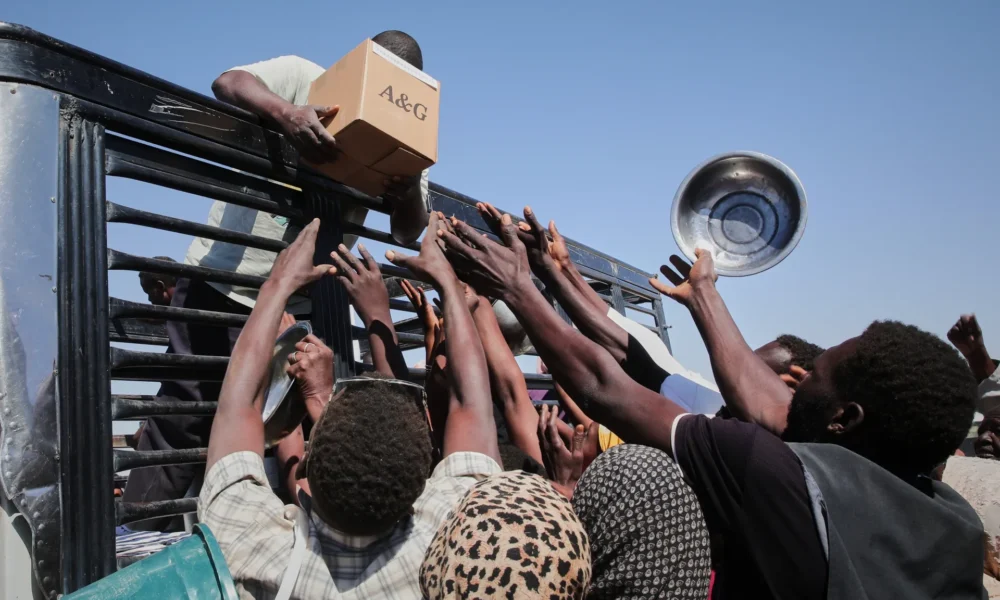
Sudan’s prolonged war has deepened one of the country’s worst modern food crises, reviving memories of earlier famines while spreading hunger across urban and agricultural centres.
Table Of Content
The conflict between the Sudanese army and the Rapid Support Forces began in April 2023. Since then, agricultural production and trade have been disrupted, farmers have been forced from their land, and the movement of food and humanitarian assistance has become increasingly difficult. The crisis contributed to famines in 2024 and 2025.
Unlike earlier disasters that were frequently linked to drought, poor harvests and other environmental shocks, the present crisis is described as predominantly man-made and driven by war.
A crisis reaching cities and farming regions
Abdullah al-Tijani, a social historian and humanitarian activist, said hunger and the collapse of basic services had spread across Sudan. He identified Khartoum, Gezira, Sennar, Darfur and Kordofan as areas containing major urban and agricultural centres affected by the food crisis.
Al-Tijani said the emergency had caused millions of people to be displaced inside and outside the country. He contrasted the current situation with earlier famines, which he said were often concentrated in particular regions while the capital and other major cities retained access to basic necessities and services.
He attributed the present deterioration to what he described as the systematic destruction of infrastructure, disruption of large agricultural projects and attacks affecting markets, bakeries and crops. He also cited interruptions to banking and communication networks, saying these had isolated entire regions.
Al-Tijani further pointed to restrictions on humanitarian access and delays in issuing transit permits for relief workers. He accused the warring parties of using control over food supplies as a tool of war and warned that international funding had not matched the scale of the emergency. Those claims are attributed to al-Tijani.
Echoes of earlier famines
Sudan has experienced severe food shortages over several centuries. Historical accounts cited by Al Jazeera refer to a major crisis in central Sudan in 1684, followed by another climate-driven crisis in 1750. A famine between 1835 and 1838 was associated with severe drought and low Nile water levels during Ottoman-Egyptian rule.
The famine of 1888-1889 remains particularly prominent in Sudanese historical memory. It followed drought, locust infestations and conflict. Some historical estimates put the death toll at more than one million, although the precise figure is difficult to establish.
Food shortages, droughts and poor harvests continued to affect Sudan during the 20th century. In 1984, a devastating drought in western Sudan, including Darfur and Kordofan, caused crop and livestock losses and displaced hundreds of thousands of people from rural areas to Khartoum.
Agricultural potential under pressure
Sudan possesses substantial agricultural resources, including an estimated 200 million acres, or about 81 million hectares, of arable land. It also has access to Nile water and extensive livestock resources. Despite that potential, the country has not fulfilled its capacity to become a global breadbasket.
Economic researcher Mohammed Abdul Rahman linked the current food-security crisis to a development gap and longstanding weaknesses in Sudan’s agricultural sector, compounded by the war. He said wars and armed conflicts were among the most influential factors affecting food production.
Abdul Rahman also identified farmer displacement, political instability, weak agricultural policies and funding, inadequate government guarantees and reliance on traditional farming methods as factors affecting food production.
The current emergency therefore reflects both the immediate effects of war and longstanding structural weaknesses. Humanitarian and historical observers fear that some of the suffering associated with Sudan’s earlier famines is being repeated on a wider geographic scale.






No Comment! Be the first one.