
Durban Refugees Fear Further Attacks as September 30 Deadline Nears
Refugees and asylum seekers in Durban say they fear returning to their former communities as a September 30 departure deadline declared by March and March approaches.

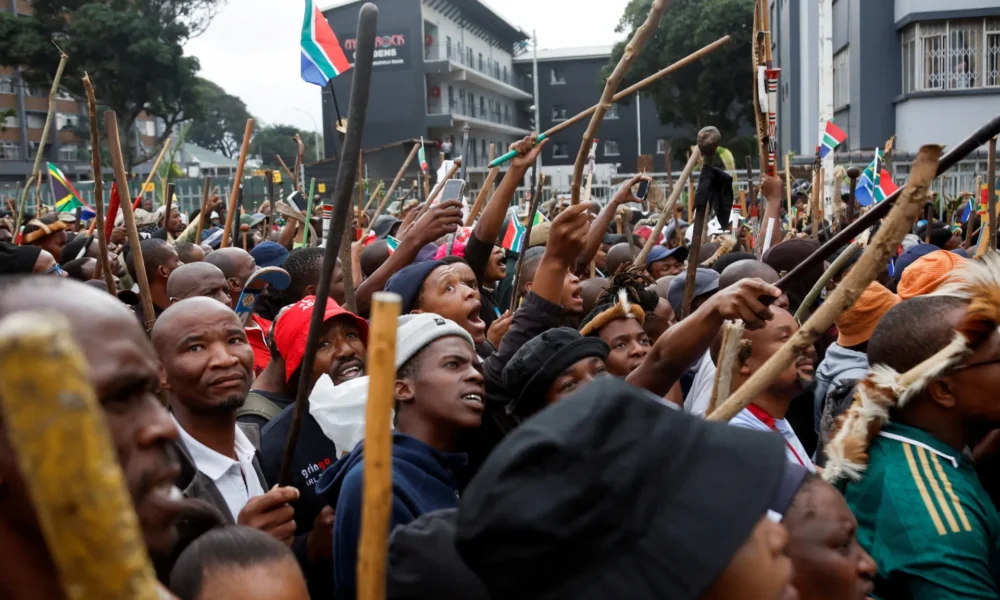
Refugees and asylum seekers in Durban are facing renewed fears of violence and homelessness as a September 30 deadline declared by the anti-immigration movement March and March approaches.
Table Of Content
Hundreds of people had slept for roughly four months on the pavement outside the Durban Refugee Reception Centre on Che Guevara Road. Many said they left their communities because they feared attacks against foreign nationals.
The makeshift camp was cleared in mid-September. Authorities offered residents the choice of returning to their communities or accepting temporary accommodation at the Lindela facility in Gauteng, a government-run immigration detention facility used for people facing deportation.
On September 15, 274 people were transported by bus from Durban to Lindela. About 150 others remained in Durban and began looking for alternative accommodation. The current conditions of those sent to Lindela, and the arrangements found by those who stayed behind, have not been provided.
Fear of returning home
Refugees from the Democratic Republic of the Congo, Burundi, Uganda, Mozambique and Tanzania told Al Jazeera that official documents offered limited reassurance because hostility on the streets did not necessarily begin with a request to see immigration papers.
Many said they were afraid to return to neighbourhoods where they had built businesses and established lives. Kafuti Muyumba, a Congolese business owner and representative of the refugee community, said returning to the Democratic Republic of the Congo was not a viable option for many Congolese refugees. “There is still war there,” he said.
Bishop Raphael Bahebwa, a Congolese refugee who has lived in South Africa for 26 years, described the conditions at the pavement camp as extremely difficult. “It has been very tough,” he said. Bahebwa also said he was in hiding because of threats linked to his advocacy for the rights of foreigners.
Some migrants described irregular access to food and medication while living outside the centre. A man reportedly suffering from tuberculosis also died at the camp, although the circumstances of his death have not been independently established.
Reports of violence
On September 3, members of March and March confronted refugees and asylum seekers outside the centre. Violence broke out and police intervened. At least four people were reported injured.
GroundUp, as cited by Al Jazeera, reported that six refugees working in salons near Durban’s Warwick Street Market were beaten by men carrying sticks. Two were hospitalised.
Bahebwa alleged that police told some migrants they could not open cases because they were foreigners. Police have not publicly responded to that specific allegation. Muyumba also expressed distrust of the police, saying some refugees believed officers were not treating them fairly.
“This is not the first time we are experiencing xenophobia,” Muyumba said, referring to earlier periods in 2008 and 2015.
Deadline has no legal authority
March and March has called for undocumented foreign nationals to leave South Africa and warned of further demonstrations if its demands are not met. The movement says its campaign is focused on undocumented immigration, crime and deteriorating conditions in South African communities, and rejects accusations that it is targeting foreign nationals generally.
The South African government has clarified that the September 30 deadline has no legal authority and that ordinary citizens cannot deport people from the country. It has also warned private groups against taking immigration enforcement into their own hands.
Police said they had no plans to change their normal policing approach because of the deadline and would expect protesters to remain within the law.
The government said it had intensified immigration enforcement following ongoing protests. According to South Africa’s Inter-Ministerial Committee on Migration, authorities processed 86,596 foreign nationals for deportation and repatriation between June 14 and August 20. Government data said 90 percent of those repatriated had entered the country illegally, while 95 percent had crossed the border outside official ports of entry.
For refugees still in Durban, however, the approaching deadline has deepened uncertainty over their safety and accommodation. Bahebwa said he did not expect the hostility to end on September 30, saying migrants were being scapegoated because they were foreigners.





No Comment! Be the first one.