
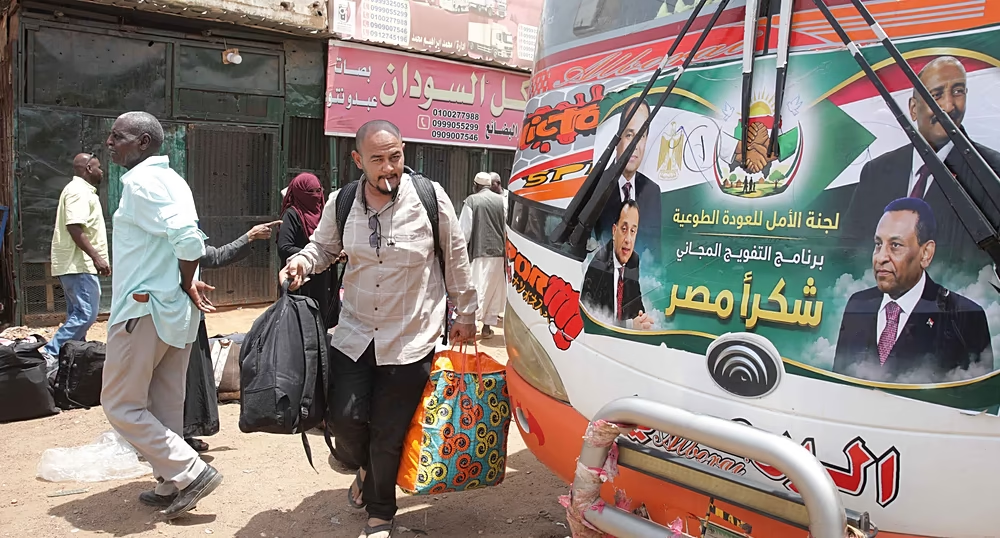
Residents returning to Khartoum are confronting a capital where basic services remain unreliable, jobs are scarce and safety risks persist, despite efforts to repair parts of the city after years of war.
Table Of Content
An estimated 2.7 million people have returned since the army recaptured Khartoum, according to figures reported to Agence France-Presse. About four million people fled the capital after fighting began in 2023 between the army and the Rapid Support Forces.
For many returnees, however, coming home has not meant a return to normal life. Electricity and water can remain unavailable for days, while many residents have little income to spend even though some markets have reopened.
Families reconsider return
Emad Khaled, a 43-year-old businessman, said he was sending his family back to Egypt while staying in Khartoum for work. “Bringing my family back was a mistake,” he told AFP.
Nearly half a million people have returned to Khartoum from neighbouring Egypt. Egypt had provided shelter to about 1.5 million Sudanese, but some returnees are now weighing another departure because of conditions in the capital.
Thuraya Babiker, 86, said she and relatives were leaving for the United Arab Emirates three months after returning. “my husband, my youngest daughter and I are leaving for the United Arab Emirates,” she said. “We don’t want to leave,” Babiker added, explaining that limited medical care had made it impossible for them to remain.
Khartoum’s working-class neighbourhoods have received the largest numbers of returnees, while more affluent districts, including Khartoum 2, remain largely abandoned.
Services and medical care remain strained
The army has rebuilt Khartoum’s airport, reopened it for domestic flights and carried out repairs to parts of the city’s infrastructure. Sudanese charities have also helped rebuild hospitals, which health workers described in some cases as “better than before.”
Even so, shortages of medicines and medical services continue. Physician Haifa Omar said, “some things just aren’t available.” She said patients are sometimes asked to purchase medicines themselves, adding: “We have to ask patients to buy some medicines on their own dime. I have a lump in my throat as I say it, we know how difficult people’s situations are.”
Imam Babiker, a 34-year-old college professor, said he had visited 10 pharmacies while looking for his father’s blood pressure medication. “and every day it’s a different price,” he said.
He also said power cuts were affecting the storage of insulin for his diabetic mother. “but the electricity goes out for 12 hours a day, so it gets ruined,” Babiker said.
Souad Mohamed, 49, described another consequence of the conflict’s damage and looting. After her refrigerator was stolen, she said: “So now I have to buy vegetables and meat every day, and the price goes up every day.”
Safety concerns persist
The return has also taken place amid continuing dangers from the war. By June, the United Nations had declared only one percent of Khartoum safe, according to the report. Dozens of children have been killed or injured by booby-traps and unexploded shells in the capital.
Fighting between the armed forces and the RSF continues in Darfur, Kordofan and Blue Nile, leaving the wider conflict unresolved even as residents attempt to rebuild their lives in Khartoum.
The scale of the return has therefore not yet translated into a stable recovery. For some families, unreliable water and electricity, limited medical care, unemployment and the threat posed by remnants of the fighting are prompting another search for safety outside Sudan’s capital.


No Comment! Be the first one.