
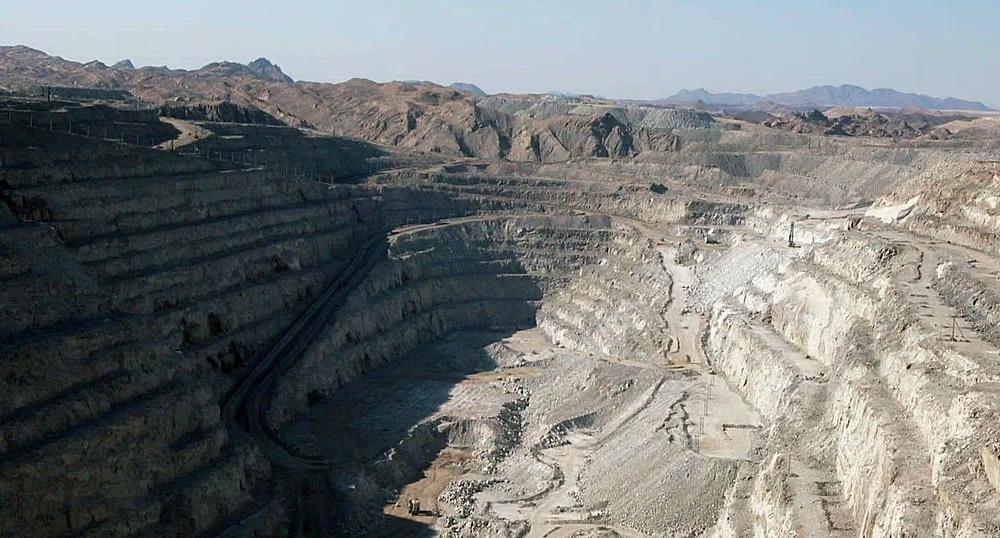
Niger has increased its ownership of the Madaouela uranium project to 40% under a new mining agreement, strengthening the state’s role in one of the country’s key mineral developments.
Australian company Atomic Eagle retains the remaining 60% stake in the project, which is located in northern Niger. The company has said it will accelerate preparations for Madaouela and pursue the financing required to move the project toward construction.
The agreement was signed last week, although an exact date was not provided. It comes as Niger seeks a larger share of the revenue generated from its mineral resources and works to broaden its network of international partners.
Foreign financing remains central
Atomic Eagle aims to reach construction readiness for Madaouela in around two years. Hoskins Philip Ross, managing director of Mamico, said the project would also seek international investment and financing.
“Atomic Eagle will similarly seek to attract international investment and financing for the development of Madaouela,” Ross said, describing continued investor interest as an encouraging sign for Niger’s uranium sector.
The project’s ownership structure highlights the government’s effort to increase national participation while still relying on foreign capital and expertise to advance uranium production.
The Nigerien government says stronger state participation is intended to keep more mining revenues within the country. It is also seeking to diversify its international partnerships.
Uranium projects draw financing interest
Madaouela is not the only uranium development attracting attention in Niger. Global Atomic is developing the Dasa uranium project in the country, while a separate agreement provides for financing of up to $414.2 million from the U.S. International Development Finance Corporation.
The available information does not establish whether the full Dasa financing amount has been disbursed or whether it remains an agreed maximum.
For economic analyst Issoufou Boubacar Kado, Niger’s expanded role in the sector reflects greater control over raw materials rather than complete economic independence.
“I don’t think we can talk about economic sovereignty at the moment. What we can talk about is control over raw materials,” Kado said. He added that Niger could now have a greater say in choosing its partners than it did previously.
The Madaouela agreement therefore places Niger’s drive for increased control alongside the continued need for international investment to develop its uranium resources.





No Comment! Be the first one.