
Competing Claims Over Alamata as Ethiopia Fighting Spreads
Fighting between Ethiopian federal forces, allied groups and the TPLF has intensified across Tigray, Afar and Amhara, with competing claims over key towns and growing displacement.

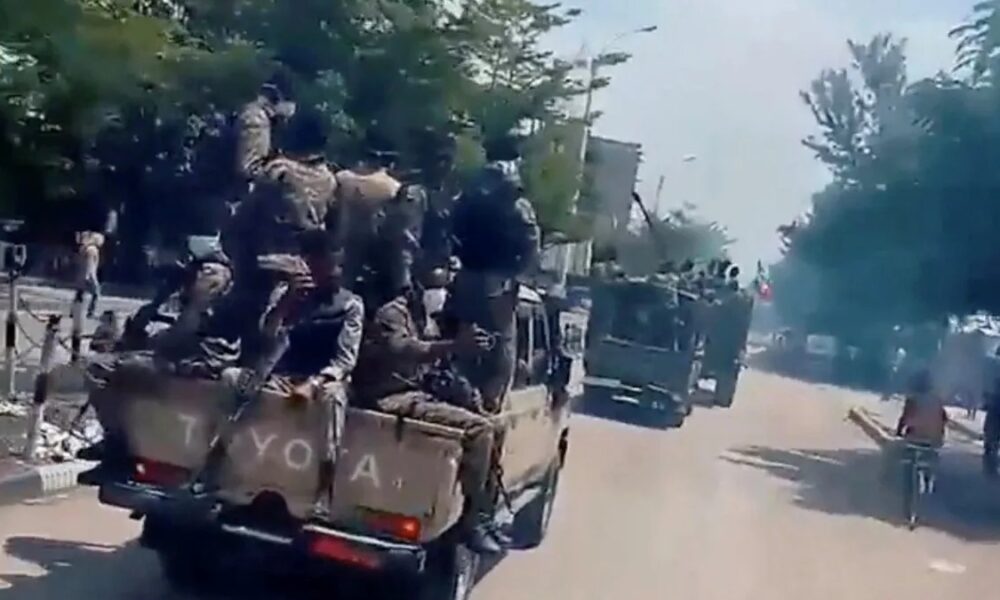
Fighting has intensified across northern Ethiopia, with government forces and allied fighters claiming to have taken the Tigray town of Alamata as clashes with the Tigray People’s Liberation Front (TPLF) spread across Tigray, Afar and Amhara.
Table Of Content
The Tigray Peace Force said in a Facebook statement that its fighters captured Alamata alongside Ethiopia’s national army. A Reuters video reviewed by the agency showed soldiers moving through the town while carrying Ethiopian flags.
Two diplomatic sources told Reuters that Alamata had fallen, while a source linked to opposition forces said those forces were withdrawing. The full extent of government control in the town remained unclear.
Alamata is a supply centre close to Tigray’s southern border with Amhara, about 120km from the regional capital, Mekelle. Its reported capture could give federal forces a route to advance north, although the source material did not establish whether government troops had reached or surrounded Mekelle.
Fighting on several fronts
The latest escalation followed a major Tigrayan offensive during which Tigrayan forces reportedly seized three airports in Tigray and moved into parts of Afar and Amhara. The TPLF said it was fighting a defensive war and accused federal forces of using drones and heavy artillery.
Federal troops and allied forces later launched a counterattack. The headquarters of Tigrai TV in Mekelle was hit by a drone on Sunday, according to the report.
In Afar, TPLF forces reportedly captured Erebti over the weekend, according to an Ethiopian commander who spoke anonymously to The Associated Press. The Tigray Peace Force acknowledged that Erebti had fallen to the TPLF but disputed reports that the takeover followed intense fighting.
The Afar governor also alleged that Eritrean forces were involved in the fighting, controlled more than two-thirds of Afar and were moving to cut the road linking Djibouti and Eritrea. The Eritrean government had not responded to those allegations at the time of the report.
Displacement and casualties
The escalation has disrupted internet and telephone networks in Tigray and caused casualties and displacement. Valerie Browning, co-founder of the Afar Pastoralist Development Association, told The Associated Press that about 150,000 people had been displaced since the latest fighting began. That figure was not independently verified.
The Ethiopian military said about 270 Tigrayan fighters had been killed and more than 200 wounded around North Wollo. Those figures were presented as military claims and were not independently confirmed.
Doctors Without Borders reported a sharp increase in wounded patients in northern Ethiopia. The organisation said the number of patients at hospitals in Korem and Alamata rose from about 180 to more than 420 within 48 hours. It also reported that 300 wounded people arrived at Suhul Hospital during the previous week.
Regional and political risks
The fighting has raised concerns about Ethiopia’s supply lines. Most of the country’s imports, including fuel, pass through Djibouti, and the offensive in Afar could threaten those routes.
Ethiopian army chief Field Marshal Berhanu Jula accused Eritrea of supporting opposition forces and said Sudan and Egypt were also providing backing. Eritrea and Sudan denied the allegations. Egypt’s Foreign Ministry spokesperson, Nader Zaki, said the country’s policy was based on “full respect for the sovereignty, unity and territorial integrity of states”. Sudan described the allegations as “baseless and unfounded” and said they lacked any “foundation or evidence”.
The TPLF joined six other armed groups to form the Ethiopian Peoples’ Forces Alliance for Survival shortly before the latest offensive. The alliance, which includes the Oromo Liberation Army and the Amhara Fano National Movement, has said it wants to remove Prime Minister Abiy Ahmed’s government and establish a transitional administration.
The renewed conflict has shattered the Pretoria Agreement, signed in November 2022 after the previous war between the TPLF and federal forces. That conflict, which began in November 2020, killed hundreds of thousands of people and displaced millions, according to the source report. The latest fighting has also renewed fears that Ethiopia’s neighbours could become involved.





No Comment! Be the first one.