
UN to Mark 25 Years of Durban Anti-Racism Declaration
The United Nations General Assembly will hold a high-level meeting in New York to commemorate 25 years of the Durban Declaration and Programme of Action and examine continuing challenges linked to...


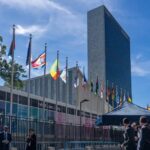
The United Nations General Assembly will hold a high-level meeting on Monday at UN Headquarters in New York City to commemorate the 25th anniversary of the Durban Declaration and Programme of Action.
Table Of Content
The meeting will assess progress and continuing challenges in the fight against racism, racial discrimination and inequality. A political declaration is expected to be considered and adopted, although the source information does not confirm that adoption has taken place.
A framework against discrimination
The Durban Declaration was adopted by the vast majority of UN member states by consensus at the 2001 World Conference Against Racism in Durban, South Africa. It is not legally binding on member states, but is described as one of the most comprehensive international frameworks for combating racial discrimination and inequality.
The 153-page document addresses racism, xenophobia, the oppression of Indigenous people and gender-based discrimination. It also recognises slavery and the slave trade as crimes against humanity and links those historical injustices to modern poverty and disparities.
The declaration recognises the rights of Indigenous peoples and calls on states to condemn and prevent the recurrence of slavery, the slave trade, apartheid, genocide and related crimes. It also says migration policies should not be based on racism or intolerance.
Focus on implementation and youth leadership
According to the UN Office of the High Commissioner for Human Rights, the anniversary meeting is intended to improve public understanding of the declaration, encourage dialogue and identify strategies for mobilising renewed political will to implement it.
The official theme is “Mobilizing Global Public Support for the Full and Effective Implementation of the Durban Declaration and Programme of Action.” The event will be livestreamed through UN Web TV in several languages.
The programme includes an interactive panel on youth leadership. It will examine how young people from marginalised racial and ethnic groups shape public discourse and advance action against racism.
The opening plenary is scheduled to include Khalilur Rahman, president of the 81st General Assembly; UN Secretary-General Antonio Guterres; UN High Commissioner for Human Rights Volker Turk; a South African head of state or representative; an NGO representative; and a youth representative.
UN member states, observer states and observers of the General Assembly are expected to participate in the general debate at the conclusion of the conference.
Continuing dispute over Israel and Palestine
The Durban process has remained politically contentious because of provisions concerning Israel and Palestine. Clause 63 of the declaration recognises the Palestinian people’s right to self-determination and to establish an independent state, while also affirming the right to security for all states in the region, including Israel. Another provision recognises the right of refugees to return voluntarily to their homes.
The United States and Israel withdrew from the 2001 conference and did not support the declaration because of its clauses concerning Israel and Palestine. The source also reports that language equating Zionism with racism was removed from an early draft following opposition from Israel and its Western allies.
Multiple rights groups and scholars have characterised Israeli policies against Palestinians as amounting to apartheid. Experts and a UN commission of inquiry have also described Israel’s war on Gaza as genocide. Those descriptions are attributed claims reported in connection with the Durban anniversary debate.
Previous reviews
The Durban Review Conference took place in Geneva in April 2009 to assess progress since the 2001 conference and address new challenges. A further meeting was held in 2011 to mark the declaration’s 10th anniversary.
The draft political declaration for the latest meeting reaffirms messages from the 2001 declaration, the 2009 review outcome document and political declarations adopted on the 10th and 20th anniversaries. It also expresses deep concern about discrimination, systemic racism and hate speech, while stating that equality and non-discrimination are fundamental principles of international law.





No Comment! Be the first one.