
Bio Renews Sierra Leone’s Reparatory Justice Appeal in Quincy
President Julius Maada Bio has renewed Sierra Leone’s call for reparatory justice during a visit to Quincy, Massachusetts, where he reflected on the Amistad struggle and the historic relationship...

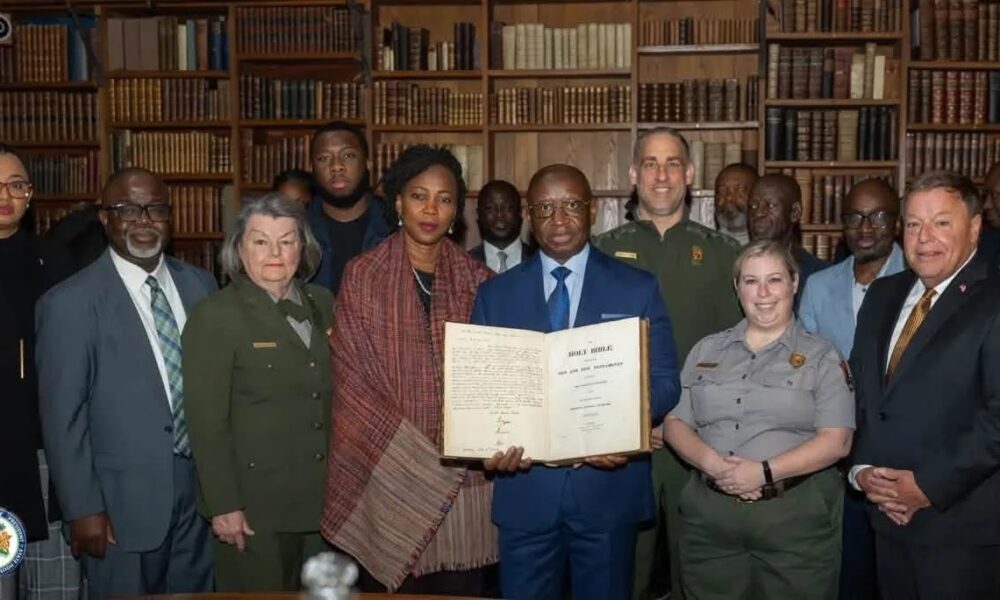
President Dr Julius Maada Bio has renewed Sierra Leone’s call for reparatory justice over the enduring consequences of slavery and the transatlantic slave trade during a gathering in Quincy, Massachusetts.
Table Of Content
Bio addressed the event at the United First Parish Church on 27 September 2026 under the theme, “Celebrating Courage: Honouring the Historic Link Between Quincy and Sierra Leone.” The church is popularly known as the Church of the Presidents.
In his remarks, the president linked the relationship between Quincy and Sierra Leone to the Amistad struggle and the pursuit of freedom by Sengbe Pieh, also known in the United States as Joseph Cinqué. He also highlighted the role of former United States President John Quincy Adams, who represented the Africans before the United States Supreme Court.
Amistad legacy and reparatory justice
Sengbe Pieh and other Mende Africans were unlawfully enslaved aboard the Spanish schooner La Amistad in 1839. Their resistance led to a legal battle that reached the Supreme Court, which ruled in favour of the captives in 1841.
Bio described the episode as an example of courage expressed in two ways: Pieh’s resistance to injustice and Adams’ decision to confront injustice through law, conscience and principle.
“Nearly two hundred years ago, Sengbe Pieh came to these shores in chains. Today, the President of the Republic of Sierra Leone comes to Quincy in freedom and friendship. That is the distance history has travelled,” Bio said.
The president said reparatory justice should involve recognising historical truth, honouring those who suffered and building a fairer future. He described the issue as one that joins memory with responsibility and justice with reconciliation.
“It is about memory joined with responsibility and justice joined with reconciliation,” he said.
Bio did not specify a particular form of reparations. He reaffirmed Sierra Leone’s position that reparatory justice should be part of broader efforts to acknowledge historical wrongs and address their continuing effects.
Historic links with Quincy
During his visit, Bio also went to Adams National Historical Park, where he viewed the Mendi Bible preserved in the Stone Library.
The United First Parish Church has links to John Quincy Adams, who worshipped there. His tomb and that of Louisa Catherine Adams are located in the church’s crypt.
Bio thanked the people of Quincy, Adams National Historical Park and the United First Parish Church for preserving the historic relationship with Sierra Leone. He called for the ties to continue developing around truth, justice, freedom, friendship and humanity.
“History must not merely be remembered, it must instruct us,” he said, urging the Amistad story to guide present-day efforts to confront injustice.
Resilience and future responsibilities
The president also referred to Sierra Leone’s recovery from an eleven-year civil war, the Ebola epidemic, the 2017 mudslide disaster and the COVID-19 pandemic as evidence of the country’s resilience.
He said the legacy of the Amistad struggle should be connected to practical efforts involving education, opportunities for young people, women’s participation, addressing hunger and food insecurity, protecting peace and enabling African self-determination.
“Sengbe Pieh fought for freedom. Our responsibility is to give that freedom meaning,” Bio said.

No Comment! Be the first one.