
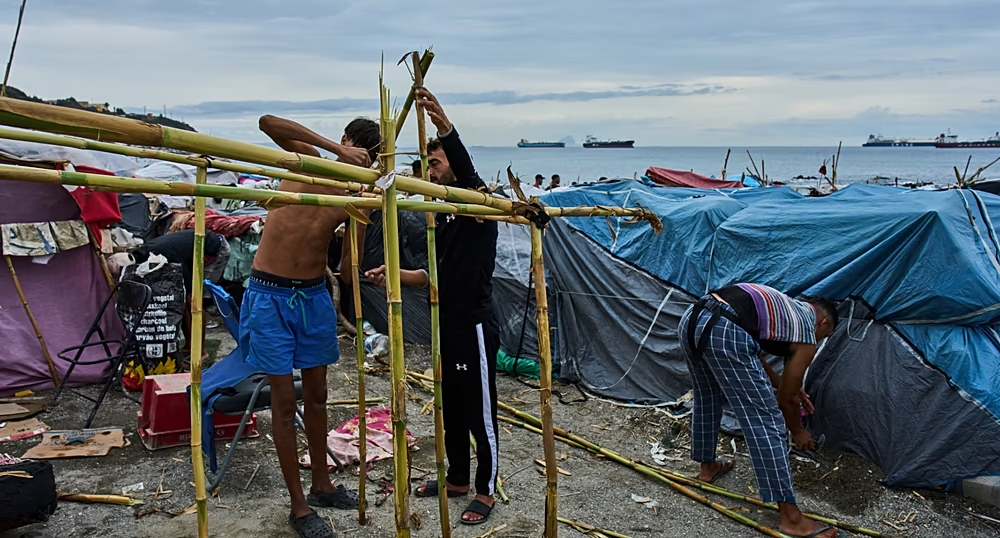
Three members of the European Parliament have described the humanitarian situation in Ceuta as grim after completing a fact-finding mission to the Spanish enclave.
Speaking at a joint press conference in Brussels, Estrella Galán of The Left, Jaume Asens of the Greens and a third lawmaker whose name was not identified said conditions were deteriorating. Their assessment followed the arrival of an estimated 72,000 migrants in Ceuta, most of whom were returned to neighbouring Morocco within several days.
A few thousand people were believed to have remained in the territory. Weeks later, the Spanish national government estimated that about 5,000 people were still there, including approximately 1,200 minors. Ceuta’s local government gave a higher estimate, although the figure was not specified.
Allegations of abuse
Asens alleged that military forces had subjected migrants to torture and inhumane treatment. He said patrols carried out night searches, beat people, took belongings and forced some migrants to shave their hair or kneel to kiss a Christian cross or the Spanish flag.
“These are not isolated events. There is a pattern. There are patrols that do night sweeps and that beat up [people],” Asens said.
He also described what he called “torture, inhumane treatment by military forces” and accused the state of violating the rights of people it should have been protecting.
Amnesty International separately accused Spain’s armed forces of torture and other cruel, inhumane and degrading treatment of migrants stranded in Ceuta. The allegations remain attributed to Asens and the rights organisation.
Probe ordered
The Spanish government has ordered the military to conduct an internal investigation aimed at identifying individuals who may be responsible for the alleged acts. The outcome of that probe has not been provided.
Galán warned that Ceuta should not become a place where rights are reduced or where migrants are left indefinitely. She said the territory could become an open-air refugee camp if people remained trapped there, adding that keeping thousands in makeshift emergency camps could not be the solution.
The influx placed heavy pressure on Ceuta’s resources and angered many residents. Local authorities said Spain’s central government had failed to act on warning signs before the border was breached.
Ceuta, whose population is approximately 84,000, is a Spanish territory on the North African coast. The exact number of migrants remaining there is disputed between the national government and the local administration.







No Comment! Be the first one.