
Sudan Fuel Shortage Raises Transport and Food Costs
Fuel shortages in Sudan are disrupting transport, freight and factory production, driving up food costs and expanding black-market fuel trading in government-held areas.

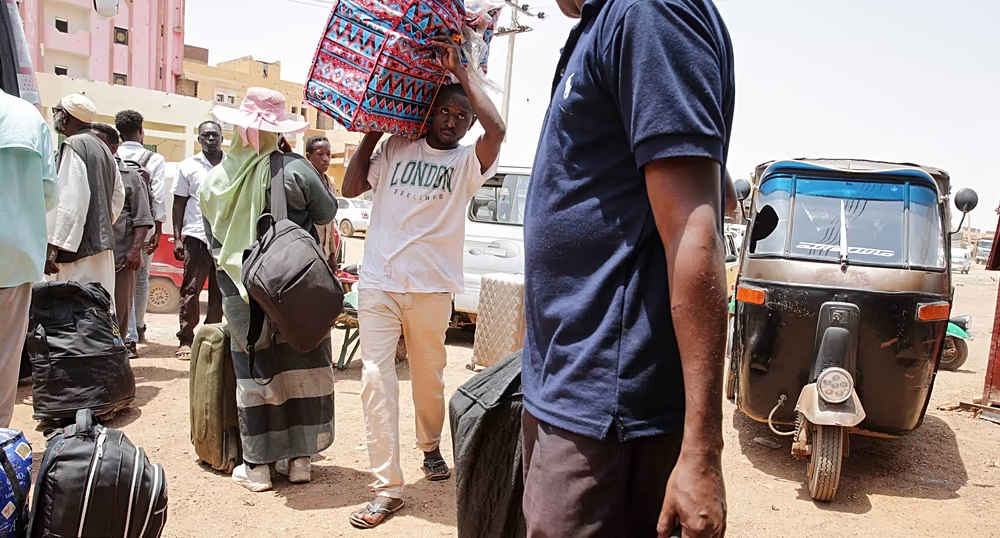
Fuel shortages in Sudan are putting pressure on transport, food prices and business activity, with public transport operators, freight services and factories among those affected.
Table Of Content
The supply crunch has been linked to global oil disruptions associated with the conflict in the Middle East, as well as restrictions on fuel imports inside Sudan. Rising transport costs have consequently pushed food prices higher, adding to the burden on ordinary people.
Transport and production disrupted
In Khartoum, resident Mohamed Hassan described the impact on the movement of people and goods.
“The movement of goods and people has stopped, and the market is totally paralyzed, we need solutions, not promises,” Hassan said.
The shortage has also affected factory production and freight services, reducing the movement of goods while increasing the costs involved in getting products to markets.
Sudan is amid an ongoing civil war, and the fuel crunch has contributed to a surge in black-market fuel trading across government-held areas. The available information does not quantify the changes in fuel, food or transport prices.
Government orders additional supplies
Prime Minister Kamil Idriss has ordered extra supplies of petroleum products for service stations. The measure is intended to ease shortages and improve fuel availability, although details on the volume and timing of the supplies have not been provided.
Importers have also faced restrictions that have limited participation in the fuel market. Under a central bank requirement, importers were required to deposit the equivalent of 200 kilograms of gold, a condition that restricted access to the import market.
Longer-term supply challenges
Analysts have pointed to several deeper problems behind the shortage. These include the prolonged shutdown of the al-Jaili refinery, foreign exchange shortages and difficulties in financing fuel imports.
The refinery’s shutdown has left Sudan facing additional supply challenges, while limited foreign exchange and financing difficulties have complicated efforts to bring in imported petroleum products.
The prime minister’s order provides a short-term response, but the wider problems affecting refinery operations, currency availability and fuel-import financing remain unresolved. The duration and full geographic extent of the shortage have not been specified.






No Comment! Be the first one.