
South Sudan Aid Crisis Deepens as Food Stocks Fall and Arrivals from Sudan Continue
South Sudan is facing worsening humanitarian pressure as food stocks decline, aid agencies reduce support and about 3,000 refugees and returnees continue crossing from Sudan each week.

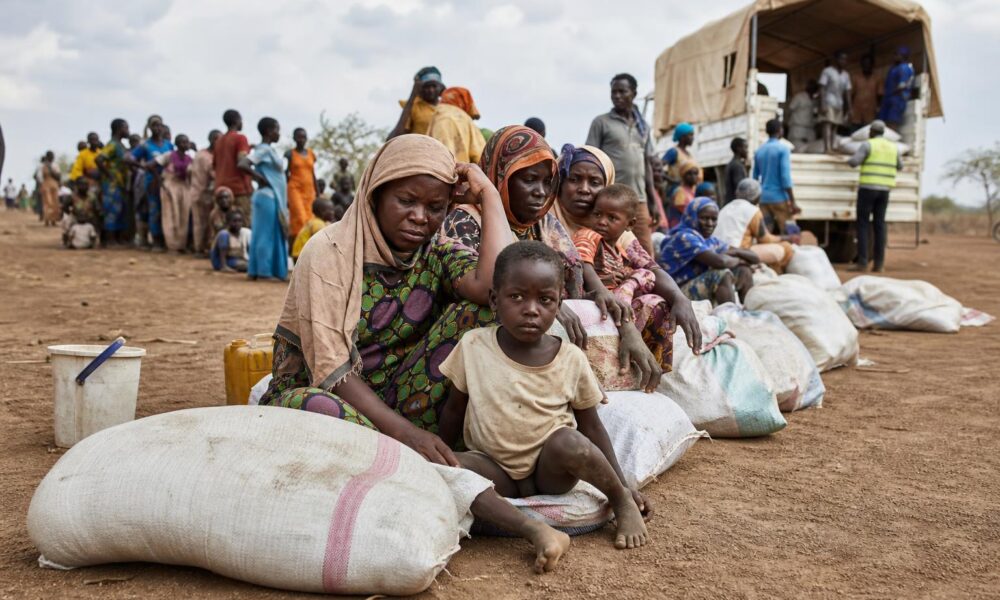
South Sudan’s humanitarian crisis is intensifying as dwindling funding forces aid agencies to reduce assistance while refugees and returnees continue arriving from war-torn Sudan.
Table Of Content
The World Food Programme (WFP) has warned that more than one million vulnerable people could lose access to life-saving food and nutrition support by October if additional resources are not secured. The agency has already reduced rations and cut other forms of assistance as funding has declined.
Food stocks in Malakal sharply reduced
Food reserves at the WFP’s logistics hub in Malakal, Upper Nile state, have fallen from 10,000 metric tonnes at the same time last year to less than 300 tonnes, according to the agency.
The former Protection of Civilians site in Malakal, now designated as a settlement for internally displaced people, houses nearly 40,000 people in more than 6,000 households. The area has hosted displaced families for years, while humanitarian needs have continued to grow.
The International Organization for Migration has also warned that water, sanitation and hygiene services in Malakal and Bentiu are at risk because of funding shortages. Malakal faces additional danger during the rainy season, with drainage pumping and dyke maintenance needed to limit the risk of flooding.
Arrivals from Sudan add pressure
About 3,000 refugees and returnees are crossing into South Sudan from Sudan each week. More than 1.4 million people have entered the country since the war in Sudan began in 2023, the WFP said.
Renk, in Upper Nile state near the Sudanese border, has become a major entry point. Its transit centres were not built to accommodate the scale of arrivals, and some families remain there for months while awaiting onward transport to Malakal or other locations.
Matthew Hollingworth, the WFP’s assistant executive director, said the conflict in Sudan had pushed up prices and placed further strain on a country already struggling to respond to humanitarian needs.
“It all comes at the time when the international community has a lot less to give, and we don’t have the same resources we used to have,” Hollingworth said.
He also said humanitarian workers were unable to reach some areas because of illegal checkpoints, adding that vulnerable people needed support across the country.
Displaced families describe worsening conditions
People interviewed in the report described hunger, insecurity, limited access to farmland, illness and a lack of employment opportunities.
Peter Maker, a displaced person in Pigi County, Jonglei state, said insecurity had prevented him from travelling safely for work or farming. “Although I am able-bodied and qualified to work, insecurity prevents me from travelling for opportunities or farming safely outside, leaving us heavily reliant on the UN and aid,” he said.
Zainab Musa, a mother of six who recently arrived from Sudan, described conditions at a transit centre in Renk as marked by hunger.
Nura Mohammed Ahmed, a Sudanese refugee, said some people at the centre faced severe food shortages and illness. Najah al-Tayieb al-Fadhul, a Sudanese refugee and mother of four, reported hunger and malnutrition among children, including a child with heart disease whose treatment she said she could not afford.
Funding gaps threaten assistance
The WFP says 7.8 million people in South Sudan are facing high levels of acute food shortage, while 2.2 million children are acutely malnourished.
The agency has reported an immediate funding gap of $86 million and a shortfall of $258 million for its emergency response through the remainder of 2026. In an earlier warning, the WFP and the United Nations High Commissioner for Refugees said more than 650,000 refugees and asylum seekers risked losing food assistance, with support for the most vulnerable 240,000 refugees expected to run out in September without new funding.
With arrivals from Sudan continuing and humanitarian access restricted in some areas, aid agencies are urging additional resources to prevent further reductions in food, nutrition and essential services.



No Comment! Be the first one.