
Nigerian Rights Group Sues TikTok Over Reported Northern Access Restrictions
The Foundation for Digital Justice and Sustainable Development has filed a fundamental-rights action against TikTok over reported access problems in Kaduna, Kano, Kebbi and Sokoto.
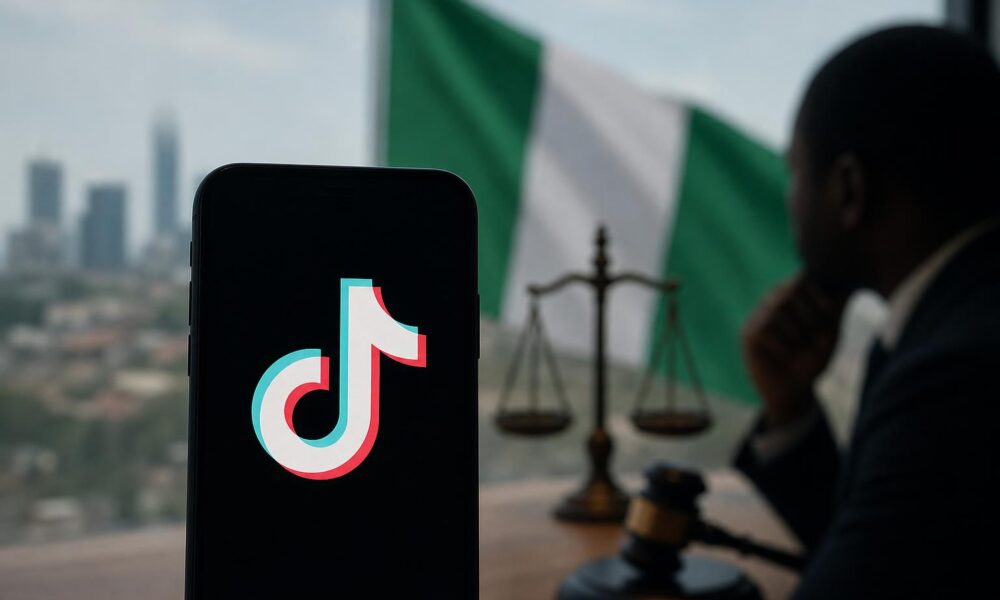
The Foundation for Digital Justice and Sustainable Development has taken TikTok to the Federal High Court in Abuja over reported access problems affecting users in four northern Nigerian states.
Table Of Content
The foundation filed the fundamental-rights action on October 5, asking the court to determine whether the alleged restriction violates users’ rights to freedom of expression and freedom from discrimination.
The reported disruption concerns TikTok users in Kaduna, Kano, Kebbi and Sokoto. According to the account described by TechCabal, problems began around September 11, with the platform reportedly heavily restricted or completely inaccessible in the four states by September 14.
Access problems under dispute
The lawsuit reportedly describes videos freezing or failing to load over ordinary mobile data connections, uploads stalling and other application functions becoming unavailable. The foundation also says affected users can restore access through virtual private networks.
However, the use of a VPN does not by itself establish that TikTok deliberately blocked users in the affected locations. It remains unresolved whether the disruption was caused by TikTok or by a network, routing or infrastructure problem.
The foundation attributes the situation to a regional restriction rather than a local technical fault, based on its investigation and interviews with users. TikTok has not publicly explained the reported access problems and did not respond to requests for comment.
Digital rights and discrimination claims
Festus Ogun, counsel representing the foundation, said the reported disruption should not be treated as ordinary content moderation because it affected access to the application across a region rather than particular posts or accounts.
“This has nothing to do with content moderation,” Ogun told TechCabal. “Content moderation relates more to the ability to post or make comments and not the ability to access or use the application entirely.”
The foundation argues that posting, viewing, replying, liking and reposting are forms of expressive conduct that affected users were allegedly prevented from carrying out. It cites Sections 39, 42, 45 and 46 of Nigeria’s Constitution, as well as Articles 2 and 9 of the African Charter on Human and Peoples’ Rights.
It further contends that selective restrictions without an objective and lawful justification could amount to unequal treatment based on place of origin, ethnicity, religion or another constitutionally protected ground. Whether the reported restriction occurred, and whether it violated those rights, remains for the court to assess.
“TikTok owes its users the duty to offer an explanation concerning the restriction and the discrimination,” Ogun said. He added, “We maintain that the continuous exclusion and restriction is a violation of digital rights.”
Remedies sought
The foundation is asking the court to declare the alleged geoblocking wrongful, unconstitutional and arbitrary. It also wants TikTok to publish a public apology in three newspapers with nationwide circulation within seven days of judgment.
Ogun said TikTok should explain why users in the four northern states were allegedly excluded while people elsewhere in Nigeria could continue using the platform. The reported disruption may also affect creators and small businesses that rely on TikTok to reach audiences or customers.
TikTok’s Terms of Service reserve the right to suspend or restrict all or part of the platform for “business and operational reasons” without prior notice. Those terms, however, do not establish that TikTok exercised that power in northern Nigeria, and the service’s published policies do not resolve the cause of the reported outage.
The central issue before the court will therefore be whether the foundation can first establish that TikTok caused the regional access disruption. The alleged constitutional violations and discrimination claims will depend on that determination.



No Comment! Be the first one.