
Sheriff Questions Whether a Larger Map Can Change Africa’s Reality
Aminata Sheriff has questioned the practical value of a reported UN resolution on Africa’s representation on world maps, calling instead for stronger political, economic and institutional influence.

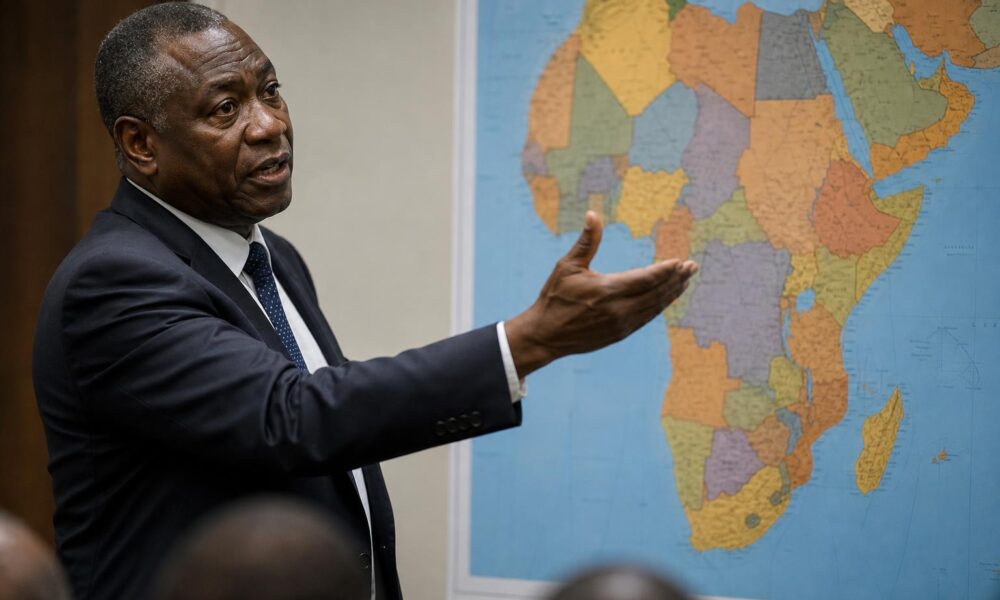
Aminata Sheriff has challenged the practical importance of a reported United Nations resolution concerning the way Africa is shown on world maps, arguing that symbolic recognition will not resolve the continent’s deeper political, economic and social challenges.
In commentary published by The Sierra Leone Telegraph on 7 September 2026, Sheriff said she woke to what was presented as celebratory news that the UN had approved the measure. The supplied commentary does not provide the resolution’s title, text, adoption date or operative details, and the reported approval has not been independently confirmed in the available material.
Map initiative contrasted with Security Council deadlock
Sheriff said Togo and the African Union had invested substantial effort in persuading 164 countries at the UN General Assembly to support representing Africa at its proper geographical scale. She also said African diplomats and leaders had spent months drafting, lobbying and promoting the initiative in New York.
She contrasted that effort with what she described as continuing deadlock over permanent African representation with real power on the UN Security Council. In her view, the difference raised questions about the priorities attached to symbolic recognition compared with changes that could give African states greater influence in global decision-making.
“I have to ask: does changing the size of Africa on a map actually change our reality?” Sheriff wrote.
Call for practical influence
Sheriff argued that altering the visual size of the continent would not expand the territory of any African country, settle border disputes or put food on people’s tables. She also said it would not strengthen institutions, protect human rights or restore dignity to people living under failed governance.
The commentary described people across Africa as facing hunger, systemic corruption, indignity, conflict and what Sheriff called relentless human rights violations. These descriptions are presented as her analysis and are not independently verified in the supplied material.
Sheriff contrasted what she described as Africa’s focus on symbolic acknowledgement with the approach of Asian counterparts, whom she said were building economies, securing supply chains, expanding manufacturing and investing in infrastructure, technology and human capital.
“I don’t need Africa to look bigger on a map. I want Africa to be bigger where it actually matters,” she said.
Her preferred focus includes greater African influence in global trade, manufacturing, innovation, diplomacy and economic power, alongside stronger human rights protection and improved quality of life. She concluded that the continent needs substantive political and institutional reforms rather than a larger outline on a map.
“We don’t need a bigger outline. We need real leadership, structural justice, fairer trade, functioning institutions and the restoration of human dignity,” Sheriff wrote.




No Comment! Be the first one.