
IMF and World Bank meetings weigh energy shock, debt pressures and AI growth
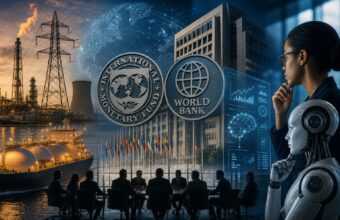
Annual IMF and World Bank meetings in Bangkok are focusing on energy-related economic pressures, rising debt, inflation, climate risks and the rapid expansion of artificial intelligence investment.


Annual meetings of the International Monetary Fund and World Bank are being held in Bangkok, Thailand, bringing together finance ministers, central bankers and other policymakers to address a range of pressures facing the global economy.
Table Of Content
The meetings run from Monday through Saturday and include closed-door discussions, public events and policy announcements. The IMF is scheduled to release its global economic forecast on Tuesday, followed by detailed regional outlooks during the week.
Energy shock and pressure on developing economies
A central issue is an energy shock that the source links to the US-Iran war, including retaliatory action by Tehran against Washington’s Gulf allies and reduced global oil and gas supplies. Higher energy costs have contributed to inflation spreading into other goods, while interest-rate increases by central banks have weighed on economic activity.
The IMF has warned that the impact is uneven. Developing countries that depend heavily on imported energy are described as being among those hit hardest, placing additional strain on governments already dealing with debt and other economic challenges.
The Fund has called on governments to reduce spending on subsidies and rebuild fiscal buffers after years of shocks since the pandemic. Critics, however, argue that cutting subsidies may not be feasible for low-income countries and that international lenders should provide more assistance.
Kevin P. Gallagher, director of Boston University’s Global Development Policy Center, said poorer IMF and World Bank member states were under pressure from spillovers of the Iran war, higher interest rates in Western economies and a climate crisis worsened by El Nino.
“The IMF and World Bank are not meeting this moment,” Gallagher said, calling for short-term emergency liquidity together with longer-term financing to make developing countries’ growth paths less vulnerable to shocks.
Poverty concerns
The United Nations Development Programme has warned that the combined pressures could push millions more people into poverty as developing countries struggle to maintain support for households.
UNDP Administrator Alexander De Croo said surging oil and food prices were leaving millions of families without a financial safety margin. He described the situation as “a perfect storm” that could push tens, if not hundreds, of millions of people back into poverty.
De Croo also said developing-world governments faced an “impossible” choice between reducing assistance to poorer citizens and putting their development agendas at risk.
AI offers a contrasting growth story
Artificial intelligence is providing a contrasting theme at the meetings. The IMF has assessed that investment in AI could exceed the capital previously invested in railroads, electricity grids and global telecommunications networks.
Advanced economies have seen increased AI investment support stock markets and economic growth, although some developing countries may not benefit because they remain outside the technology’s supply chains.
IMF chief Kristalina Georgieva said the global economy was being pulled in two opposing directions: “a negative energy supply shock and a positive demand shock from AI.” She added that the combined effects were “highly uneven across the world.”
Georgieva also said AI was rapidly becoming a major factor in countries’ relative economic fortunes, adding: “Love it, hate it, or fear it, AI is here.”
G20 discussions
G20 finance ministers are expected to meet on the sidelines of the Bangkok gatherings, with rising bond yields set to feature prominently in discussions.
US Treasury Secretary Scott Bessent will not attend that meeting because of “domestic engagements,” according to a US Treasury Department official.





No Comment! Be the first one.