
Calls Grow for Evidence-Based Probe into Alleged Political Sponsorship of Bondo Ceremonies
Questions over alleged political sponsorship of mass Bondo initiations have prompted calls for an independent investigation, legal reform and greater protection for girls at risk of FGM in Sierra...

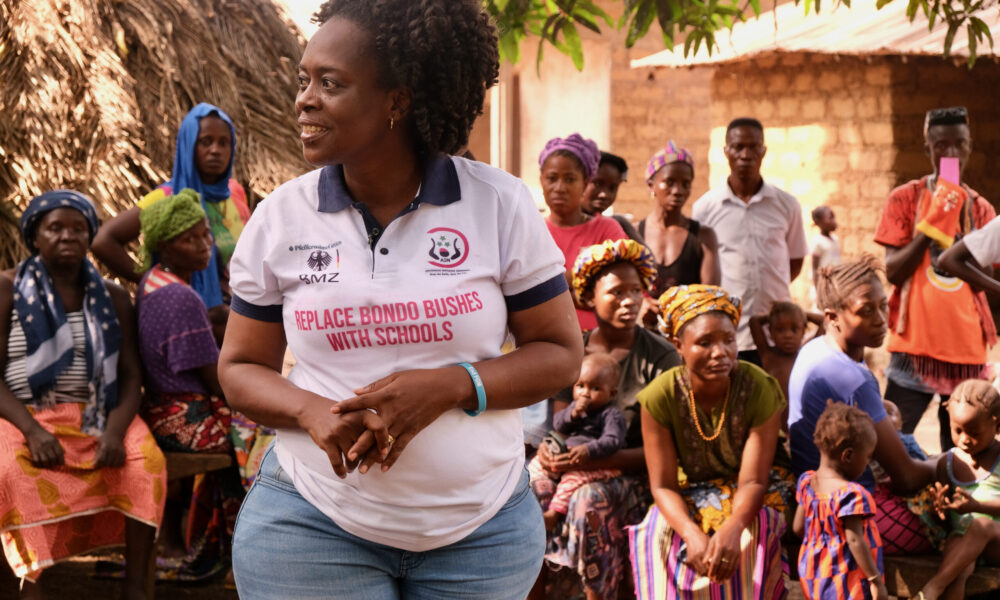
Reports that political actors may be involved in, encouraging or sponsoring mass Bondo initiation ceremonies in Sierra Leone have prompted calls for an independent, evidence-based investigation.
Table Of Content
The allegations have not been established. The available account does not identify any politician or provide financial records, eyewitness testimony, organiser statements or other independently verified evidence showing that political sponsorship of ceremonies involving female genital mutilation (FGM) is taking place.
The issue has nevertheless raised concerns about the relationship between traditional authority, money, electoral politics and the protection of girls and women.
Separating Bondo from FGM
Bondo is described as a traditional institution associated with cultural instruction, community belonging, social recognition and the transmission of traditional knowledge. The article examining the allegations stresses that Bondo should not automatically be treated as synonymous with FGM.
Not every initiation necessarily involves cutting, and cultural initiation can take place without the procedure. Politico SL, as cited in the article, documented a ceremony in Port Loko District involving approximately 70 young initiates who participated without the cutting ritual. Traditional practitioners involved in that initiative reportedly pledged to stop performing FGM.
The distinction is significant because FGM has no health benefits and can result in severe bleeding, infections, urinary difficulties, chronic pain, sexual-health complications, psychological trauma and childbirth complications. In some cases, it can lead to death.
High prevalence and legal concerns
UNICEF’s 2024 global estimates indicate that more than 230 million girls and women alive today have undergone FGM. More than 144 million are reported to be in Africa, while more than 80 million are in Asia and approximately six million are in the Middle East.
The World Health Organization estimates that more than four million girls are at risk of undergoing FGM each year. The international community has committed to ending the practice by 2030 under Sustainable Development Goal 5.3.
Sierra Leone’s reported prevalence has declined, but remains very high. The country’s 2019 Demographic and Health Survey found that approximately 83 percent of women and girls aged 15 to 49 had undergone FGM, compared with 90 percent in 2013.
The Prohibition of Child Marriage Act, 2024 provides protections against child marriage, but it does not automatically prevent FGM, which can occur without marriage. Sources reviewed for the article indicate that Sierra Leone still lacks a comprehensive law explicitly criminalising FGM as a practice in itself.
Money and accountability
Awoko reported in June 2026 that some Bondo practices were being increasingly driven by financial gain, citing warnings from the National Ceremonial Chairman of the Council of Traditional Healers. Claims about substantial initiation and training fees were included in that reporting, but the article stresses that they require careful verification.
Any examination of alleged political sponsorship, it argues, should assess financial records, public announcements, eyewitness accounts, organisers’ statements and other verifiable material. Political relationships with traditional authorities can support development, education, healthcare and community welfare. They become a public concern if they support activities that expose girls to harm.
Ishmeal Alfred Charles, identified as a Sierra Leonean humanitarian, child-rights advocate, author and anti-FGM campaigner, has called for stronger prevention, survivor-centred healthcare, education and economic alternatives. He is also described as a former child soldier and a Community Voice volunteer with GAMS, with nearly two decades of experience in humanitarian and social-development work.
The broader reform challenge is to protect cultural identity without treating tradition as beyond scrutiny. The article calls on Parliament to address legal gaps and urges traditional leaders, political representatives, civil-society groups, journalists and international partners to support accountability and reform.
It also argues that the central political question should be protection: no cultural institution should be beyond constructive reform, and no girl should have to surrender her rights to secure acceptance in her community.



No Comment! Be the first one.