
Global Hunger Persists as Food Loss and Waste Reach Alarming Scale
An estimated 645 million people faced hunger in 2025, while more than 1 billion tonnes of food were discarded or lost across the global food system.

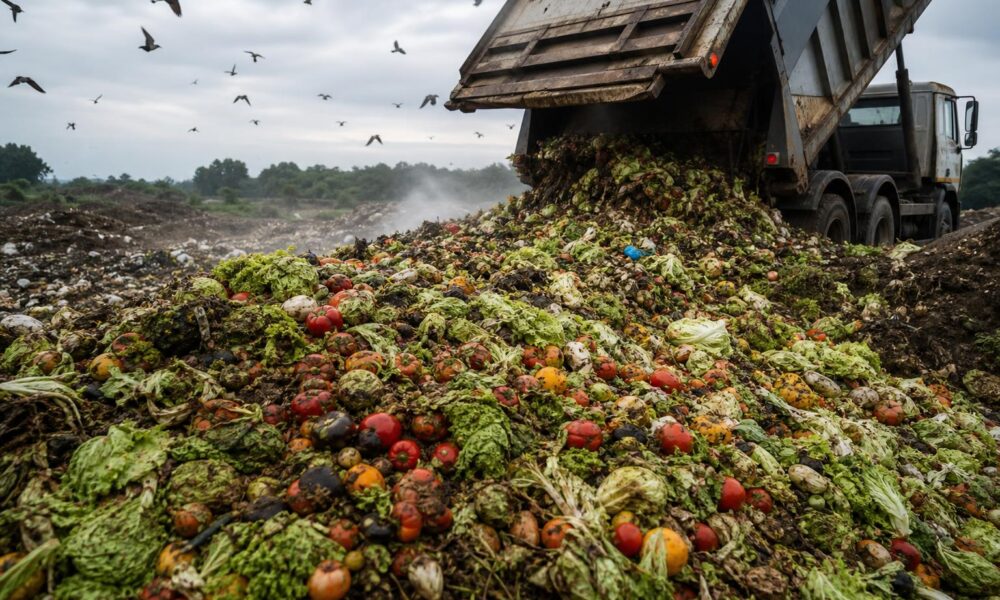
An estimated 645 million people faced hunger in 2025 even as more than 1 billion tonnes of food were wasted annually, according to figures examined in an Al Jazeera visual explainer for World Food Day.
Table Of Content
The United Nations’ annual State of Food Security and Nutrition in the World report put the share of the global population facing hunger at 7.8 percent in 2025. That was down from 8.1 percent in 2024 and the 8.6 percent peak recorded in 2022, but remained above the level reported in 2019, before the COVID-19 pandemic. The 2025 estimate represented about 61 million more people facing hunger than in 2019.
Africa carries the largest regional burden
Africa had more undernourished people than any other region in 2025, with an estimated 309 million people affected, or about one in five of the continent’s population. Asia recorded 292 million undernourished people, equivalent to 6 percent of its population, while Latin America and the Caribbean recorded 32 million, or 4.8 percent.
The 2026 Global Hunger Index assesses hunger using undernourishment, child stunting, child wasting and child mortality. Eight countries were classified as having an “alarming” level of hunger, including seven in Africa. Somalia had the worst result among the 122 countries ranked, followed by the Democratic Republic of the Congo, Chad and Madagascar.
The index could not calculate scores for Sudan, South Sudan, Burundi and Yemen because of conflict and gaps in available data.
Losses occur before food reaches consumers
Food is lost and wasted throughout its journey from farms to consumers. The Food and Agriculture Organization estimates that about 13 percent of food produced globally is lost after harvest and before reaching shops. Storage, transport and processing are among the stages where losses occur, with fruits and vegetables experiencing the highest losses before reaching retailers.
The FAO estimates that food lost before reaching shops is worth at least $400 billion each year. Separate estimates from the United Nations Environment Programme show that consumers discarded about 1.05 billion tonnes of food in 2022, equal to almost one-fifth of the food available to them.
Households accounted for 60 percent of consumer food waste, followed by restaurants and other food services at 28 percent and shops at 12 percent. The discarded food was equivalent to about 52.5 million 20-tonne truckloads.
Economic and environmental costs
Average food waste was estimated at 132 kilograms per person annually, including 79kg wasted at home. UN estimates cited in the explainer put the Maldives at about 260kg per person each year. Syria, the Dominican Republic, Seychelles, Mexico and Tunisia were each reported at more than 210kg per person, while Spain was among the countries reporting 39kg or less. The source notes that the country estimates do not include a stated common methodology or year for each figure.
Food loss and waste cost the global economy more than $1 trillion annually, according to the United Nations. Food that is never eaten also uses land and energy without providing nourishment. About 1.4 billion hectares of land—28 percent of the world’s agricultural land—is used to grow food that is not consumed.
Food loss and waste are also estimated to generate 8 to 10 percent of global greenhouse gas emissions. Decomposing food in landfills can release methane, adding to the climate impact.
UNEP reports that hotter countries tend to record higher household food-waste levels, although the reasons offered—including the availability of fresh produce and refrigeration conditions—are presented as possible explanations rather than confirmed causes.
World Food Day is observed every October 16 to mark the founding of the Food and Agriculture Organization in 1945. This year’s theme, “Innovate today, nourish tomorrow,” calls for food systems capable of feeding more people while wasting less.





No Comment! Be the first one.